Buhari wants to leave legacy of functional refineries, but how can he do it?
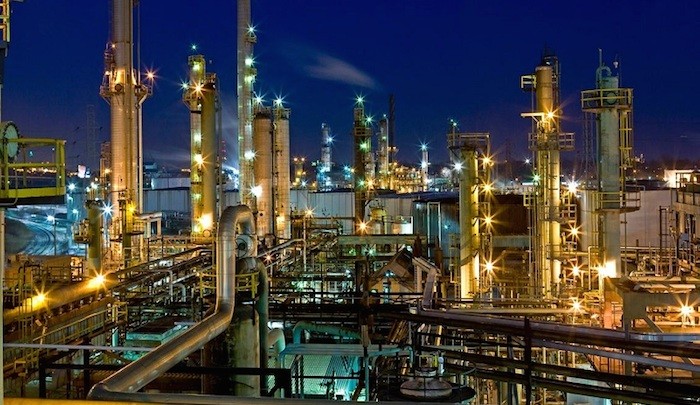
Timipre Sylva, Nigeria’s minister of state for petroleum, has tried to justify the $1.5 billion the government plans to spend on the rehabilitation of the derelict Port Harcourt Refinery.
Speaking on Sunday during a Channels Television programme, Sylva said President Muhammadu Buhari wants to leave a legacy of functional refineries.
Sylva said Nigerians should hold him and the Buhari administration accountable “for every dollar, every cent” spent on the Port Harcourt refinery.

But what is the best way to deliver functional refineries?
Over the past 12 years, Nigeria tried and failed four times to crank up its ageing crude-processing plants, now the government is giving it another shot with plans to spend $1.5 billion (about N570bn).
Despite the repeated failure to breathe life into the refineries, the state-run energy company, NNPC, is giving it another shot, ignoring global examples on how to run a successful refinery.
The government’s long history of wasteful spending on turnaround maintenance on its struggling refineries triggers a feeling of bitterness in the hearts of many Nigerians.
For instance, the government wants to spend $1.5 billion on a refinery that has never operated above its 200,000bpd capacity, whereas Shell sold a more efficient and profitable refinery with a capacity of 157,000bpd in California for $1.2 billion last year.

Beyond Shell’s decision to sale a profitable refinery, BusinessDay analysis of the 10 biggest refineries in the world shows they are all privately owned and have consistently increased refining capacity, an indication that their operations have been profitable.
If Buhari really wants to leave a legacy of functional and profitable refineries, it may be best to privatise rather than spend money it can I’ll afford on rehabilitation.
Recommended for Reading:
A tale of two refineries: What Nigeria can learn from South Korea
Nigerians rise against $1.5bn Port Harcourt refinery repair bill
Atedo Peterside calls $1.5bn refinery bill brazen adventure
Nigeria’s fiscal position remains precarious despite rising oil price
Bullish crude oil prices since the beginning of the year have raised hope of a better global fiscal performance after severe disruptions caused by covid-19 but Nigeria seems stuck in a precarious fiscal position.
A more than 75 percent rise in the price of oil since November 2020 has been on account of the reopening of major economies and the vaccination of their populations, a year after the pandemic shut down factories and grounded the aviation industry in March 2020.
But with the positive sentiments associated with the rise in oil price, celebration from the Nigerian economy, sadly, comes off as premature as the country’s fiscal position still remains precarious.
Analysis shows that as of today, Nigeria’s economy can only attain fiscal break-even position only if oil prices climb as high as $103 per barrel.
A fiscal break even position is attained when the government’s revenue is able to cover expenditure.
The limited chances that oil prices will rise to $103 per barrel this year means the federal government must step up efforts to boost non-oil revenues. With the future of oil looking bleak, Nigeria has no other choice but to reduce its dependence on oil revenues.
Nigerian startups raise more money in a single month than whole of 2020
In a month tech investors decided to open their investment wallets in an unusual manner, five Nigerian startups have found themselves $202 million richer. It is the most investment in a single month since 2019 and beats the whole money raised in 2020.
Flutterwave opened the month of March with a $170 million Series C funding that pushed its valuation to over $1 million; Havenhill Nigeria Limited, a clean energy company raised $4.5 million on the same day as Flutterwave; Kuda Bank followed with $25 million; Termii and Kwik came a day later announcing raising $1.4 million $1.7 million each.
It is the most funding closed in a month since the $200 million investment by Visa in Interswitch. Although Paystack pulled in $200 in the deal with Stripe in October 2020, it is an outright acquisition and so does not count as funding.
The $202 million funding is even more impressive as it eclipses the record of the entire investment in 2020 when about 82 Nigerian startups could only haul in $170 million. According to a report compiled by StartupLists, venture capital investments in Africa took off on a high note in the first three months of 2020 only to be blindsided by the outbreak of the COVID-19 pandemic and consequent lockdowns and economic meltdown across the world.
Turkish Lira slides 15% after President Erdogan fires Central Bank governor
Turkey’s currency has tumbled as much as 15 percent after President Recep Tayyip Erdogan sacked the country’s central bank governor over the weekend.
Naci Agbal had been credited as a key force in pulling the lira back from historic lows.
Erdogan replaced him in a surprise move on Saturday, the third central bank governor exit in under two years.
Agbal, appointed in November, had been raising interest rates to fight an inflation rate running above 15 percent.
The removal has shocked both local and foreign investors who had praised Turkey’s central bank’s recent monetary policy.
CBN to double COVID-19 fund for households to N300bn after success of first phase
The Central Bank of Nigeria says it has been promoted to double the COVID-19 loan for households to N300bn following the success of the initiative and impact on the economy.
This was revealed at a media interactive programme in Lagos at the weekend.
The CBN governor said at the event that the apex bank had disbursed N149.21 billion to 316,869 households to cushion the effects of the COVID-19 pandemic.
The funds, which were given out in the first phase of the N150 billion Targeted Credit Facility (TCF), were disbursed through the NIRSAL Microfinance Bank after the beneficiaries met set guidelines for the intervention fund.
The second phase of N150 billion is to kickoff at yet to be announced date with each qualified household expected to access a maximum of N3 million at five to nine per cent interest rate depending on the loan purpose.
Inflation tops headache for MPC as two-day meeting starts today
Nigeria’s Monetary Policy Committee (MPC) commences its second meeting for the year 2021 today, and will tomorrow announce policy decision on interest rate direction for an economy that sluggishly exited recession in the fourth quarter of 2020.
Maintaining the status quo may likely play out after the meeting, as most analysts polled by BusinessDay expect a ‘Hold’ on the benchmark interest rate due to rising inflation and the need to further stimulate economic growth.
Nigeria’s inflation rate increased to 17.33 percent in February 2021, from 16.47 percent recorded in the previous month, according to the National Bureau of Statistics (NBS).
At the last MPC meeting in January, the committee retained the Monetary Policy Rate (MPR) at 11.50 percent, with the asymmetric corridor remained at +100/-700bps around the MPR.
Also, the Cash Reserve Ratio (CRR) and Liquidity ratio were left unchanged at 27.5 percent and 30 percent, respectively.