MTN’s Commercial Paper closes today
MTN Nigeria’s N100bn Series III and IV Commercial Paper (CP) Issuance closes today, one week after it was open to investors.
The implied yield on the CP ranges from 4.7 to 6 percent depending on whether it’s the 180-day tenor Series III programme or the 270-day series IV programme.
MTN Nigeria was issued a corporate rating of Aa by Agusto & Co. which reflects the Company’s history of strong financial performance. In 2020, MTNN recorded revenue in excess of N1 trillion (largest revenue by a listed corporate) and posted healthy operating profit metrics (c. +50% EBITDA margin).

The proceeds from the Offer will be applied towards MTN Nigeria’s working capital and general corporate purposes.
Nigeria taps KPMG for first-of-its-kind infrastructure fund
Nigeria has engaged KPMG LLP as transaction adviser for the newly-created Infrastructure Corporation of Nigeria Limited (InfraCorp).
The search for an asset manager for the fund- established to raise as much as N15 trillion for power, road and railway projects- still continues, however, following an extension of the deadline by two weeks to March 30.
Nigeria plans to boost infrastructure investments to stimulate economic growth after exiting its second recession in five years in the fourth quarter.

The country needs at least $3 trillion over 30 years to close its infrastructure deficit, according to estimates by the Africa Development Bank.
Nigerians are more miserable than African peers
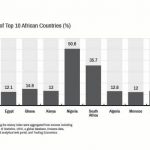
Nigeria may be the largest economy on the African continent, but the average Nigerian is more miserable than the average citizens of other countries that rank as top 10 economies in Africa, according to Misery Index.
The Misery Index is calculated by adding a country’s inflation and unemployment rates, and for Nigeria, the misery index at 50.6 percent towers far and above every other country, even three times higher than most.
The misery index for the top 10 economies in Africa, from most miserable to least miserable ranks as follows: Nigeria (50.6%), South Africa (35.7%), Angola (32.7%), Ghana (14.8%), Kenya (13%), Tanzania (12.9%), Algeria (12.8%), Egypt (12.1%), Morocco (12%), and Ethiopia (6.9%).
CBN orders new fee for USSD banking services
The Central Bank of Nigeria (CBN) has announced a new fee for Unstructured Supplementary Service Data (USSD) services with effect from March 16, 2021.
Deposit Money Banks (DMBs) in the country are to begin to charge a flat fee of N6.98 per transaction for USSD services.
The new fee is contained in a joint statement issued by the CBN and the Nigerian Communication Commission (NCC) on appropriate pricing of the USSD services.
This new price regime which the CBN said will ensure a much cheaper average cost for customers to promote financial inclusion replaces the old per session billing structure.
The apex bank also assured that the new pricing model is transparent and will ensure that amount charged will remain the same irrespective of the number of sessions per transaction.
Mobile Network Operators (MNOs) and DMBs have had a protracted dispute over the appropriate USSD pricing model for financial transactions.
According to the joint statement, the disagreement resulted in the accumulation of outstanding fees for USSD services rendered by MNOs leading to potential service withdrawals.
Researchers see booster vaccines as next big stick against COVID-19
Researchers keeping an eye on changes in the genetic behaviour of SARS-CoV-2, the virus that causes COVID-19, have found that booster vaccines will be necessary to beat the pandemic, since permanent immunity may not be assured.
Vaccine boosters have the dual impact of boosting immunity against the original COVID-19 virus, as well as provide methods to overcome the emerging variants that could render existing vaccines ineffective.
Sharon Peacock, head of COVID-19 Genomics UK (COG-UK), an effort to sequence the virus’ genome, said changes that make the virus more transmissible, with a higher ability to evade immunity means regular booster shots will be needed to fight future variants.
The novel coronavirus mutates about once every two weeks.
“We already are tweaking the vaccines to deal with what the virus is doing in terms of evolution – so there are variants arising that have a combination of increased transmissibility and an ability to partially evade our immune response,” Peacock said in a Reuters report on Monday.
The COVID-19 genomic consortium headed by Peacock is one of the world’s largest databases for the virus, with 346,713 genomes of the virus sequenced out of about 709,000 globally.
The rise of new variants of COVID-19 almost displaced vaccination as the main global exit strategy out of the pandemic.