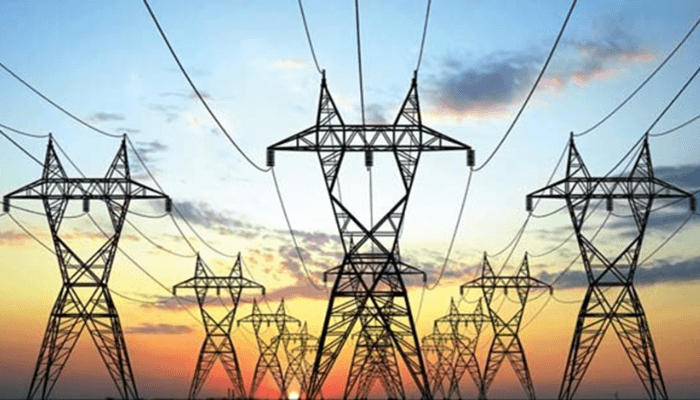
Nigeria’s power sector stands at a defining crossroads. Despite decades of reforms and billions invested, millions of homes and businesses remain in darkness.
With only about 61 per cent of the population connected to the grid as of 2023, and many facing blackouts up to 40 per cent of the time, over 80 million Nigerians still lack reliable electricity.
Meanwhile, small diesel generators gulp more than $14 billion annually in fuel and maintenance costs, exceeding what some African countries spend on health and education combined.
Yet Nigeria enjoys some of the highest solar irradiation levels in Africa. The paradox is striking: sunlight is abundant, but financing is scarce. Solar energy offers a cost-effective and sustainable way out of this dilemma.

Across the country, renewable projects are quietly proving that clean power can work technically, socially, and commercially. But scaling these successes requires capital, and capital demands confidence.
The heart of Nigeria’s energy problem is not the absence of technology but the structure of finance. Solar projects need long-term, low-cost funding and stable payment mechanisms.
Unfortunately, most commercial lenders still view solar investments as risky. With lending rates seen as high and short loan tenors, few developers can raise sustainable project finance locally. This is where innovative partnerships are changing the game.
At VSolaris, we believe that collaboration among developers, banks, governments, and development finance institutions is key to unlocking Nigeria’s solar revolution. Our partnership initiatives with several banks represent a new financing model that bridges the gap between clean-energy providers and end users.
Under this arrangement, banks provide accessible consumer and SME financing for solar solutions, while VSolaris delivers reliable technology and after-sales support. The model allows customers to acquire solar systems without heavy upfront costs, paying flexibly over time. It democratises energy access, deepens financial inclusion, and stimulates local enterprise, proof that finance and technology can power progress together.

Similarly, our ongoing collaboration in Plateau State illustrates how coordinated investment delivers real impact. In partnership with the Rural Electrification Agency (REA), the International Finance Corporation (IFC), and the Presidency, VSolaris is deploying hybrid mini-grids across underserved communities such as Dadinkowa in Lantang South.
These projects combine solar generation, battery storage, and smart metering to provide 24-hour electricity to households, schools, health centres, and small businesses. The IFC offers technical and financial advisory support, while REA ensures regulatory facilitation and community engagement. The outcomes are profound: better healthcare, improved education, longer business hours, and a sharp drop in diesel dependence.
These examples prove that renewable energy can thrive in Nigeria when backed by the right financial architecture. As industry experts note, the real challenge is not technology but access to affordable finance. The IFC estimates Nigeria’s off-grid energy market at over $9 billion annually, yet only a fraction has been tapped due to funding constraints and risk perceptions.
Globally, development institutions are signalling renewed confidence in distributed renewables. The World Bank’s $750 million Distributed Access through Renewable Energy Scale-Up (DARES) programme aims to provide clean electricity to more than 17 million Nigerians. But such catalytic programmes cannot do it alone. The private sector must mobilise commercial capital through blended finance, consumer credit schemes, and securitised portfolios.
Our experience at VSolaris shows that these models work. Through blended financing, combining concessional funds, development capital, and private investment, we have structured projects that deliver both impact and returns. The VSolaris–Bank partnership programme is a strong example.
By enabling gradual payments and embedding repayment systems that promote financial discipline, we reduce default risk while expanding access. For rural communities with seasonal incomes, this approach ensures affordability without compromising service quality.
The benefits of distributed solar extend far beyond lighting. Electrified communities record higher school enrolment, improved healthcare, and thriving micro-enterprises.
In Dadinkowa, traders who once closed at sunset now operate into the night, increasing revenues by up to 40 per cent. Local clinics refrigerate vaccines reliably, while households save money previously spent on kerosene and generator fuel. Each kilowatt installed ripples through the local economy, creating jobs, improving livelihoods, and empowering women and youth through new opportunities.
Scaling such success, however, requires consistent policy and enabling instruments for financiers. Banks must build capacity to assess renewable projects not as traditional loans but as infrastructure with predictable cash flows.
Regulators must accelerate frameworks for net metering, tariff transparency, and interconnection. Development partners should continue to provide guarantees and first-loss capital to de-risk private sector participation.
Localisation is another vital piece of the puzzle. For every imported panel or battery, there is a Nigerian engineer capable of producing, assembling, or maintaining it locally. Encouraging local manufacturing and technical training will reduce costs, strengthen supply chains, and create employment. VSolaris and its partners are investing in capacity building to train a new generation of solar engineers, installers, and technicians nationwide.
The lesson is clear: when credible technology meets structured finance and strong partnerships, solar becomes both profitable and transformative. From our Plateau State mini-grids to the Isimi Lagos Solar Farm and the Bank Partnership Programme, VSolaris demonstrates that distributed solar can deliver measurable value to investors, communities, and the environment.
Nigeria now faces a decisive choice: continue patching the national grid or finance a new future that is decentralised, clean, and inclusive. The capital exists — within our banks, development agencies, and global green investment funds. What remains is alignment and leadership.
Financing solar is not just about powering homes; it is about powering hope, productivity, and progress. Every watt deployed brings us closer to a Nigeria where energy is no longer a privilege but a right.
The time to choose and to finance that choice is now.
Chantelle Abdul is CEO of Virtuitis Solaris (VSolaris), a leading solar energy provider based in Lagos