The desire of foreign airlines to access markets beyond Lagos and Abuja and the current disposition of the federal government through Festus Keyamo, minister of aviation and aerospace development on protecting indigenous carriers have seen them enter codeshare and interline agreements with local carriers in Nigeria.
Keyamo had in different meetings said he would do all in his power to see that local carriers are protected and not exploited and any treatment meted on indigenous carriers would be reciprocated including flight frequencies and slots given to foreign airlines.
In a related development, Keyamo threatened to reject the summer schedules of foreign airlines that refuse to patronise local caterers for outboard meals. Airlines sign this schedule quarterly to secure operations in the country.
Read also: African airlines flock to Nigeria on single market

Stakeholders say the current disposition of the federal government is forcing foreign airlines to enter various partnership agreements with local carriers.
Alex Nwuba, president, Aircraft Owners and Pilots Association of Nigeria/former Chief Executive Officer, Associated Airlines said “foreign airlines are very much interested in the Nigerian market but not the airlines, nor developing local capacity however, they are reading the posture of the current Minister of Aviation and Aerospace and understand that partnerships and interline agreements will enhance their access to the market.”
Nwuba said that Nigerian airlines and in particular Nigerian passengers would benefit from interline agreements where they can buy one ticket to a larger global marketplace on one ticket than separately as is now mostly the case.
“For example, if your flight arrives late in Dubai or Istanbul, it will be the responsibility of the connecting airline to rebook you onto a later flight, unlike in the current situation where you are on your own this helps local airlines through partnerships and consumers,” he explained.
In February, Emirates signed an interline agreement with Air Peace, enhancing connectivity for passengers travelling to and from Nigeria. The partnership expands Emirates’ footprint to 13 new cities in Nigeria with single-ticket travel and simplified baggage throughput.

Travellers booked on flights from Dubai to Lagos can access more of Nigeria, with onward connections to Asaba, Akure, Benin City, Calabar, Enugu, Ilorin, Kaduna and Owerri. The interline agreement will also benefit corporate travellers, connecting to additional cities in one of Africa’s major economic hubs, Abuja, Kano, Uyo, Port Harcourt and Warri, further supporting the strong bilateral trade relationship between Nigeria and the UAE.
Sierra Leone’s new flag carrier, Air Sierra Leone in January announced technical partnership with Xejet, one of Nigeria’s domestic carriers which will provide aircraft for its operations.
Recently, Keyamo disclosed that Air Peace is also in discussion with the Namibian Government over the possibility of direct flights between Nigeria and Windhoek, the capital of Namibia.
Kenya Airways in a press conference earlier this month said it is looking to partner with Nigerian airlines to boost connectivity.
“The changing direction of FG to remove, eradicate, or limit multiple entry points to the foreign carriers is compelling. Furthermore, the growing capacity of our domestic airline leadership to engage, negotiate, initiate with more technical prowess could be assuring to these foreign airlines.
“From a marketing and market penetration perspective example, Emirates that had a great share of international passengers could also agree to such an initiative because of losing mileage due to their many months of absence in the Nigerian market,” Seyi Adewale, the chief executive officer of Mainstream Cargo Limited, said.
He hinted that the introduction of wet lease partners that have similar arrangements with the foreign carriers make partnerships more understandable since the standards and safety ought to be the same.
Adewale also said the introduction of Insurance packages into flight ticketing also helps limit the liabilities on foreign carriers.
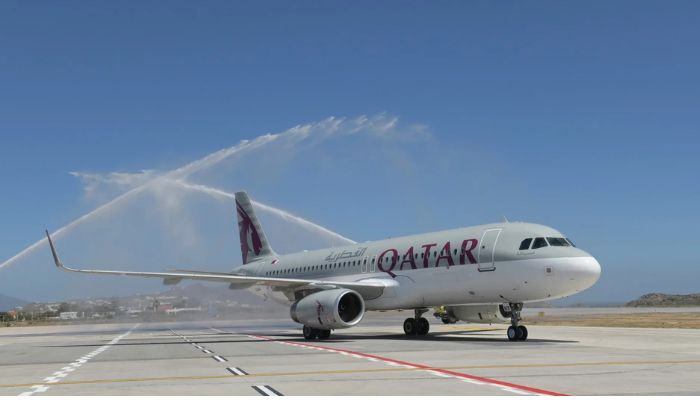
BusinessDay’s checks show that out of over 20 foreign airlines operating in Nigeria, only three foreign airlines fly beyond Lagos and Abuja. They are Qatar Airways, Lufthansa and Ethiopian airlines. Qatar currently flies from Lagos, Abuja, Port Harcourt and Kano.
Lufthansa flies from Lagos, Abuja Port Harcourt and Ethiopian airlines flies from Lagos, Abuja and Enugu.
This implies that opportunities for more partnership to access local markets beyond Lagos and Abuja continue to abound.
Read also: Airlines slash fares to Europe on low travels
Olumide Ohunayo, industry analyst and Director, Research, Zenith Travels, told BusinessDay that for the first time, the aviation sector has a minister that is pushing the private sector to achieve its potential which includes getting more clients, more services and respect.
“The foreign airlines are now forced to look at the possibilities of partnership. In the past we had ministers disguising as if they have national interest but they are pushing their own agenda. The foreign airlines are not foolish.
“I hope we will concretise this by looking at the bilateral service agreements and working towards reviewing them. The minister has said Nigeria’s investments must be protected. That is why we are seeing these benefits including more revenue for Nigerians, cheaper Air fares and more options for flying,” Ohunayo said.
Horace Millar-Jaja, retired airline captain with over 40 years of experience said code share agreements between Nigerian domestic airlines and international airlines can bring numerous benefits, including increased route network, improved connectivity, enhanced reputation, access to new markets, increased revenue, reduced costs, improved customer service and compliance with international standards amongst others.
Millar-Jaja said that by partnering with international airlines, Nigerian domestic airlines can expand their reach, improve their services, and contribute to the growth of Nigeria’s aviation industry.