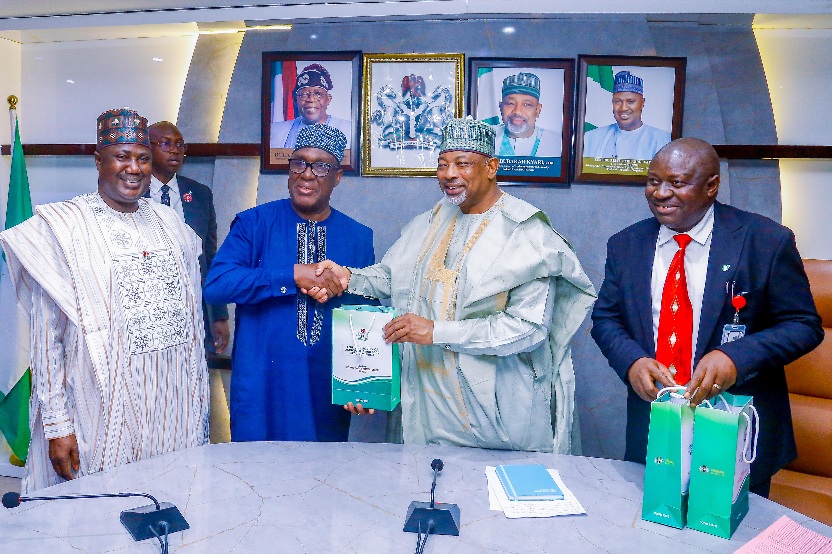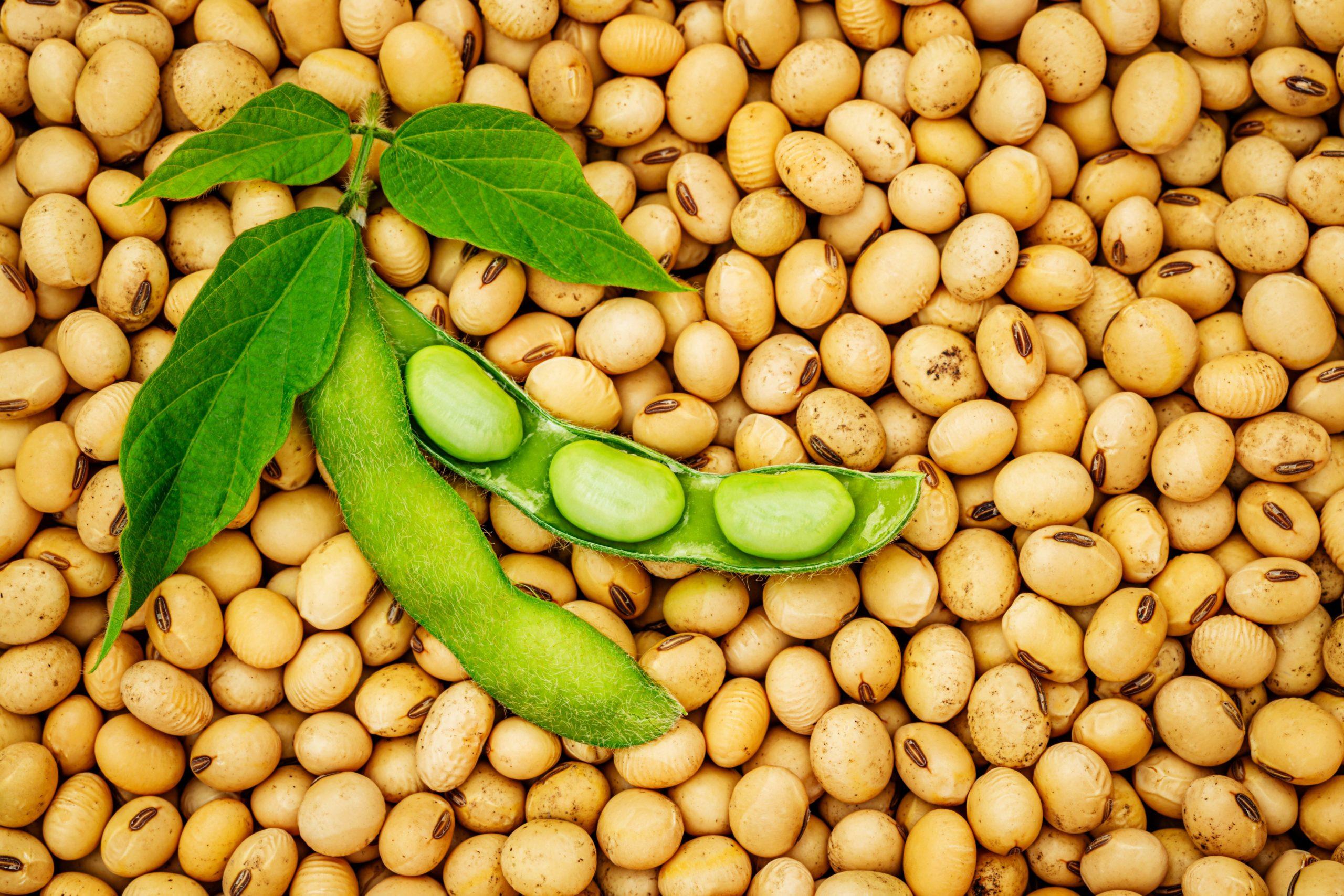
The federal government has launched the National Soybean Production Policy and Strategy and the Nigerian Soybean Partnership, a bold initiative aimed at redefining Nigeria’s agricultural future and positioning the country as a global agricultural powerhouse.
The policy is anchored on seven pillars: seed and soil innovation, extension services, climate-smart mechanisation, expanding cultivated areas, processing, value addition, and market access.
In his remarks at the launch in Abuja on Tuesday, Abubakar Kyari, minister of Agriculture and Food Security, emphasised the importance of collective commitment and leadership in realising the policy’s objectives, urging state governments to lead the soybean initiative with vision and determination.
Stating that Nigeria has a current production capacity of 1.35 million metric tons, with a national demand surpassing 2.7 million metric tons, he said the policy aims to strengthen every link in the soybean value chain, scaling production, driving value addition, and expanding domestic and international markets.

Kyari said the policy is expected to generate significant economic benefits, create jobs, and improve food security. Kyari noted that the Nigerian Soybean Partnership will unite federal and state governments, private sector stakeholders, farmer cooperatives, and development partners in building an integrated and competitive value chain
He further said that achieving these ambitious targets requires more than plans.
“It demands a supportive ecosystem driven by effective governance. The role of government is to create an enabling environment for growth. Through supportive policies, strategic collaboration, and targeted interventions, we aim to strengthen the soybean value chain and make it more competitive.
“Our priority is to foster an ecosystem where farmers, processors, and investors can thrive, in line with President Bola Ahmed Tinubu’s Renewed Hope Agenda, which places agriculture at the heart of economic diversification, job creation, and national prosperity.”
The minister emphasised the importance of collective commitment and leadership in realising the policy’s objectives, urging state governments to lead the soybean initiative with vision and determination.

In his remarks, Hyacinth Iormem Alia, governor of Benue State, stressed the state’s pivotal role in this initiative, highlighting its potential to drive national transformation and prosperity.
The governor said, “The National Soybean Expansion Strategy is a bold, forward-looking partnership designed to generate N3.9 trillion in annual revenue, create one million jobs across 22 states and the Federal Capital Territory, and position Nigeria as a powerhouse in global agriculture.
“It is a clarion call to action—a collective invitation to reimagine the future of our rural communities, our smallholder farmers, and our nation’s economy.”
He recalled that since the introduction of the ‘Malayan’ soybean variety in 1937, the fertile Guinea Savanna has nurtured generations of hardworking farmers.
“Our fields, enriched by nature and sustained by tradition, have made Benue the leading producer of soybeans in Nigeria and Sub-Saharan Africa.”
Alia said Benue State has aligned closely with these pillars, with initiatives such as the Soybean Seed Multiplication and Distribution Programme, which will reach over 200,000 farmers in the next three years.”
The governor added that the state aims to double its soybean output from 202,000 to at least 400,000 tons in three years and contribute more than 400,000 metric tons to national production annually.