The Federal Government has announced plans to scale up youth agripreneurship as a core economic strategy to drive food systems transformation, job creation, and inclusive growth.
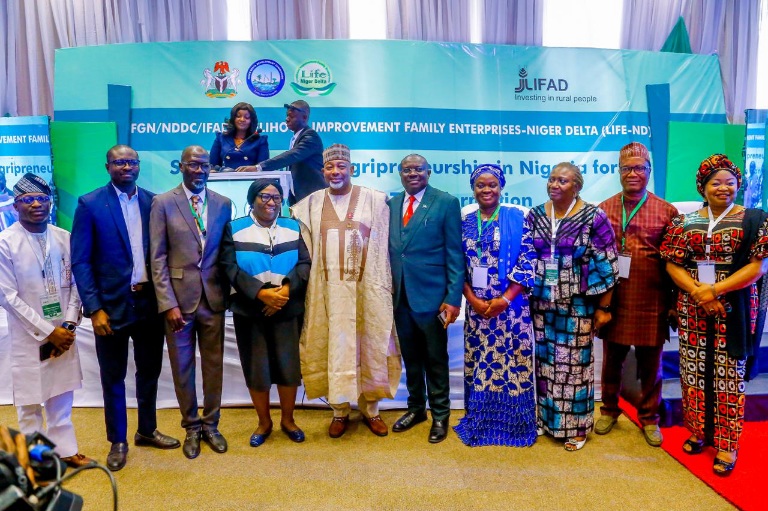
This was disclosed in Abuja on Tuesday at a high level business and policy forum focused on expanding youth led agribusiness through the FGN-NDDC- IFAD Livelihood Improvement Family Enterprises in the Niger Delta (LIFE-ND) Project.
Speaking at the event, Abubakar Kyari, minister of agriculture and food security said the government was repositioning agriculture as a major engine of economic transformation under the Renewed Hope Agenda.
Read also: $500m World Bank loan to unlock agribusiness value chains — Kyari

He said Nigerian youths were already driving innovation across the agrifood value chain, including precision agriculture, digital marketplaces, agro processing, and climate smart technologies.
However, he noted that limited access to land, finance, processing facilities, markets, and tailored skills continued to restrict youth participation at scale.
Kyari said the federal government would prioritise land access for young farmers, expand inclusive financing and credit guarantees, strengthen incubation and mentorship systems, and deepen market access through digital platforms and public private partnerships.
He added that youth focused agribusiness policies would embed climate resilience, sustainable land management, and transparent monitoring systems to track impact across age, gender, and regions.
The minister said the LIFE-ND Programme had already demonstrated the economic viability of youth led agribusiness models in the Niger Delta and that the next phase would focus on rapid and inclusive expansion nationwide.

He called on financial institutions, development partners, and the private sector to align incentives and investments with youth led agribusinesses to unlock scale and profitability.
Also speaking, Dede Ekoue, country director, IFAD Nigeria, described the LIFE-ND Programme as an internationally recognised model that had enabled the creation of nearly 24,000 youth led agribusinesses across crop production, livestock, aquaculture, and agro processing.
Ekoue said over 60 percent of Africa’s population was made up of young people and that Nigeria’s youth represented a major economic opportunity if adequately supported.
She cited Nigeria’s Youth Mapping Report, which identified over 6000 young innovators across the food system, noting that more than half were already engaged in agribusiness despite ongoing barriers to land, finance, and markets.
According to IFAD, the LIFE-ND Programme is anchored on incubation, public private producer partnerships, digital integration, inclusion of women and persons with disabilities, and sustainability.
Ekoue said IFAD would continue scaling youth agripreneurship through LIFE ND and other investments including Special Agro Industrial Processing Zones, the Value Chain Development Programme, and Agribusiness Hubs.
She called for increased blended finance, expanded incubation and digital skills training, stronger multi stakeholder partnerships, and greater youth participation in agribusiness decision making.
Representatives of NDDC, AFDB, FAO, World Bank, EU, USAID, and state governments attended the forum.
The federal government said scaling youth agripreneurship was central to boosting food security, strengthening value chains, and positioning agriculture as a driver of long term economic resilience in Nigeria.