The federal government has spotlighted its economic reform agenda and commitment to MSME-led growth on the global stage, unveiling over ₦1.3 trillion in strategic interventions at the 2025 Global Entrepreneurship Congress (GEC).
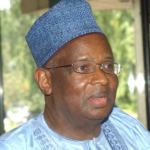
Led by John Owan Enoh, Minister of State for Industry, Trade and Investment, the Nigerian delegation engaged global investors, policymakers, and innovation leaders to position the country as a dynamic hub for entrepreneurship and a prime destination for international investment partnerships.
Addressing global ministers and private sector leaders at the GEC’s high-level Startup Nations Ministerial, Enoh emphasized the centrality of Micro, Small, and Medium Enterprises (MSMEs) to Nigeria’s industrial and economic transformation strategy.
He highlighted that with over 39 million MSMEs contributing more than 84% of national employment, Nigeria’s approach goes beyond support to embedding small businesses at the core of national resilience and inclusive growth.

“With over 39 million MSMEs contributing 84% of Nigeria’s total employment, we are not merely supporting small businesses, we are investing in national resilience and the architects of our economic future,
“Nigeria’s robust reforms under the Nigeria Startup Act, the development of Industrial Hubs across states, and the roll-out of strategic interventions such as the Syndicated De-risked Loan Scheme, ₦1.3 trillion in MSME disbursements through the BOI, and SMEDAN’s ecosystem-building efforts including solarized innovation centres and digital enterprise programs,” the minister stated
Enoh outlined several key initiatives under the current administration, including the implementation of the Nigeria Startup Act, which aligns regulatory incentives with innovation and investor protection, Establishment of Industrial Hubs in key regions to accelerate manufacturing and value-added production;
Read also: Stakeholders urge inclusive growth for Nigeria’s informal MSMEs at annual Economic Forum
Deployment of solarized innovation centres and digital enterprise programs through SMEDAN to improve access to infrastructure and digital tools for entrepreneurs and Rollout of the Syndicated De-risked Loan Scheme, designed to increase access to affordable credit for high-growth MSMEs.

He also pointed to the global success of Nigerian startups such as Flutterwave, now valued at over $3 billion USD, as proof of Nigeria’s growing influence in the global innovation economy.
Beyond public presentations, the delegation participated in a series of high-impact bilateral meetings with international institutions and peer economies. These included: UNCTAD, focusing on MSME competitiveness and sustainable innovation ecosystems, OECD, for collaboration on industrial benchmarking and global policy alignment;
Algeria, Brazil, and Indonesia, to enhance South-South cooperation on SME policy, financing, and market development.
These engagements, according to a statement signed by the ministry are critical for accessing technical support, capacity-building frameworks, and investment facilitation, deepening Nigeria’s integration into global value chains and positioning entrepreneurs to compete internationally.
The Minister reiterated Nigeria’s readiness to work with international partners to unlock trade, drive industrial growth, and scale entrepreneurship. Under the leadership of President Bola Ahmed Tinubu, he noted that Nigeria is prioritizing investor confidence through pro-business reforms, policy consistency, and improved ease of doing business.