The federal government of Nigeria on Monday launched the Student Venture Capital Grant (S-VCG), a N3 billion initiative that will provide equity-free grants of up to N50 million each to undergraduate and postgraduate innovators in Science, Technology, Engineering, Mathematics, and Medical Sciences (STEMM).
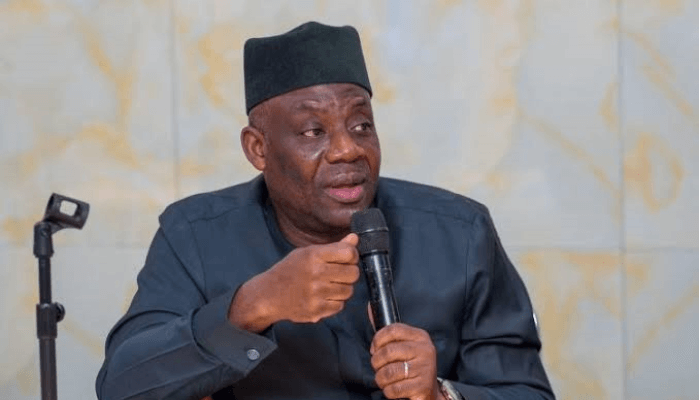
Dr. Tunji Alausa, minister of Education, at the official unveiling in Abuja, described the scheme as a deliberate move to transform Nigeria’s tertiary institutions into hubs of innovation and entrepreneurship.
“We are not asking for equity or repayment. This is seed capital to turn brilliant ideas into viable startups that will create jobs and drive national development,” he said.
The programme targets full-time students from 300 Level upwards in all recognised tertiary institutions, federal, state, and private, as well as Masters and PhD candidates. Applications opened on November 17, 2025, and will close on January 23, 2026, through a dedicated portal managed by the Federal Ministry of Education in collaboration with the Nigerian Economic Summit Group (NESG) and other partners.

Read also: Alausa urges youth to embrace Student Venture Capital Grant as trailblazer initiative
Less than three weeks after the portal went live, approximately 18,000 students have initiated applications, with 1,000 already completing and submitting full proposals, according to official figures released at the launch.
The S-VCG is the latest in a series of youth-focused innovation programmes by the Tinubu administration. It builds on earlier interventions such as the N100 billion Presidential Grant for Nano Businesses (2024), the 3 Million Technical Talents (3MTT) programme, and the Nigerian Youth Academy (NIYA).
Unlike previous schemes that largely offered loans through the Bank of Industry or NIRSAL, the S-VCG is the first large-scale federal initiative to provide direct, non-dilutive funding to student-led ventures.
Successful applicants will receive between N10 million and N50 million, depending on the maturity and scalability of their projects, with disbursements expected to begin in the second quarter of 2026 after rigorous evaluation by a technical committee.