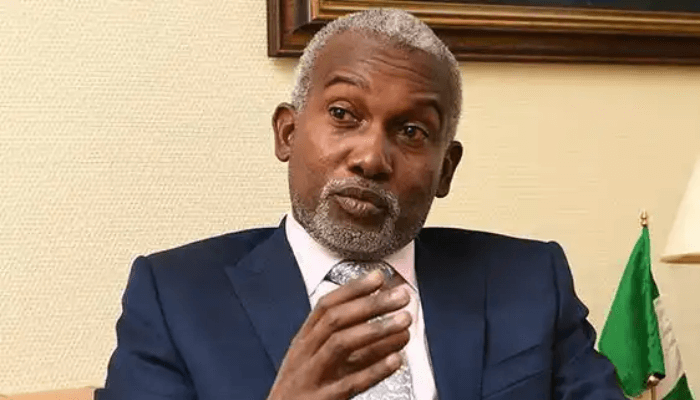
Foreign Affairs Minister Yusuf Tuggar has announced that Nigeria will not bow to pressure from the Donald Trump administration to accept Venezuelan deportees from the United States.
Speaking as a guest on Channels Television’s Politics Today programme on Thursday, Minister Tuggar made it clear that Nigeria has its own problems to deal with and will not become a “dumping ground” for Venezuelan prisoners being deported from the US. This comes as President Trump continues his tough crackdown on undocumented migrants.
The statement follows Nigeria’s participation in the BRICS Summit in Rio de Janeiro, Brazil, which took place from 6-7 July 2025. President Bola Tinubu joined other world leaders at the gathering of the 11-member economic and political group, which has strong Chinese influence.
On the final day of the summit, US President Donald Trump announced he would impose an additional 10% trade tariff on what he called “anti-American” BRICS nations – including China, India and Nigeria.

However, Minister Tuggar suggested the tariff threat might not be directly related to Nigeria’s BRICS participation.
Read Also: How Tambuwal, Adoke stopped Jonathan from removing me as governor – Shettima
Tuggar said, “The issue of tariffs may not necessarily have to do with us participating in the BRICS meeting. You have to also bear in mind that the US is mounting considerable pressure on African countries to accept Venezuelans to be deported from the US, some straight out of prisons. It would be difficult for countries like Nigeria to accept Venezuelan prisoners into Nigeria. We have enough problems of our own; we cannot accept Venezuelan deportees to Nigeria. We already have 230 million people.”
The minister then revealed that the Tinubu government has begun discussions with the US about new visa restrictions imposed on Nigerian citizens. He also expressed disappointment about fresh visa restrictions placed on Nigerian travellers by the United Arab Emirates.
Nigeria joined BRICS+ as a partner country in January 2025, following an invitation to join the group. BRICS originally stood for Brazil, Russia, India, China, and South Africa. The group started in 2006 as a way for major developing economies to challenge the political and economic dominance of wealthier nations in North America and Western Europe.

Now called BRICS+, the organisation has expanded to include new members such as Egypt, Ethiopia, Indonesia, Iran and the United Arab Emirates. The bloc is economically significant, accounting for approximately 37% of the world’s GDP. Its members represent about half the world’s population and produce 40% of global economic output.