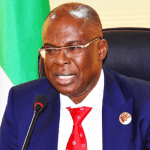
Kingsley Tochukwu Udeh, minister of Innovation, Science and Technology, has reaffirmed the Federal Government’s commitment to building a science-driven economy anchored on innovation, trust, and technological transformation.
Speaking at the 2025 World Science Day for Peace and Development celebration in Abuja, themed “Trust, Transformation, and Tomorrow: The Science We Need for 2050,” Udeh said science, technology, and innovation (STI) will remain central to President Bola Ahmed Tinubu’s Renewed Hope Agenda, driving economic diversification, industrialisation, job creation, and youth empowerment.
“Trust in science is built when people see clear, tangible benefits in their daily lives,” Udeh stated. “Science must move from the laboratory to the marketplace—solving real problems and improving lives.”
He cited the Tela Maize Initiative, implemented through the National Biotechnology Research and Development Agency (NBRDA) in collaboration with the Federal Ministry of Agriculture and Food Security, as a key success story. The high-yield maize variety provides better pest control and enhances food security, reflecting science’s practical value to citizens.

The minister highlighted several breakthroughs designed to strengthen Nigeria’s innovation ecosystem. Through the Federal Institute of Industrial Research Oshodi (FIIRO), the Ministry has established potato and cassava processing plants across the country, empowering farmers, creating agro-processing jobs, and minimizing post-harvest losses.
Udeh also announced the deployment of Neem-based minero organic fertiliser, produced locally for farmers in northern Nigeria, to improve soil health and reduce pest infestation.
In the energy sector, the NBRDA has developed biodigesters that generate clean biogas and electricity from biomass waste, while the Energy Commission of Nigeria (ECN) has designed solar generators, cross-flow turbines, and locally made electricity meters to promote import substitution and rural electrification.
The Ministry has also advanced work on the Methanol Downstream Value Chain and the construction of Multi-Chemical Production Plants across the six geopolitical zones, expected to support small and medium enterprises (SMEs) and provide cleaner fuels for industry and transport.
In pursuit of sustainability, the Nigerian Building and Road Research Institute (NBRRI) has created prototype machines that recycle plastic waste into durable building materials and developed bamboo-based construction techniques to provide affordable, climate-friendly housing.

Other innovations include a Carbon Monoxide Sensor to prevent generator-related deaths, self-triggering fire extinguishers, and accelerometer sensors for bridge safety monitoring.
Udeh announced the establishment of Technology and Innovation Hubs and Model Science Laboratories in each of the six geopolitical zones to nurture young researchers and entrepreneurs.
“Our youth are the entrepreneurs and innovators of the future. For Nigeria to compete globally, we must empower them to invent, explore, and lead,” he said.
Read also: New science minister charts roadmap for innovation, national development
The minister reaffirmed Nigeria’s alignment with global frameworks such as the UN 2030 Agenda for Sustainable Development, the Paris Agreement, and the African Union’s Agenda 2063, noting that science and culture must coexist as complementary drivers of progress
“Together, let us build the science we need for 2050—science that is inclusive, ethical, and transformative,” Udeh urged stakeholders.
The celebration featured exhibitions by students and innovators showcasing projects in biotechnology, renewable energy, and digital technology, underscoring Nigeria’s growing scientific potential.