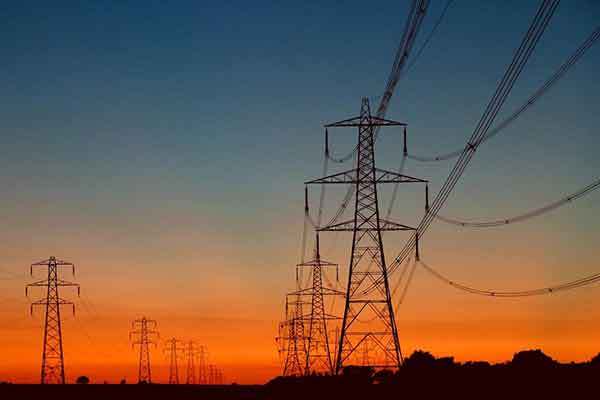
The Federal Government on Wednesday approved N701billion as Power Assurance Guarantee for the Nigerian Bulk Electricity Trading (NBET).
The facility which will be provided by the Central Bank is to guarantee the payment for the evacuation of power produced by the Generating Companies (GenCos).
Minister of Power, Works and Housing Babatunde Fashola who briefed newsmen alongside the ministers of Information and Culture, Lai Mohammed, and that of Agricultural resources, Audu Ogbe, after the weekly Federal Executive Council meeting chaired by Acting President Yemi Osinbajo, said the guarantee which is a Central Bank of Nigeria’s facility, is an instrument meant to resolve liquidity problems
encountered by GENCOs in the payment to gas suppliers.
The approval is coming on the heels of a lingering liquidity crisis in the power sector as debt owed the generating companies (GenCos) is put at over N500billion making them unable to meet obligation to gas suppliers. Last week the Executive secretary of the Electricity Generating Companies (GenCos), Joy Ogaji, said the GenCos have severally approached the government for help to salvage the liquidity
crisis.

According to Fashola the approval by the federal executive council reposes confidence in the sector for would be investors to invest and enhance accelerated development.
“NBET as you know is the government’s own company, that is the Bulk Trader Electricity who buys power from the GENCOS. The liquidity problems that have characterized the market have affected NBET’s ability to deliver on its PPP obligations through the gencos.
“So, going forward in order to strengthen NBET, CBN is proving a payment assurance guarantee for any energy produced by any genco, so that the gencos can pay their gas suppliers when they get paid. So that the hydros can continue to operate.
“What we seek to achieve here is to bring some stability to the production side of the power value chain and also give confidence to investors who want to come in, who are concerned about how to recover their money….. payment assurance and also people who are planning to invest in the gas sector which is being championed by the ministry of
petroleum also are saying the same thing in terms of payment for gas produced. So, the approval of council was to provide this guarantee for NBET which is a 100 percent government owned company to pay on a monthly basis it’s obligations for energy actually produced on to the grid to the gencos that are it’s customers” he said.
The minister said his ministry also briefed council on the Public Private Partnership status of infrastructure projects and present options suggesting that the government must lead and finance the infrastructure while continuing to engage the private sector.

FEC also approved N263 million naira for the growing of Gum Arabic seedlings in the country.
The move, according to the Agriculture Minister, is to strengthen the capacity of Nigeria in the production of the gum in which it ranks second world producer behind Sudan.
Ogbeh who revealed that $43 million was earned from the export of gum Arabic last year had also mentioned that 17 states are involved in the gums cultivation across the country.
The federal government also approved the distribution of improved cassava stems to farmers in the Southern part of the country. According to Ogbeh the cassava stems, to be provided by the International Institute of Tropical Agriculture is to improve Nigeria’s cultivation of cassava which is a primary source of ethanol and industrial starch production.
Fielding questions Ogbeh said the government was not considering setting up industrial hubs to facilitate production of goods in Nigeria despite its diversification efforts.
According to him the government has decided to leave such ventures in the hands of the private sector owing to poor management skills lacking in the public sector firms.
He added that the rationale for such stance,despite its campaigns on diversification, and alleged rot of tomatoes produced by local farmers, owing to lack of industries to process them into paste, said the major thrust of government would be to support the private sector to thrive on their own.
Ogbeh also hinted of plans of a gradual phase out of metal steel engines used in processing most stable foods. According to him studies have shown that the ferus oxides, a harmful component from the machines find their way into the food we eat, increasing cases of kidney and heart diseases.