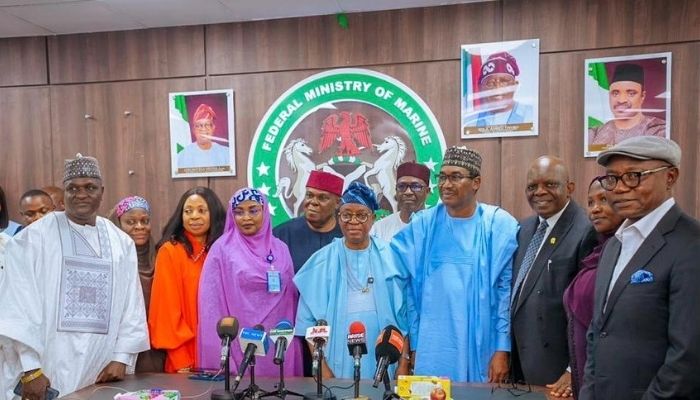
The federal government of Nigeria, led by President Bola Tinubu and the Federal Executive Council has approved Nigeria’s first National Policy on Marine and Blue Economy, a 10-year roadmap to harness the country’s vast ocean and inland water resources for economic growth, job creation, and environmental sustainability.
Sunday Dare, the president’s special adviser made the official announcement on Monday, stating that the policy would run from 2025 to 2034.
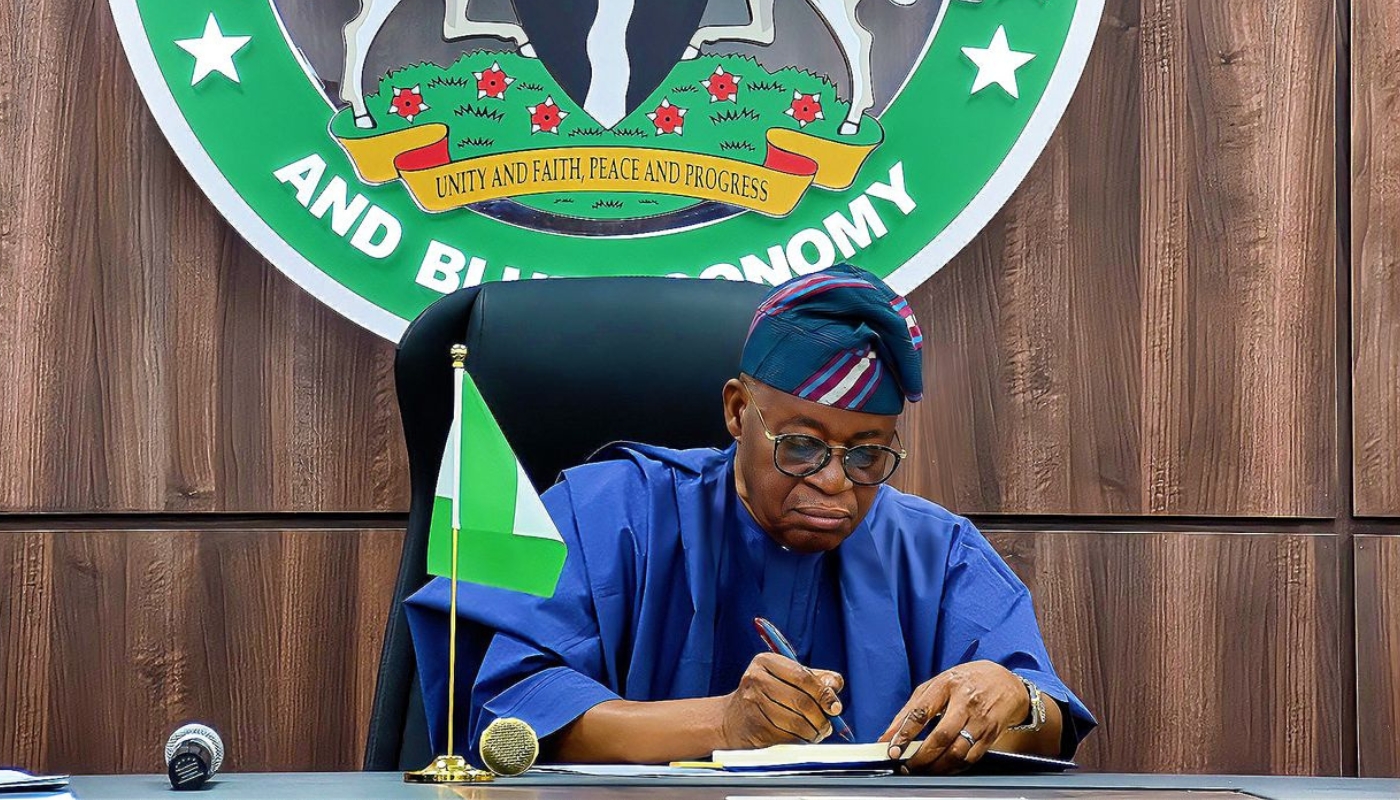
Adegboyega Oyetola, the minister of marine and blue economy, described the policy’s approval as “a defining moment” for Nigeria, marking the first time the country will pursue a coordinated national strategy to develop its marine assets.
“This is not just a policy document, it is a bold declaration of intent,” Oyetola said after the FEC meeting, adding that the policy was shaped through multi-level stakeholder engagement and expert input.

“We now have a comprehensive blueprint to transform our coastal and inland waterways into engines of national development,” he said.
Read also: ‘Nigeria needs $12bn to clean up Niger Delta for blue economy to thrive
Nigeria has 853 kilometres of coastline and an extensive network of rivers and inland waterways, but these resources have remained largely untapped for decades.
The newly approved policy outlines strategic actions to boost maritime trade, aquaculture, coastal tourism, and clean ocean energy.
The presidential spokesperson said the policy comes with a robust implementation framework and will rely heavily on private sector financing, alongside other yet-to-be-specified sources.

“Private sector investments are crucial,” Oyetola said, urging both local and international investors to seize the emerging opportunities.
“We strongly encourage domestic businesses and international investors to direct investment into activities that help to grow the marine and blue economy in Nigeria. Public Private Partnerships (PPPs) will be vital in mobilising the technical expertise and financial capital needed to unlock the full potential of this sector,” the minister stated.
The policy also includes a monitoring and evaluation system to track implementation and ensure accountability across its 10-year timeline. “It is time to turn the tide. The ocean is not just a boundary, it is our future,” Oyetola said.