Want a federal government loan? Explore trusted schemes for business, students, and farmers. Fast approval and low-interest rates.
Federal government grant loan programs in Nigeria are established to achieve strategic economic and social objectives that may not be suitably catered to by existing financial institutions.
- Key Federal Government Agencies Involved in Loan Administration
- List of Federal Government Loans Available
- FG Grant Portal
- Student Loans in Nigeria
- Tips On How to Get Federal Government Loans in Nigeria
- Frequently Asked Questions About Federal Government Loans in Nigeria
- 1. How to Get a CBN Loan
- 2. How to Know If a NELFund Loan Has is Approved
- 3. How to Apply for a SMEDAN Loan
- 4. Which banks provide loans in Nigeria?
- 5. What Are the Types Of Loans Offered In Nigerian Banks
- 6. What Are The Steps to APPLY For A Bank Loan in Nigeria
- Final Words
These objectives include stimulating economic growth, supporting certain sectors like agriculture and SMEs, promoting entrepreneurship, meeting social needs like education and housing, and cushioning against economic shocks.
Unlike grants, these loans have to be repaid, usually at low interest rates and over an extended period. These loans are offered at minimal interest rates to support agriculture, small and medium enterprises, education, housing, and others.
Key Takeaways

- FG loans are repayable funds offered at low interest rates to support agriculture, SMEs, education, housing, and more.
- Main loan providers: CBN, BOI, SMEDAN, DBN, FMBN, and NELFund.
- Popular loan types: Agricultural, SME, Industrial, Housing, Student Loans, and Special Intervention Funds.
Key Federal Government Agencies Involved in Loan Administration
Several agencies are charged with the management of federal government loans; these, among others, includes:
- Central Bank of Nigeria (CBN) for sector-specific intervention funds,
- Bank of Industry (BOI) for industrial and SME financing,

- Small and Medium Enterprises Development Agency of Nigeria (SMEDAN) for facilitating access to finance for SMEs,
- Development Bank of Nigeria (DBN) which funds Participating Financial Institutions (PFIs) for on-lending to SMEs, and
- Various ministries such as the Federal Ministry of Agriculture and Rural Development for agricultural loans.
List of Federal Government Loans Available
Federal government loans in Nigeria are offered depending upon the type and sector it belongs to:
- Agricultural Loans: Support the agricultural value chain through programs like CBN’s Anchor Borrowers’ Programme and Commercial Agriculture Credit Scheme (CACS). Most require the clients to be into farming or landowners.
- SME Loans: Intended for Small and Medium Enterprises (SMEs) to provide working capital, purchase equipment, and expand operations, with schemes running through BOI, DBN (via PFIs), and the CBN’s Real Sector Support Facility. Eligibility is usually based on the size and sector of the business.
- Industrial Loans: BOI loans to industrial enterprises, including SMEs in manufacturing, for setting up industrial plants or upgrading existing ones with the purchase of machinery.
- Housing Loans: Facilitated by organizations such as the Federal Mortgage Bank of Nigeria (FMBN) to grant mortgages in primary mortgage institutions to Nigerians.
- Special Intervention Funds: Set up by the government to address a specific economic issue or support strategic sectors with tailor-made loan terms.
Here are some popular loans and grants you can benefit from
FG Grant Portal
The Federal Government gives grants through specific ministries or agencies to implement projects and initiatives; there is no one portal for all federal grants. Legitimate grant offers are advertised on an official government site and have very specific criteria and application procedures.
Requests for upfront fees or promises that sound too good to be true should generally raise suspicions. Always confirm your facts on grants through the official government source.
Student Loans in Nigeria
At different times, the federal government has implemented student loan schemes in Nigeria to financially assist eligible students in tertiary institutions with the objective of improving access to higher education.
Applying for a student loan from the Nigerian federal government requires following a sequence of steps to ensure eligibility and to maximize the possibility of being approved.
Presently, the Nigerian Education Loan Fund (NELFund) acts as the central agency responsible for federal student loans in an attempt to improve the accessibility and affordability of higher education.
The terms for these loans, including the interest rate and repayment periods, vary. Efforts are currently being pursued to put in place a sustainable and easily accessible student loan program that will meet the increasing demand for financial assistance in the tertiary education sector. If you are interested in learning more about loans or grants you should check value hub spot’s website.
How to apply for a federal government student loan?
1. Check for Eligibility
Before applying, ensure you meet the basic requirements:
- You should be a citizen of Nigeria.
- You must have secured admission into any recognized public tertiary institution in Nigeria.
- The income of your household ought to be below a threshold fixed by the government (please check the NELFund portal for updated information).
- You should never have defaulted on any loan or gone against the law in the matter of money.
2. Sign Up in NELFund Portal
Go to the official site of the Nigerian Education Loan Fund and open an account:
- Enter your full name, institution name, JAMB registration number, and a valid email ID.
- Set a password and also validate via your email or phone number.
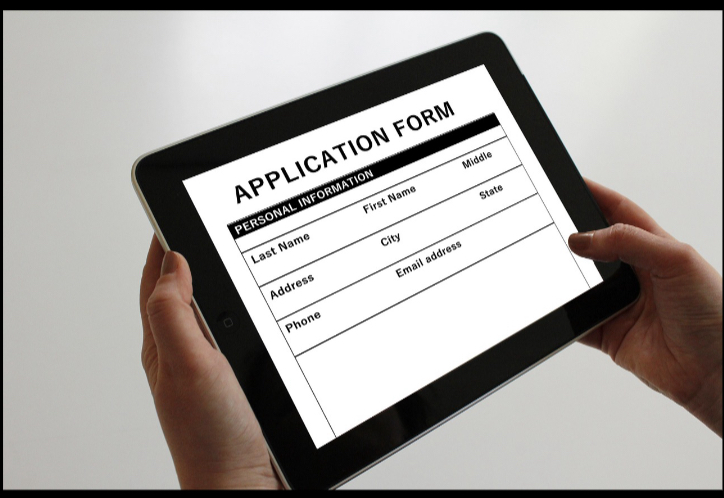
3. Fill Out the Loan Application Form
Depending on your circumstances and requirements, use the dropdown to select your level of study or the course for which you intend to complete the professional internship; thus, fill out your application with all solutions that apply to you.
This includes:
- Your institution’s name, department, and level of study.
- Personal and family income details.
- Tuition fees and upkeep (if any).
4. Upload Documents
This involves getting your documents ready and uploading scanned copies as required:
- Letter of admission.
- ID card (for instance, a student ID or a national ID).
- Proof of income at home or financial information from the guarantor.
- Bank details.
5. Send the Application
Having checked everything for accuracy from the information and documents, send in your application. You will get either an email or text message confirming your receipt.
6. Track Your Application
The status of your application may be tracked upon logging into the Fund.
The updates will include an approval message for disbursement or a request for more information.
7. Disbursement of Loan
After being approved:
- Tuition fees will be paid directly to the institution.
- Maintenance funds, if any, will be transferred to your bank account on a monthly basis.

Tips On How to Get Federal Government Loans in Nigeria
Some collective steps apply in applying for any federal government loan:
- Select Eligible Programs: You need to do some homework and find out which loan programs fit your needs and your eligibility criteria.
- Understand the Requirements: Ensure you go through the submission requirements, such as a business plan, financial statements, registration documents, identification, and security documents, if applicable. For a student loan, you need information about the enrollment.)
- Get the Application Form and Complete It: Obtain the application form from either the administering agency’s website or offices and complete it correctly.
- Assemble the Supporting Documentation: Collect the relevant documents as per instructions and ensure they are legitimate and current.
- Make Submission: Submit your completed application along with the files through the online or physical channels specified.
- Evaluation and Due Diligence: The agency will study your application as well as perform the relevant checks.
- Approval and Disbursement: After approval and issuance of an offer letter with the terms and conditions thereupon, acceptance of which causes disbursement of funds.
Considerations For Federal Government Loans in Nigeria
In borrowing through a federal government loan, some things to consider are:
- Genuine Need: Ensure the amount applied for is needed and will be used for constructive purposes.
- Repayment Capacity: Try to satisfy yourself so that, according to the agreement, you can fulfil the repayment schedule with the lenders.
- Understanding the Terms and Conditions: Read thoroughly through the agreement and understand the terms.
- Viability of Business Plan (in case of business loans): Check that your business plan shows that the investment is capable of returning the capital.
- Risk Implications of the Collateral (if any): Know what risks you are taking by providing collateral.
- Be Patient and Persistent: The process may take some time; therefore, you should be prepared to do so well until it is concluded.
- Avoid Scams: Be wary of fraudulent offers and verify information from official sources.
Frequently Asked Questions About Federal Government Loans in Nigeria
1. How to Get a CBN Loan
- CBN hardly ever lends to an individual or small group. The Central Bank of Nigeria instead sets up many intervention funds and schemes for special sectors like agriculture, SMEs, and manufacturing. To access these funds, you usually are required to:
- Have a registered business/company with the CAC.
- Be a customer of an eligible Participating Financial Institution (PFI). Examples of PFIs are commercial banks, microfinance banks, development finance institutions (like the Bank of Industry and Bank of Agriculture), and financial cooperatives.
- Go to an eligible PFI and express interest in a certain CBN loan scheme.
- The PFI will examine your business for suitability and the intent of the loan.
- If considered favourable by the PFI, the financial institution would submit an application to the CBN for the release of funds on your behalf.
- The CBN shall then consider the application of the PFI and, on approval, disburse the funds to the PFI.
- The PFI, in turn, disburses the loan to you on the basis of the terms and conditions of the particular CBN scheme.
NOTE: You do not apply to the CBN directly; it is through a participating bank/financial institution. Ensure you have a business plan, financial statements, and any other document that may be requested of you by the PFI, as well as the CBN scheme itself.
2. How to Know If a NELFund Loan Has is Approved
For the Nigerian Education Loan Fund (NELFund), the checking of loan status approval proceeds as follows:
- A Notification Is Received: Loan applicants will be sent a notification either approving or disapproving their loan; this is most likely sent by email or SMS to the number given at the application stage.
- Check Your Profile on the Portal: The most authentic way to know if your NELFund loan is approved is by logging into your applicant profile on the official NELFund portal. You should be able to see the status of your application within your account dashboard.
Important points:
- Make sure to create an account and complete the application process through the official NELFund portal.
- Check your email or the portal regularly for updates on application status.
- Upon approval of successful applications, NELFund disbursed funds within 30 days that go directly to your institution for institutional charges, while upkeep, if any, will be paid monthly to you in instalments.
3. How to Apply for a SMEDAN Loan
Generally, the Small and Medium Enterprises Development Agency of Nigeria (SMEDAN) does not grant direct loans to businesses. Instead, it facilitates access to finance for Micro, Small, and Medium Enterprises (MSMEs) through interventions and linkages with financial institutions.
Here are some tips on applying for the SMEDAN loan in Nigeria:
- Register with SMEDAN and obtain a certificate for your business by registering on the official SMEDAN portal. Although not every loan application may require this, in most cases, having the certificate is great for accessing government support.
- Keep Track of SMEDAN’s Programs: Various training programs and schemes are run by SMEDAN; in some, it might provide conditional grants, whereas others might facilitate the granting of soft loans with partner bodies. Watch this space, the “Our Programs” page on the SMEDAN website. For instance, the Conditional Grant Scheme for Micro-Enterprises offers grants to nano businesses under certain conditions.
- Access SMEDAN via Its Credit Information Portal: SMEDAN maintains a credit information portal designed to match businesses with lenders. However, loan applications do not take place via this portal; it simply provides information on credit options.
- Participate in Programs such as SMEDAN/Sterling Bank Loan: SMEDAN works with banks like Sterling Bank to create subsidized loan programs for registered SMEs. Applying for one of these programs usually entails having to apply through the partner bank’s platform (e.g., Banca by Sterling mobile app).
By applying through SMEDAN-Facilitated Programs: The agency may partner with other government agencies (for instance, Bank of Industry via the FGN/BOI MSME Intervention Portal to offer specific loan schemes. The application processes will be specified on the respective portals.
4. Which banks provide loans in Nigeria?
A host of commercial banks and other financial institutions in Nigeria provide various types of loans to individual clients and businesses. These are some prominent banks granting loans:
a. Commercial Banks:
- Access Bank
- Guaranty Trust Bank (GTBank)
- Zenith Bank
- United Bank for Africa (UBA)
- First Bank of Nigeria (FBN)
- Sterling Bank
- Fidelity Bank
- Union Bank
- Stanbic IBTC Bank
- Standard Chartered Bank
- Wema Bank
- Unity Bank
- Keystone Bank
- Titan Trust Bank
- Globus Bank
- And many other national and regional banks.
b. Development Finance Institutions (DFIs):
- Bank of Industry (BOI) – Focuses on industrial and SME financing.
- Bank of Agriculture (BOA) – Focuses on agricultural financing.
- Development Bank of Nigeria (DBN) – Provides wholesale funding to PFIs for on-lending to SMEs.
- Nigerian Export-Import Bank (NEXIM) – Supports export-oriented businesses.
C. Microfinance Banks:
Numerous microfinance banks across Nigeria provide smaller loans to individuals and small businesses, often with less stringent collateral requirements than commercial banks.
5. What Are the Types Of Loans Offered In Nigerian Banks
The types of loans offered by these agencies include:
- Personal Loans: For personal needs such as education, health, or general expenses.
- Business Loans: For working capital, equipment purchase, expansion, and all other business needs.
- SME Loans: Customized financial products for small and medium-sized enterprises.
- Agricultural Loans: For financing agricultural work.
- Mortgage Loans: For acquiring property.
- Auto Loans: For the acquisition of cars.
6. What Are The Steps to APPLY For A Bank Loan in Nigeria
To acquire a bank loan in Nigeria, the following are usually required:
- Have an account with the bank.
- Meet their eligibility requirements, which could include income level (for personal loans), business registration, operational history of the business (business loans), credit fitness, or collateral (where applicable).
- Submit all required documentation such as application forms, identification, proof of income/business financials, and evidence of collateral, if any.
- Best to look out for different banks and their loan products and see what suits you best in your situation.
Final Words
Loans from the Federal Government in Nigeria can be excellent tools for economic and social development.
Knowing the options available to you, processes to follow to apply, and your responsibilities enables individuals and corporations to use them to their advantage, to ensure they meet their goals and to contribute to national development
Always rely on official sources for your information, and apply with due diligence and full awareness of what responsibilities are involved.