After two assiduous years of working at his most massive sculpture yet, Arturo Di Modica with the help of his friends delivered The Charging Bull, an 11 feet-long sculpture that weighed over 7,000 pounds, right beneath the New York City’s 60 feet Christmas Tree in front of the New York Stock Exchange.
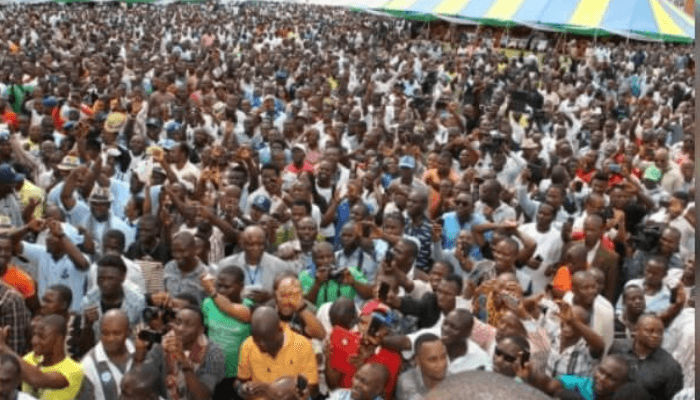
It was December 15, 1989 and the world went up in an excited roar and frenzy about the mystery Christmas present. Enormous crowds of New Yorkers and tourist flooded the Exchange and looked on in awe.
At the end of the day, the sculpture was removed. However, a permanent home was found for it at nearby Bowling Green through the intervention of the then Park’s Commissioner Henry Stern and the Bowling Green Association.
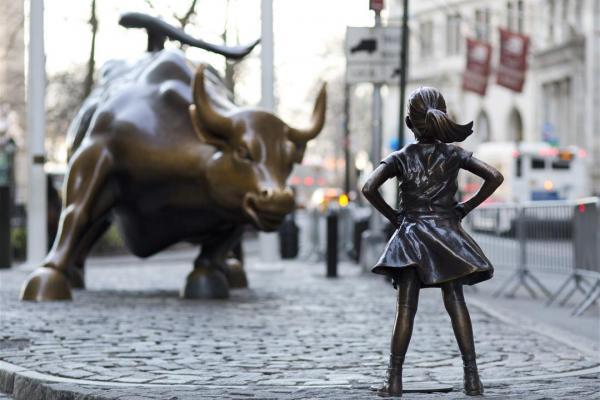
The Charging Bull is an unusual sculpture. In the mass of many shiny bronze pieces welded into one, you see a bull charging in rage; its strength and fury captured in the whip of its tail, the hostility in its eyes and its ready limbs.

According to Di Modica, The Charging Bull, created and installed two years after the crash of the stock market, was a symbol of the strength and resilience of the American people and the American Dream. It alluded to the fact that anyone could be whatever they wanted through sheer doggedness and hard work especially in New York and the rest of the country.
When the Fearless Girl, a four feet-long, 250 pound statue of a little girl in an obstinate hands akimbo stance, picked a spot in the way of and starring down at The Charging Bull at Bowling Green on the 7th of March, 2017 ahead of International Women’s Day, the art scene took on a different meaning that continues to spark conversations about gender parity till date.
The Fearless Girl statue which was created by Visbal Krsiten under the commission of Wall Street firm, State Street Global Advisors was an advertising stunt to celebrate the power of women in leadership and create awareness about the lack of female representation on the boards of the Russell 3000, an index of U.S. firms.
The Charging Bull did not originally have sexist intent, however more than ever, the world is realising that while the human race may be made up of men and women, gender divides and unconscious factions are depriving the world of the capabilities and growth that would be recorded if these divides were bridged or non-existent at all.
So before the Fearless Girl is served a quit notice, the new ‘life-art scene’ at the heart of corporate America will cause some stirring conversations about the level of women involvement in governance and corporate spheres for the rest of the year.

Columnist for the New York Post, Andrea Peyser writes of this newbie, “Fearless Girl is just an excuse for women to sulk.” She further argued that the statue “perpetrates the myth of women’s powerlessness while fomenting self-pity and anti-male sentiments that helps no one.”
For her, the idea propagated by the addition is a fluke given that American women are more likely than others to head corporations, run for president, earn a lot or even choose to be stay-at-home mothers. But is this the reality?
The Inter-organization Network, in a 2016 survey on women in the Russell 3000, reported that 28% of Russell 3000 companies (796) had no women on their boards while 37% of Russell 3000 companies (1050) had only one woman on their boards.
For women in Africa and some other parts of the world, the realities are significantly different and even starker.
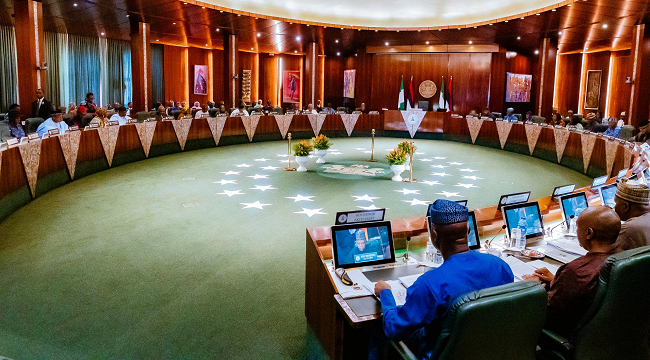
A survey from the National Bureau of Statistics shows that in 2011, only 5.9% female representation was recorded in state assemblies. Out of this number only 9.8% were chairpersons of committees within the assemblies in that year.
In state civil service across the country, only 35.5% women occupied senior positions from 2010 -2013 as against 64.5% men in similar positions. The patterns are repetitive both at the federal levels, ministries, departments and agencies; going up the ladders of politics means scantier female representation.
In corporate Nigeria, only 11.7% of board directors are female. We can list them off the fingers of both hands.
For a country where women constitute roughly half of the population and thus potentially half of the work force, these numbers are infinitesimal.
It is quite easy for these discussions to be dismissed by some as one of the many things wrong with the fight for gender equity, arguing that the problem is non-existent and the fuss is meaningless.
But the statistics speak for themselves. The World Economic Forum says it will take another 170 years to close the gender gap between men and women in pay and employment opportunities alone.
Women are hindered by a lot of things including self-limiting beliefs, cultural bias that include the pressure to put family first, and lack of enabling environment to instances where women are believed to be set-up to fail in certain positions and then paraded as instances where the women-in-leadership option was explored and back-fired woefully. You can cite a few examples in our local context.
The argument is not that women are better managers or better executives than men but that gender balance and equity provides for a stronger workforce that propels a blend of ideas, synergies and perspectives that create dynamic teams.
“Sometimes a symbol helps us become whole,” said New York Mayor, Bill de Blasio at the installation of the Fearless Girl statue.
To be whole requires that we not remain passive, indifferent or antagonistic to the fact that these divides exist and it will take both men and women, personally making changes first in mindsets about cultural expectations and then in action, for the gaps to begin to close.
Women should be allowed to choose their paths in life without being scorned for the choices they make. Women must begin to lose the bias that is associated with women leaders and executives as being less feminine and less womanly than the rest. Those in leadership roles must be celebrated and encouraged to mentor and raise protégés.
Above all, men must realize that the fight is for fairness and enabling platforms irrespective of gender and not for supremacy, and take up active roles in their workplace and local communities to stand for fairness.
We cannot wait 170 years to provide women world over with the enabling platform to lend their voices building sustainable businesses and economies around the world.
Kay Ugwuede
Kay Ugwuede is an Online Content Producer at BusinessDay Media Ltd.