Nigeria is testing the limits on several fronts with its federal budget for 2026 with a spending plan in excess of N58trn, or about $40bn.
The spending plan reveals a deficit of 4.28% of GDP, just a notch below the statutory limit of 5%.
There should be not much to cheer in this budget.
Secondly, with the massive budget outlay President Bola Tinubu failed to say what economic growth target the budget will deliver.

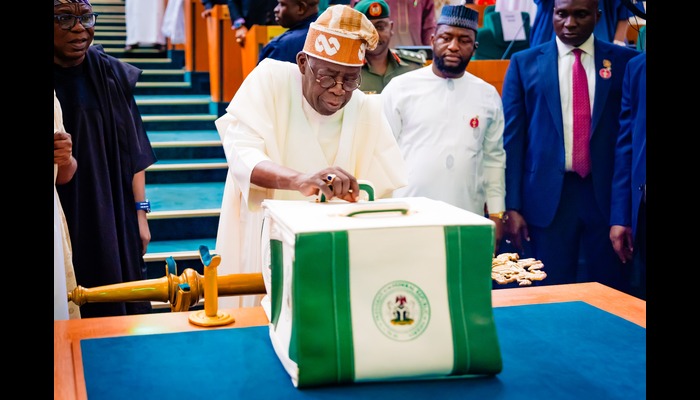
President Bola Tinubu announced the government’s 58.18 trillion naira ($40 billion) spending plan is aimed at consolidating economic reforms and boosting growth.
Read also: Peter Obi condemns “forged laws” as national shame, demands transparency in tax legislation
The deficit will come to roughly 23.85 trillion naira, he told lawmakers on Friday. And worryingly this deficit is near 50% of the entire budget for next year.
“The 2026 budget is anchored on realism, prudence and growth orientation,” Tinubu told lawmakers in Abuja. “We will spend with purpose, manage debt with discipline, and pursue growth that is broad-based, not narrow, and sustainable, not temporary.”
Economists and analysis say they see no realism in a fiscal plan which the government itself hinges on another borrowing binge.
“Even if the market is willing to lend the government that much, Nigeria will discover quickly that it does not have the capacity to borrow at the pace and size the budget lays out,” said one economist.

And it would seem the budget is also based on unrealistic assumptions.
Nigeria budget teams do not seem to want to learn. The budget oil price and production assumptions will fall short in actual performance leaving an even bigger fiscal deficit for the country.
And that is going to expose the people to even harsh economic conditions in the years ahead when repayment must happen. Currently Nigeria spends just over Ntrn monthly on debt servicing.
The proposed budget allocates 15.52 trillion naira to debt servicing and 26.08 trillion naira for capital projects, focusing on sectors such as security, infrastructure, education and health.
In 2025 it is unlikely the government managed to spend anything on capital expenditures.
The budget is based on a projected crude oil price of $64.85 a barrel and includes a target oil output of 1.84 million barrels a day. Oil accounts for around two-thirds of Nigeria’s export income.
The budget also projects an exchange rate of 1,400 naira to the dollar.
Tinubu said inflation had plunged to an annual rate of 14.45% in November from 24.23% in March, while foreign reserves had surged to a seven-year high of $47 billion.
“These outcomes are not accidental. They reflect difficult but deliberate policy choices,” he said.
Read also: What FG’s N54trn 2026 budget means for suffering, disillusioned citizens
Tinubu did not give a growth target but his budget chief on December 3 projected 4.68% growth for 2026, just above the World Bank’s 4.4% forecast.