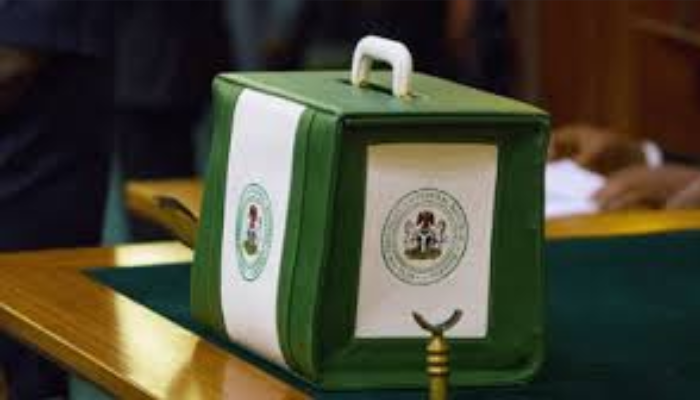
Some financial experts have advised the Federal Government to adopt more realistic revenue assumptions, prudent debt management and innovative asset utilisation to ensure effective appropriation and implementation of the 2026 budget.
The experts, in separate interviews with the News Agency of Nigeria (NAN) in Lagos, said conservative projections, equity-based asset management and higher oil output would strengthen government finances and reduce implementation risks.
Muda Yusuf, Chief Executive Officer of the Centre for the Promotion of Private Enterprise (CPPE), urged the government to rein in optimism when setting revenue targets, warning that overambitious assumptions often undermine budget performance.
“The more conservative we are, the better for us, regarding budgetary appropriation and implementation,” Yusuf said.

Read also: What FG’s N54trn 2026 budget means for suffering, disillusioned citizens
He cautioned against overly optimistic revenue projections, noting that they often create funding gaps, especially when multiple constituency projects are included.
“We should not be too optimistic regarding revenue assumption, because it creates all sorts of challenges, particularly when there are too many constituency projects for implementation,” he said.
Yusuf also stressed the need for stronger debt management, describing Nigeria’s rising debt profile as worrisome.
“Our current debt is becoming worrisome, both local and foreign components, and it’s a given to service them because it’s a first-line charge,” he said.

According to him, heavy debt servicing can tighten fiscal space and limit the government’s ability to fully execute the budget.
“This could result in tight fiscal space and the inability of the government to adequately implement the budget,” Yusuf added.
On alternative funding strategies, Ayo Teriba, Chief Executive Officer of Economic Associates, advocated greater equity participation in government assets to boost revenues.
“Allowing private entities through Foreign Direct Investment (FDI) to manage government productive assets will enhance fiscal revenues and support full budget implementation,” Teriba said.
Read also: FEC approves N58.47trn 2026 budget
He described the approach as a more sustainable option than heavy reliance on international commodity markets, which are vulnerable to shocks.
“This innovative measure to fund the proposed budget is better than relying on international commodity products, which are prone to shocks,” he noted.
Teriba said the model should also be applied to infrastructure development to avoid abandoned or poorly funded projects.
“This will ensure that projects are completed and avoid the errors of the past where projects are often not executed to the latter due to inadequate funding,” he said.
He noted that countries such as Saudi Arabia, Brazil and India were already deploying similar models to meet their infrastructure needs.
Also speaking, Mr Chris Nemedia, a former Director, Research Department, Central Bank of Nigeria (CBN), said boosting crude oil production remained critical to strengthening government revenue.
“The government increasing its production above the 1.8 million barrels per day benchmark could enhance government revenues,” Nemedia said.
“Then executing the budget will not be a challenge for the government,” he added.
Read also: Tinubu prioritises security, health, education in N58.47 trillion 2026 budget
Nemedia also urged the National Assembly to fast-track the budget approval process to allow timely implementation.
NAN reports that President Bola Tinubu on Friday presented the 2026 Appropriation Bill of N58.18 trillion to a joint session of the National Assembly.
The budget, titled “Budget of Consolidation, Renewed Resilience and Shared Prosperity,” projects total revenue of N34.33 trillion and total expenditure of N58.18 trillion, including N15.52 trillion for debt servicing.
The proposal also earmarks N15.25 trillion for recurrent non-debt expenditure and N26.08 trillion for capital expenditure, with a fiscal deficit of N23.85 trillion, representing 4.28 per cent of Gross Domestic Product.