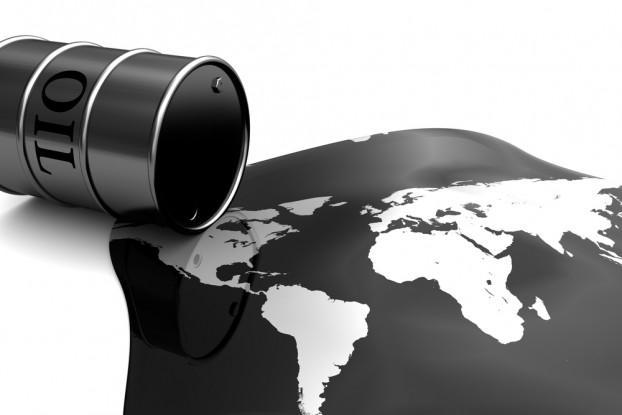
Oil and gas industry operators have advised the Federal Government to start taking steps to mitigate the adverse effects of a possible downward slide in the price of crude oil to about $30 per barrel next year, on account of likely over-supply into the global market. The price of Brent crude, the equivalent of Nigeria’s Bonny light crude, was $46.21 as at yesterday.
This is even as Goldman Sachs, a leading global investment firm has called on Nigeria to lower oil production taxes to remain competitive in a world where shale producers with 50 percent of their projects now short-cycle, marked by lower costs and fallen break-even costs have ramped production by 190 billion barrels in 17 years.
Shale producers are upsetting the global oil market order with speed to market advantages and outstanding production volumes expected to peak at 13 million barrels per day by 2030. Breakeven costs are now at $54from $90 per barrel five years ago according to a Goldman Sachs top projects report, which is an annual review of the world’s top energy assets, obtained by BusinessDay.
The operators say one of the steps that government can take to mitigate against such adverse effects, is to begin to encourage local refining of crude oil, rather than focusing on exports. They further say that if the crude is refined locally, then the country can begin to export the refined products , thereby creating jobs and earning foreign exchange.
The danger of having over-supply in the world market, they say, is that indigenous oil operators may not find market for their crude oil.
Their advise is coming on the heels of the alarm raised by Fereidun Fesharaki, chairman of consultants FGE, at the International Association of Energy Economics (IAEE) conference, that the price of the crude oil could slide to $30 a barrel by early next year and would remain so for two years.
“The price of oil could fall to $30/b next year and stay at that level for about two years”, he said.
Fesharaki however said, new supply would outstrip demand growth in 2018, leading to lower prices, if OPEC fails to deepen its cuts.
Wumi Ilebare,a professor of energy economics, who is also chairman of the local branch of IAEE, told BusinessDay that private investors should be encouraged to establish refineries, which would refine the crude locally and then be sent to the international market. “There should be domestic refineries dedicated primarily to domestic market for energy security purpose and economic output expansion”.
He however said that there is no solution in the short run, beyond export outlet diversification that should target West African countries.
He said government must begin to look at oil not from the revenue generation perspective, but for power to drive the economy. “As I have said oftentimes, you get far more from oil as source of energy to drive the economy, than as a source of direct revenue.
The final destination of crude oil is the refinery, which we have only 445mbbl/d refinery capacity leaves much to be desired. The way to go is to expand Nigeria’s capacity and focus more on export of excess petroleum products, rather than crude”, he said.
Speaking in the same vein, Eddy Wikina, managing director of Treasure Energy Resources, and former external relations of manager of Shell Nigeria Exploration and Production (SNEPCO) said it is better that government starts thinking of refining the crude locally and export to the international market, to make revenue.
Government, he said, should apply resources to industrial growth, to secure the economy and generate employment.
John Uwajumogu, Partner, Transaction Advisory Services, at Ernst & Young, said Nigeria as of yet, has not earned the right to be impervious about shifts in the economic dynamics of the oil market. The potential adverse fallout of a $30 per barrel oil price, underscores the importance of a sound economic diversification strategy.
He said there are no quick fixes; however, the approach to mitigate the impact of such potential decline, would be for the government to immediately start investing in economic enablers that will aid in pushing and sustaining diversification.
This will be a combination of setting up workable institutional frameworks and implementation of real sector investments (i.e. power, roads, education, ICT). One of such things would be refining the crude oil to add more value and then export to get more revenue.
“As noted, the potential adverse fall-out of a significant drop in oil price, highlights the need for an immediate implementation of the government’s diversification strategy. Government at this time needs to refocus to developing other sectors of the economy, while creating the required ambience for investments.
“The focus should be on strengthening existing institutional frameworks, such as ease of doing business, enforcement of contracts, rule of law and investments in economic enablers such as infrastructure, education, industrialisation”,
He said while OPEC is showing determination in its effort to recapture market share from the U.S. shale oil producers, Nigeria’s membership in OPEC limits her autonomy and ability to react, at least in the interim, to shifts in the industry dynamics. Most oil exporting nations, including Nigeria, are trapped in a prisoners’ dilemma at the instance of their membership of the Cartel.
Analysts at Goldman Sachs say low-cost countries may become ever more important for International Oil Companies in the medium term due to huge costs involved in shale production in comparison to declining costs in deepwater production on account of project simplification, cost reduction and cost deflation.
“A number of countries such as Angola and Nigeria have lower costs than US Shale, but show higher breakevens. This is predominantly down to higher rates of tax. Consequently, we think these countries have a lot to gain by lowering taxes to make them cost competitive with shale. We have seen early signs of this, but think there is much further to go should prices remain in the US$50-60 range,” said the report.
Global oil production has seen an extraordinary evolution of the global cost curve as result of the industry’s race to make projects competitive with shale.
“Today even select projects in the Arctic (albeit not ice-covered Arctic) can compete with shale and display breakevens of below US$50/bl. The scale of the shale resource, potentially yielding 20mn b/d of liquid production (and 75% economic at below US$60/bl), dwarfs all else. Even global deepwater projects “only” get to 12.5mn b/d, with only 54% economic at US$50/bl, and 4mn b/d uneconomic at US$60/bl,” said the report.
But this is hardly a new counsel. Dolapo Oni, head of energy research at Eco Bank earlier posted thread of on the internet through the Twitter platform urging the Federal Government to cut down royalty rates and taxes to attract investments in a low oil price environment.
Goldman Sachs also highlighted the imperative of fiscal reform calling it a key for countries to remain competitive, as investment shifts towards short-cycle production, an area shale producers have a competitive advantage.
“The shale revolution has altered the capex make-up of the oil & gas industry. We have seen short-cycle capex (up to two years from Final Investment Decision (FID) to first oil, and unconventional) double since 2010, while long-cycle capex has risen only 40% in the same timeframe.
“With the oil price increases, we have seen a huge rise in rig usage and activity is recovering at a rate which may push the market into oversupply in 2018.”
Goldman Sachs analysts expect investments towards unconventional projects to increase from 10% of global capex to around 35% based on their analysis of top projects in the industry.
However, Nigerian oil industry experts say it is important for the government to focus on incentives that will attract investment dollars into oil production.
“In Ghana, the field was given free. They tell you to commit to a minimum size work of certain numbers of well, unlike ours that we typically attach a signature bonus to licensing rounds, they don’t do that,” said Abiodun Adesanya, president of the National Association of Petroleum Explorationists (NAPE) in an interview.
Nigeria currently plans to amend royalty regimes of deep offshore and inland basin Production Sharing Contracts to for terrains beyond 1,000 metres, from zero percent to 3 percent.
Olusola Bello and Isaac Anyaogu