…as stakeholders urge investments in renewable energy to empower women in agriculture and mining
Stakeholders at the National Dialogue on Increasing Renewable Energy Investments for the Empowerment of Women in Sustainable Agriculture and Lithium Mining in West Africa have called for urgent and gender-responsive investments in renewable energy to bridge inequality gaps and boost productivity across rural communities.
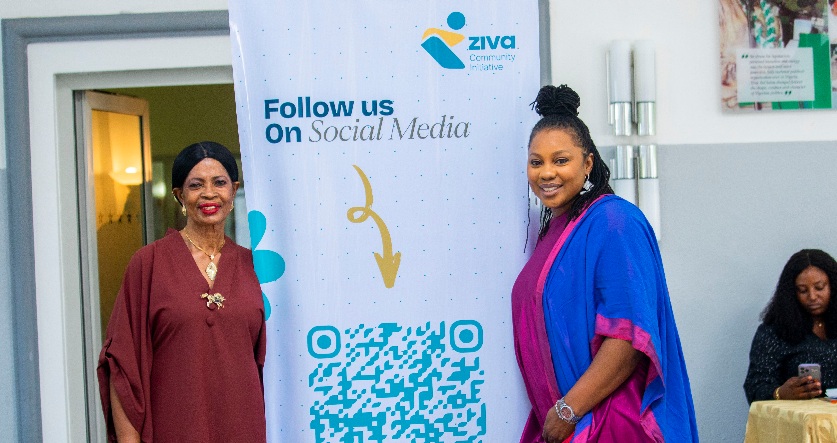
Speaking at the event, held as part of activities supporting Nigeria’s clean energy transition agenda in Abuja on Wednesday, Emily Offodile, founding director, Ziva Community Initiative, represented by Sam Pam, the program manager, described the dialogue as a vital step toward transforming how women participate in the energy, agriculture, and mining sectors.
Offodili noted that while the mining and energy industries are key to national development, women—especially those in rural and artisanal mining communities—remain underrepresented and undervalued.

“Women perform some of the most strenuous manual tasks such as sorting, grinding, washing and packing, yet their work is often invisible,” she said.
She explained that the initiative seeks to tackle structural and situational barriers limiting women’s participation by promoting renewable energy as a transformative tool for empowerment.
Read also: Nigeria secures €21m German funding to accelerate clean energy transition
“Through this project, women are being equipped with knowledge, skills, and linkages to access clean energy, improve productivity, and build sustainable livelihoods,” Offodili added.
The dialogue, organised by Ziva Community Initiative, in partnership with CGE Africa, NOPRA Ghana and funded by the Africa Centre for Energy Policy aims to explore ways to scale renewable energy investments, advance women’s inclusion in sustainable agriculture, and promote responsible mining across West Africa.

Delivering the keynote address, Beatrice Eyo, Country Director of UN Women in Nigeria, represented by Patience Ekechukwu, Programme Officer for Women’s Economic Empowerment at UN Women, commended the organisers for convening the forum at a pivotal time when the region faces overlapping crises of energy insecurity, climate change, and widening inequality.
She cautioned that while nations race toward net-zero carbon economies, the pace and pattern of transition risk deepening existing gender inequalities. “Energy is not gender-neutral,” she said. “It is a powerful driver of development and empowerment when access is inclusive.”
Citing data from national surveys, she observed that about 30 million Nigerians still lack access to electricity, with rural women disproportionately affected.
“Women spend up to five hours daily collecting firewood or other biomass for cooking, leading to health and safety risks. Over 98,000 deaths annually are linked to indoor air pollution — mostly among women and children,” she said.
The UN Women official emphasised that unreliable energy access continues to suppress women’s productivity, even though they produce over 60 percent of Nigeria’s food and own 41 percent of micro-enterprises.
Without deliberate policy interventions, she warned, the renewable energy transition could perpetuate inequality instead of reducing it.
She outlined four priority areas for action: integrating gender-responsive frameworks into energy and climate policies, improving access to finance for women-led green enterprises, strengthening data systems for evidence-based planning, and building women’s capacity in science, technology, and innovation.
“In Nigeria, UN Women is already supporting over 2,000 rural women across five states with training and materials for adopting biogas technology,” she said.
“These interventions prove that women are not just victims of energy poverty, but innovators driving sustainable solutions.”
Participants agreed that achieving a “just and inclusive energy transition” requires coordinated action by governments, private investors, and development partners to ensure women are central to energy policy design, implementation, and benefit-sharing.
As the dialogue concluded, speakers reaffirmed that the path to sustainable development must be both green and just — ensuring that women in agriculture and mining are not left behind in West Africa’s renewable energy revolution.
The dialogue was further enriched with a presentation titled Leveraging Renewable Energy for Women’s Empowerment in Agriculture and Mining by Shekwonyadu Iyakwari of the Department of Geology, Federal University of Lafiya and a panel discussion as well as panel discussion with panelists drawn from the government, Women in Mining and other non governmental organisations.