Nigeria’s current model of funding its public university system is proving unsustainable because the disbursement of funds is not based on performance and quality of graduates, experts say.
People familiar with the matter say in the absence of any performance-based budget allocation mechanism, there are no particular managerial and financial incentives to engender competition among public universities or to encourage them to manage their performance differently. Students suffer the consequences of this funding model.
Speaking at the Third Gamaliel & Susan Foundation Lecture in Lagos, September 2016, Oby Ezekwesili, former minister of education said “when I was the Minister of Education, we discovered that the more the funding for education, the less the success rate by students. That shows the issue was not funding.”
“It is about time we started looking at students as customers. Rather than subsidise students tuition by funding universities a new model which is based on per capita funding will give students the power to reject poor service from universities” said Debo Adeyewa, vice chancellor of Redeemer’s University.

Students’ loan scheme, which puts purchasing power in the hands of students comes with responsibility and tends to make students take their studies seriously.
“Such schemes exist in Ghana, Botswana, Kenya, Rwanda, Tanzania, Uganda, Zambia and several other African countries. The loan scheme has significantly bolstered admission into higher education. More importantly, the scheme has been potent in improving funding to higher education since students pay fees from loans they secure and the institutions are happy for it” said Peter Okebukola, former executive secretary of the National Universities Commission (NUC) in an emailed statement.
Okebukola added, “you may wish to know that the scheme existed in the past in Nigeria and had to be wound up since repayment rate was pitifully low. Beneficiaries evaded re-payment claiming it is part of their share of the national cake. I am not sure that this posture among our students has changed”.
However, with the emergence of Bank Verification Number it would be easier to trace beneficiaries across banks and defaulters would have their credit rating downgraded.
Adamu Adamu, the minister of education had in 2016 drawn attention to the Federal Government’s plan to increase tuition fees in all federal universities to about N45, 000. Students previously paid between N9, 000 and N25, 000 as tuition fees. This move by the FG indicated it had realised the necessity to review its funding model.

Stakeholders have continued raise concerns about the ability of the Federal Government to provide quality university education at a subsidised rate, given that the current funding model was a product of the oil boom years.
It costs approximately N270 000 on the average, per annum to train a science student in some federal universities in Nigeria. It costs over N800 000 on averages, per annum, to train a medical student, BusinessDay investigation has shown.
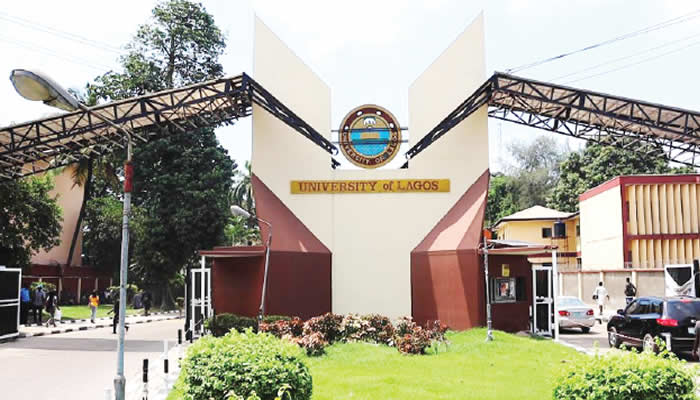
Yet students at the University of Lagos, a federal university, pay for instance N14 000 for Arts faculty and N15 500 for science, including medical students, as tuition fees.
“This is telling on the quality of the products of our federal institutions. In some federal universities, you find a lecturer teaching a class of 400-500 three or four courses in a semester. What quality of research goes into the work, and you expect quality education?
At the MIT, two lecturers may handle a course with an army of sometimes, 10 teaching assistants. The quality you get from such a system would definitely be outstanding. It comes down to availability of funds,” explained Victor Odumuyiwa, lecturer, department of computer sciences, at the University of Lagos.
Some experts say raising the fees may not be enough because quality education costs money. For instance, research and scientific experiments require state of the art facilities that most universities lack.
Ike Mowete, professor of Electrical and Electronics engineering at the University of Lagos told BusinessDay that it is difficult to subsidise quality education.
“Tertiary education is scarcely ‘free’ in any country. See, parents and students alike need to understand this, the days of free this and free that, are gone. Sure, my generation benefited from the oil boom era but that era is gone” Mowete contended.
Mowete explained further that the Tertiary Education Fund (TETFund) may need to be redefined because there is a lot of idle cash lying fallow there that could be used to finance scholarships and grants for low income students, should the FG opt for some form of deregulation of tuition fees.
Oladipo Babatunde, a postgraduate student at the University of Lagos, contends that federal universities should be given greater autonomy and allowed to compete among themselves.
“I am well aware of the fact that this calls for a great deal of thinking outside the box, or even without a box to come up with an effective model. This would induce pain in the short-run, but this is surely the way to go,” Oladipo said.
STEPHEN ONYEKWELU