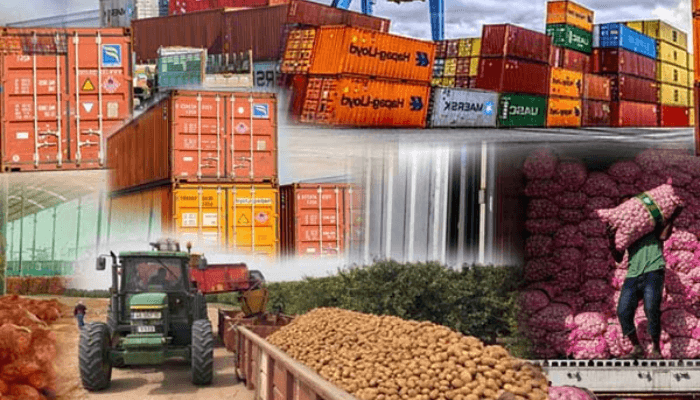
…applaud NETC launch
The launch of the National Export Trading Company (NETC) by the Federal Government has been widely commended by trade experts and industry stakeholders, who say the initiative holds immense potentials to boost Nigeria’s non-oil exports and foreign exchange earnings.
However, they insist that its success will require coordinated investments in logistics, storage, financing and policy implementation to truly deliver on its promise.
Unveiled at the inaugural West African Economic Summit (WAES) Deal Room in Abuja, the NETC is an initiative of the Federal Ministry of Industry, Trade and Investment (FMITI) in collaboration with the Nigeria Commodity Exchange (NCX), the Africa Trade and Distribution Company (ATDC), and supported by the African Export-Import Bank (Afreximbank) through the Fund for Export Development in Africa (FEDA).

The platform is designed to address persistent gaps in Nigeria’s export value chain, particularly in warehousing, logistics, working capital support, and market access for micro, small and medium enterprises (MSMEs), especially in the agricultural and agro-industrial sectors.
Read also: Budget extensions and other loathsome practices and processes for export
According to the Nigerian Export Promotion Council (NEPC), Nigeria’s non-oil export in the first quarter of 2025, recorded a 24.75% increase compared to the same period in 2024, as non-oil products valued at US$1.791 billion were exported between January and March 2025, up from US$1.436 billion in the first quarter of 2024.
The range of products exported included manufactured goods, semi-processed goods, industrial extracts, and agricultural commodities.
Cocoa Beans alone accounted for 45.02% of total non-oil exports, maintaining its lead position, while UreaFertiliser ranked second with 19.32%, and Cashew Nuts third with 5.81%.

Despite the sector’s continued growth trajectory, they stressed the urgent need for proper infrastructure, policy alignment, and targeted incentives to ensure its long-term success and boost foreign exchange earnings through the export of finished goods that meet global standards.
Nigeria also faces a significant problem with post-harvest losses, estimated at a staggering N3.5 trillion annually. These losses, encompassing both quantity and quality reductions from harvest to consumption, significantly impact food security and farmers’ incomes. Key factors contributing to these losses include inadequate storage facilities, poor transportation infrastructure, lack of access to markets, and insufficient funding.
Speaking on the initiative, Charles Sanni, Managing Director and CEO of Cowry Treasurers Limited, welcomed the development as a timely and much-needed step towards building a sustainable export ecosystem. He, however, cautioned that the NETC’s success would depend largely on the quality of infrastructure, coordination, and support systems in place.
“It’s a good thing to have a platform that facilitates price discovery and fair market access for producers across the country, But without proper logistics, warehousing, and transportation systems, it will just be another paper-trading mechanism, disconnected from the realities on ground,” Sanni said.
He highlighted the importance of warehousing infrastructure that ensures commodity quality and integrity, calling for investment in efficient storage facilities, particularly in rural areas.
According to him, Nigeria’s poor road and rail networks could also significantly hamper the movement of goods to centralised aggregation points, driving up costs and reducing competitiveness.
“Transportation remains a major cost driver. If farmers in Zamfara or Osogbo have to bring their goods to Lagos without efficient logistics, the price gap will discourage participation and undermine the platform’s objective,” he noted.
Sanni further pointed out that for the NETC to function effectively, the government must create deliberate incentives for farmers and out-growers. These include access to affordable credit, insurance, and inputs, which would allow producers to scale up and meet both local and export demands without causing supply shortages at home.
He warned that unbalanced export focus without domestic supply management could fuel inflation, as seen in past instances where local consumption was undermined by unregulated export surges.
“If we don’t produce enough to meet local and external demand simultaneously, we risk creating food insecurity and market volatility, The government must identify export-viable commodities with surplus supply and build strategic frameworks around them,” Sanni explained
Despite the challenges, stakeholders agree that the NETC has strong potential to reduce post-harvest losses, increase producer earnings, and attract foreign exchange through non-oil commodity exports.
“By aggregating commodities, improving quality control, and connecting producers to international markets, the NETC can significantly enhance Nigeria’s export capacity and competitiveness,” Sanni added.
He also emphasised the role of digital tools and mobile connectivity in empowering smallholder farmers with access to real-time pricing and market intelligence, helping bridge the information gap that has long disadvantaged rural producers.