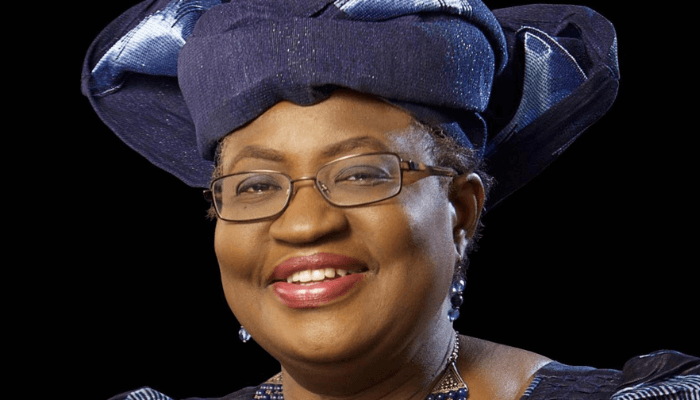
Nairaxi, Nigeria’s tech-driven mobility company, has thrown its weight behind call by Ngozi Okonjo-Iweala, Director-General of the World Trade Organization (WTO), calling on governments to strengthen social safety nets that protect vulnerable populations from economic shocks.
In a statement released on Tuesday, Kingsley Eze, Nairaxi’s Co-Founder and Chief Executive Officer, argued that social protection policies must include technology-driven transport subsidies to ease the burden of rising living costs on ordinary Nigerians.
Okonjo-Iweala, a former Nigerian finance minister, has consistently urged governments to strengthen safety nets, warning that millions of poor households continue to bear the brunt of economic reforms, soaring inflation, and global uncertainties.
Read also: Tinubu economic reforms will unveil new opportunities – UK High Commissioner

Speaking during an appearance on Arise News Business Week in Abuja, Eze described transport subsidies as a “low-hanging fruit” that could deliver immediate relief to millions of Nigerians if properly digitised.
“With inflation at record highs and transport costs biting hard, digitised transit subsidies should not remain an idea on paper,” he said.
Citing research by Nairaxi, Eze noted that transport expenses consume as much as 40 percent of daily earnings for low- and middle-income families, reducing access to jobs, education, and healthcare.
He stressed that while debates often centre on food and energy subsidies, affordable transportation is equally critical for poverty reduction and economic inclusion.
Eze also criticised Nigeria’s history of subsidy implementation, pointing to inefficiency, corruption, and the diversion of billions of naira in public funds away from intended beneficiaries.

He maintained that technology offers the solution, allowing subsidies to be delivered directly to commuters through digital platforms such as smart cards, mobile wallets, and e-ticketing systems.
“Technology gives us visibility and accountability. Every naira spent can be traced to an actual commuter, making the subsidy system efficient and trusted,” he said.
The Nairaxi boss highlighted examples from Brazil, India, and Kenya, where digital platforms have enabled governments to reduce leakages in subsidy schemes while improving service delivery.
He argued that Nigeria could achieve similar results through strong collaboration between the government and private operators.
According to him, while government should provide policy direction and financing, private firms like Nairaxi can contribute digital infrastructure, fleet management, and operational expertise necessary to scale such interventions.
Read also: Wale Edun and the burden of leading Nigeria’s economic recovery
“This is where Public-Private Partnerships become critical. The government cannot shoulder this responsibility alone,” Eze said.
Beyond affordability, Nairaxi stressed that reliable and technology-enabled transport systems have broader social and economic benefits, from boosting worker productivity to improving school attendance and freeing up household income for food, healthcare, and other essentials.
“Technology-enabled subsidies are not only about reducing transport costs. They are about restoring dignity, expanding opportunity, and giving struggling Nigerians a fair chance to participate in the economy,” Eze concluded.