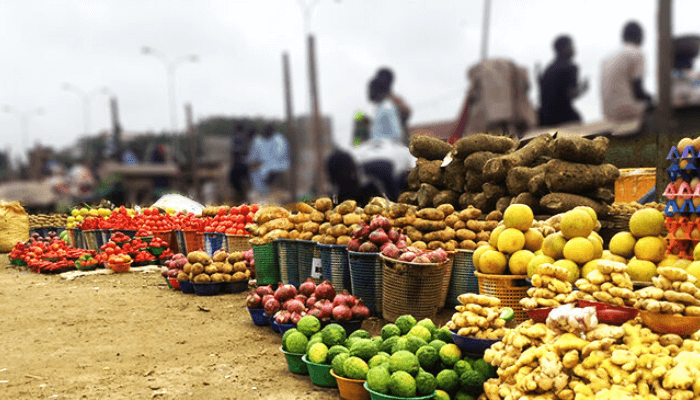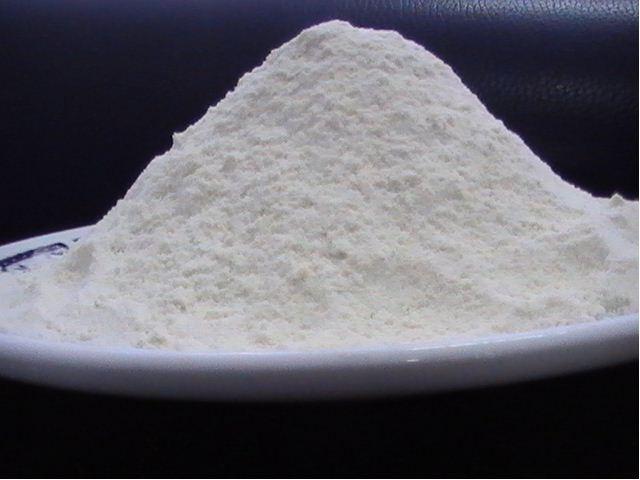
More broadly, starch essentially consists the granules separated from matured grains of corn, wheat, rice or from tubers of potato and cassava. The commonest of these types in Africa in general and Nigeria in particular are the starches sourced from cassava and corn.
The starches obtained from these different botanical sources however do not have identical properties with respect to their use for specific purposes and therefore may not be generally substitutable unless performance equivalence has been established. There are two types of starch namely: Food grade starch and the industrial grade.
The food grade is generally used by pharmaceutical and food industries while the industrial grade is used by the textile and adhesive industries. Other areas of usage of starch are the paper mills, the battery industries, the confectioneries and laundry houses.
Starch can be further processed into other derivatives such as dextrin, dextrose, glucose, lactose and sucrose.

Production of starch is technically feasible because raw materials are readily available; the production technology is simple and can be mastered with ease. Starch production is also economically viable, as there is enough profit per tonne of product produced.
Establishing the project will create market for farm products such as cassava and corn. Rural and urban jobs shall also be created.
Technical information
Starch is usually extracted from either corn or cassava and refined to a required level of quality with the objective of separating the soluble and insoluble impurities, thereby improving the viscosity and gelatinisation properties, which make it acceptable to any domestic or industrial applications. A mesh level of between 17 and 35 micron characterises the physical outlook of starch.
The production process involves disintegration (grinding), centrifugal sieving, slurry sedimentation, dewatering, drying, milling and packaging.

To establish the project, the following activities are necessary- sourcing of suitable accommodation, procurement and installation of plant and machinery, recruitment of appropriate personnel, sourcing of raw materials and commercial take off.
Financial implication
Pre Investment N100, 000
Accommodation N3, 000,000
Plant and Machinery N5, 000,000
Utilities & Working
Capital : N2, 000,000
Total N10, 100,000
Profitability
The following profitability indicators have been obtained. Annual Turnover: N84, 000, 0000. The annual profit after tax is N35.6 million.
% return on sales is above 40 percent.
% return on investment is above 500 percent.
Author’s contact: olumakindeoni2@yahoo.com, 08023058045
Olumakinde Oni