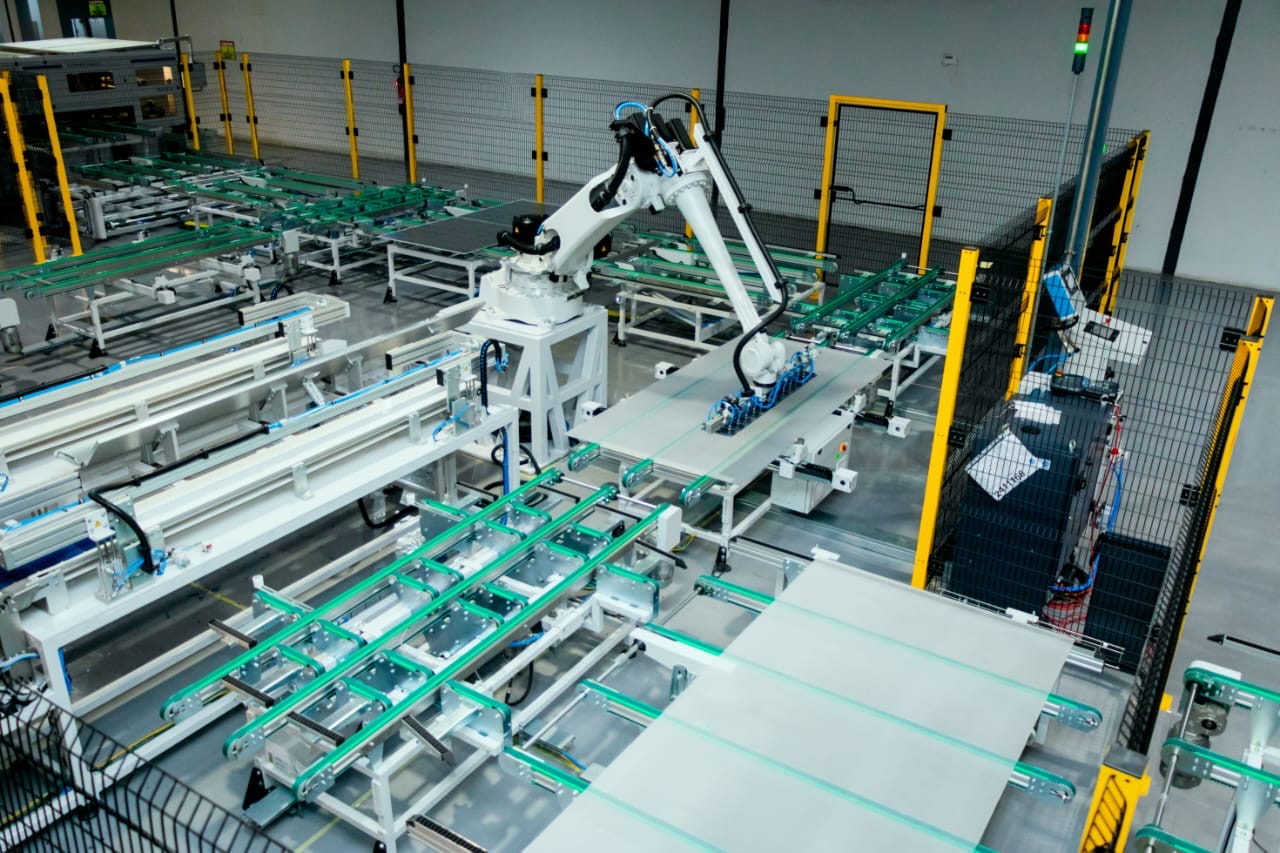
Green factories are more efficient and more profitable. Here’s how Nigerian manufacturers can join the movement.
In the past, environmental sustainability and profitability were often viewed as opposing goals; while one is driven by conscience, the other is driven by the bottom line. But today, a quiet revolution is underway in global manufacturing. Companies are discovering that integrating Environmental, Social, and Governance (ESG) principles, especially through cleaner production, does not just protect the planet; it enhances efficiency, reduces costs, attracts investment, and secures long-term competitiveness.
For Nigeria’s manufacturing sector, which contributes nearly 10 percent to GDP and employs millions, ESG is no longer a “nice-to-have” concept; it is a business imperative. With the African Continental Free Trade Area (AfCFTA) opening new markets and global buyers demanding sustainable value chains, local manufacturers face a defining choice: adapt or be left behind.
The case for cleaner production
Cleaner production means rethinking how goods are made by reducing waste, energy use, emissions, and resource consumption while improving productivity and quality. It is about doing more with less. This shift begins from design and sourcing and extends through the entire production cycle to packaging and distribution.

For example, an SME in Lagos that switched to energy-efficient motors and introduced waste heat recovery reduced electricity consumption by 25 percent within a year, which translated directly to cost savings. Another plastics manufacturer in Ogun State that began recycling its production scraps cut raw material costs by 15 percent and built a greener brand image that attracted export enquiries.
These examples show that cleaner production is not just an environmental goal but also an efficiency strategy. In a country where energy accounts for up to 40% of manufacturing costs, any intervention that lowers consumption directly improves profitability.
ESG: The framework for sustainable growth
At its core, ESG offers a practical roadmap for embedding sustainability into business strategy.
Environmental (E) minimises a factory’s footprint, its emissions, waste, energy, and water use.
Social (S) emphasises worker safety, employee welfare, and community engagement.

Governance (G) ensures ethical leadership, transparency, and accountability.
For manufacturers, strong ESG performance can unlock green financing, attract global investors, and meet rising expectations of conscious consumers. Development finance institutions now channel funds toward companies with measurable sustainability outcomes. The African Development Bank, for instance, has earmarked billions for green industrialisation and clean energy transitions. Nigerian firms aligning with ESG frameworks will be better positioned to tap into this wave of financing.
Why green means profit
Adopting ESG-aligned manufacturing practices yields tangible financial benefits. Cleaner production often leads to:
Lower operating costs: Efficient resource use reduces utility bills and material waste.
Higher productivity: Better processes and engaged workers mean fewer errors and downtime.
Market expansion: Export markets increasingly demand ESG compliance.
Investor confidence: Transparent governance attracts long-term capital.
Brand value: Sustainability strengthens reputation and customer loyalty.
These are not theoretical gains; they are measurable business outcomes. In 2023, Unilever’s “Sustainable Living” brands accounted for over 60% of its global growth. Locally, Nigerian Breweries’ investments in renewable energy and waste reduction saved millions in operating expenses while improving ESG ratings.
Local realities and challenges
Still, the Nigerian manufacturing landscape faces undeniable hurdles, which include erratic power supply, outdated equipment, limited financing, and weak enforcement of environmental standards. For many SMEs, sustainability may seem costly or abstract when daily survival is the priority.
However, small, incremental steps can drive meaningful change. Adopting ISO 14001 environmental management systems, conducting energy audits, segregating waste, and training workers on efficiency are low-cost entry points. Industry associations can also collaborate to share clean technologies and best practices, reducing the cost of innovation.
Government incentives, such as tax rebates for renewable energy adoption, import duty waivers for eco-friendly equipment, and support for green certification, can further accelerate this shift. Policymakers play a crucial role in creating an enabling environment where sustainability aligns naturally with competitiveness.
The future is circular.
Beyond cleaner production, the future of manufacturing lies in circularity, where waste becomes input for new production. This model minimises dependency on virgin resources, cuts emissions, and opens new revenue streams from by-products. Nigeria’s growing recycling sector is already showing what’s possible. From plastic upcycling in Lagos to bioenergy generation from agricultural residues in Kwara, the possibilities are endless.
The circular economy mindset pushes manufacturers to think beyond the factory gate and to consider product lifecycles, material recyclability, and the social value embedded in their supply chains. It is the natural evolution of ESG in action.
Seizing the green advantage
For Nigerian manufacturers, the message is clear: sustainability is not a cost centre; it is a competitiveness strategy. Cleaner production is not charity; it is smart business. By integrating ESG principles into manufacturing, companies can reduce costs, access new markets, attract green financing, and build brands that resonate globally.
As global supply chains grow more selective, the manufacturers who thrive will be those who can prove that their growth is both profitable and responsible. The choice before Nigeria’s industrial leaders is whether to wait for regulation to force the change or to lead the looming change.
Cleaner production is the new frontier of industrial efficiency. And those who embrace it early will find that greener factories are, indeed, more profitable ones.
Sarah Esangbedo Ajose-Adeogun is the Founder and Managing Partner at Teasoo Consulting Limited, a foremost ESG consulting firm. She is a former Community Content Manager at Shell Petroleum Development Company and served as the Special Adviser on Strategy, Policy, Projects, and Performance Management to the Government of Edo State. She is also the host of the #SarahSpeaks podcast on YouTube @WinningBigWithSarah, where she shares insights on leadership, strategy, and sustainable growth.