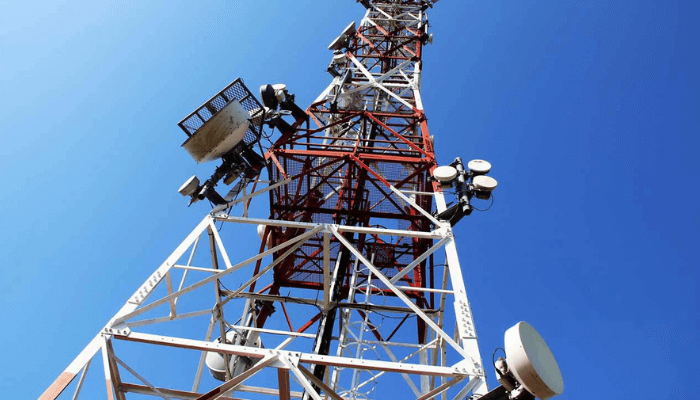
Telecoms equipment vendor, Ericsson has identified the dearth of fixed-line infrastructure as the fundamental drawback hindering access to efficient and affordable broadband internet services in Nigeria.
Kamar Abass, country manager, Ericsson Nigeria, made this remark at a press briefing in Lagos, weekend, during the visit of the new head of region, Ericsson Sub-Saharan Africa, Frank Jejdling. Kamar listed some critical strategies that government could adopt to stimulate investment in fibre infrastructure deployment. Fixed-line infrastructure, according to him was enormously expensive to deploy.
“Government should try to identify and maintain a public database of where the fibre is today and where it is planned in the short to medium term so that investors and indeed consumers can understand where there is supply and where there is deficit. That is the first thing we will encourage government to think about. Secondly, there is an extremely convoluted process of securing rights of way to embedded fibre in the ground”, he added. The Ericsson boss, however, called for the establishment of a unified authority which cuts across local and national interest to encourage investment in fibre deployment.
Kamar noted that there is uncertainty arising in the industry about the need for government to build a national broadband network to facilitate access to fibre to move available bandwidth capacity on the country’s shores to the hinterland. Jejdling said Nigeria played a critical role in Ericsson’s global business strategy. He pointed out that the firm’s commitment to Africa remains unchanged, adding that Ericsson work assiduously towards achieving a connected society in Africa. “We are working with the International Telecommunications Union (ITU) to improve adoption of ICTs in Africa.”

Jejdling, however, stressed the need for countries in Africa to improve access to effective and reasonably priced broadband services, further adding that studies have identified a correlation between broadband and economic growth. “A 10 percent increase in broadband penetration increases the Gross Domestic Product (GDP) by 1.3 percent”, he said. Commenting on Ericsson’s role in Nigeria’s gradual transition to a cashless environment, Kamar said one of the fundamental problems with electronic transactions is the absence of an omnipresent network which can seamlessly carry the enormous data traffic.
“We are working with the telecoms operators to help make those networks more resilient. The operators have to make the investments.
BEN UZOR JR