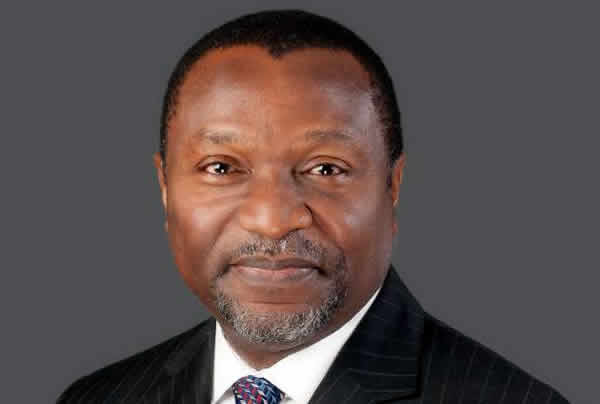
The Minister of Budget and National Planning, Sen. Udoma Udo Udoma says the Economic Recovery and Growth Plan (ERGP) is inclusive as the Federal Government will partner with state governments in its implementation.
Udoma, who stated this while fielding questions from journalists at a news conference on the ERGP on Tuesday, in Abuja said that it was not a top bottom plan. He said that the ERGP took into considering the role of states, constituencies and local government as a federation with 36 states and 774 local government areas.
“We consulted with the states and they have a major role to play, 50 per cent of this economy is at the state level and many of the things we want to do, for instance agriculture is at the state level.
“The ease of doing business, most of the permits are given at the state level so we are working very closely with the state governments and what they will be doing is based on this plan.
“They will go down to each state and develop their own plans which will be aligned with this plan. “Some of them already have their plan, so they just need to adjust it a bit so that it is seamless.
“So this plan, the plans of the states will be working collaboratively and closely together,’’ he said.
Udoma said that the Chairman of the Governors Forum had assured of the states’ commitment and pledged to partner with the Federal Government on the implementation.
“So every time we meet at the National Economic Council with the governors, we discuss the plan and we work together to try to see how we can make sure that there is extensive collaboration between the states and the Federal Government.
“So, the states are part of this plan and they are very important part of the plan,’’ he said.
On the passage of 2017 budget, he said that the ministry was working closely with the National Assembly to ensure its early passage.
“As regards transportation, whatever needs to be done to provide improved transportation, whether marine, the ports, the rail, roads is all part of our objective, we want massive improvement in transportation.’’
Udoma said the plan provided incentives for the private sector to invest in key sectors.
“What drive the private sector are incentives and profit, so whatever you structure, you must show people a part to make some money from it. Once you show people a part, they will invest.
“So our part as government is where there are constrains, we tackle them, where there are bottle necks we remove them and we want to sit down with the private sector and show them that there are opportunities in this economy.’’
He said the plan would be an opportunity for the private sector to invest in the economy.
“It is actually an opportunity for the private sector, where there are shortages, it is an opportunity for the private sector, where there are deficiencies, it is an opportunity for the private sector.
“So, we want to show them that they should see this as an opportunity for them to invest and because there is so much demand for everything, we will support them.
“If you go into agriculture in a big way, you will make money because there is a lot of demand for agriculture produce.
“If you go into textiles, you will make money, provided you are efficient because there is demand for it.’’
According to him, the bottom line of the plan is to make Nigeria competitive.
Udoma said no amount of barriers that you build would stop goods from coming in if yours were much more expensive, so we have to bring down the price of things in Nigeria relative to imported things.
“And we have to take up the quality of Nigerian goods to be of international standards.
“Once you can get goods of international standards at a reasonable price, Nigerians will buy, because most people like the best possible things at the lowest possible price.
“And that is what we want to do, we want to work with the private sector to improve the competiveness of Nigerian produce,’’ he said.
The News Agency of Nigeria (NAN) reports that the ERGP projected that Nigeria will make significant progress to achieve structural economic change with a more diversified and inclusive economy in five key areas by 2020.
The key areas are stable macro-economic environment, agricultural transformation, food security, sufficiency in energy and improved transportation infrastructure. (NAN)