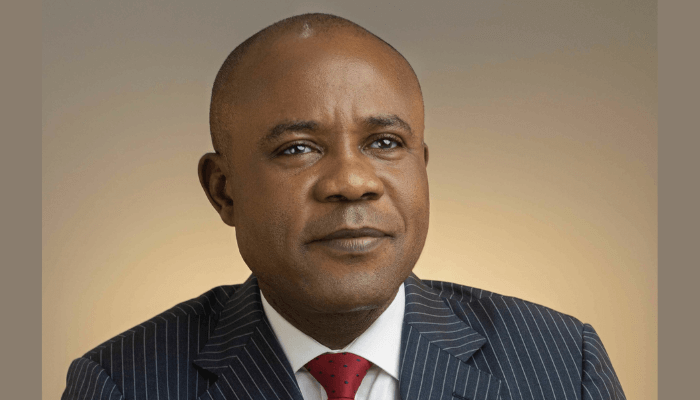
As Enugu State advances into 2026, what stands out is not merely a set of fiscal priorities, but a clearly articulated development philosophy under the administration of Governor Peter Ndubuisi Mbah—one that places functionality, speed, and measurable outcomes at the centre of governance. Having used the early years of the administration, particularly 2025, to stabilise institutions, restore fiscal discipline, revive abandoned assets, and rebuild public confidence, the government is now firmly focused on what Enugu must become in real terms: a state where infrastructure works, public services deliver value, private capital finds comfort, and citizens experience development in their daily lives. The year 2026 is therefore envisioned as a defining phase in which earlier reforms mature into visible transformation, positioning Enugu not just ahead of its peers, but as a reference point for what subnational governance in Nigeria—and indeed Africa—can achieve when leadership is intentional and execution-driven.
Central to this vision is the determination to make infrastructure in Enugu fully usable and economically productive, rather than symbolic or politically motivated. Unlike many states where urban roads are constructed without drainage, lighting, or pedestrian consideration—leading to rapid deterioration—Enugu’s approach integrates road paving with stormwater management, street lighting, walkways, and traffic control systems, ensuring durability, safety, and efficiency. This integrated urban infrastructure model compares favourably with practices in only a handful of Nigerian states and mirrors global best standards, allowing Enugu’s cities to function as cohesive economic spaces rather than fragmented settlements. The completion and full activation of the Enugu International Airport further elevate the state’s competitiveness, especially when compared to states that rely entirely on distant regional airports or underutilised airstrips. By pairing airport operations with structured private-sector partnerships and a growing fleet, Enugu is deliberately positioning itself as a logistics, tourism, and investment gateway for the South-East and beyond, reducing travel friction for investors and accelerating the flow of goods, people, and ideas.
Equally transformative and yet compelling is the administration’s resolve to deliver basic services at a level that many subnational governments struggle to achieve consistently. The expansion of water infrastructure to reach households directly, rather than stopping at bulk supply points, places Enugu ahead of several states where access to clean water remains largely communal and unreliable. When combined with renewable-powered energy systems supporting hospitals, schools, industrial zones, and water facilities, Enugu’s development strategy demonstrates a level of coordination rarely seen at the subnational level. Rural access roads linking farm estates, markets, and industrial clusters further distinguish Enugu’s model, as they ensure that growth is spatially inclusive.
While many states concentrate investment almost exclusively in capital cities, Enugu’s emphasis on rural connectivity integrates agriculture and industry into a single value chain, reducing inequality and stimulating statewide economic participation.

Mobility within Enugu’s urban centres is also being redefined in ways that set new benchmarks. Rather than relying on unregulated private transport systems that dominate in most Nigerian cities, the administration is building a structured public transport ecosystem anchored on modern buses, extensive intra-city shuttles, organised terminals, and intelligent traffic management systems. The digitalisation of ticketing and route optimisation introduces efficiency and transparency that remain absent in most state-run transport schemes nationwide. As a result, Enugu’s commuters are projected to enjoy shorter travel times, lower transport costs, and safer journeys—an outcome that directly enhances productivity and quality of life, and one that positions the state as a model for urban mobility reform.
The administration’s vision for 2026 also recognises that infrastructure alone does not produce prosperity without deliberate investment in people. This understanding has driven a comprehensive transformation of public education, anchored on Smart Green Schools that rival private institutions in digital capacity, energy sustainability, and learning environments. In contrast to many states where public schools remain under-resourced and disconnected from modern labour market needs, Enugu’s education system is being deliberately aligned with future industries through technology-driven learning, teacher retooling, and skills-based curricula. The provision of nutritional support to pupils further reinforces a holistic approach to learning that links education outcomes to health and welfare, a model still uncommon across much of the country.
Healthcare delivery under the Mbah administration follows a similarly pragmatic and inclusive philosophy. By ensuring that every ward hosts a fully operational primary healthcare centre and strengthening secondary and tertiary facilities, Enugu is narrowing the urban-rural healthcare gap that persists in many states. Expanded health insurance coverage and digital health systems not only improve access and efficiency but also introduce accountability and data-driven planning, allowing Enugu to outperform peers where healthcare remains fragmented and underfunded. These reforms signal a shift from reactive healthcare delivery to preventive and sustainable health systems, positioning the state as a leader in subnational health governance.
In agriculture, Enugu’s ambition for 2026 goes beyond food production to economic industrialisation. While many states continue to frame agriculture largely as a social intervention, Enugu is methodically transitioning farmers into mechanised, commercially viable operations supported by processing, storage, finance, insurance, and market access. This approach aligns agriculture with industry and export potential, distinguishing Enugu as a state where farming is treated as business, employment, and wealth creation. Youth and women inclusion in agribusiness value chains further strengthens the social and economic impact of this transformation, ensuring that growth is both generational and gender-inclusive.
The broader economic vision driving Enugu in 2026 is anchored on competitiveness and credibility. Through industrial parks, special economic zones, streamlined business processes, and a strong public-private partnership framework, the state is deliberately reducing the cost and complexity of doing business. Compared to many states where regulatory bottlenecks and policy inconsistency deter investors, Enugu’s emphasis on speed, clarity, and digital governance enhances investor confidence and positions the state as a preferred destination for capital. Support for SMEs, startups, tourism, and the creative economy further diversifies the economic base, reducing dependence on federal allocations and insulating the state from external shocks.

Governance reforms remain the silent engine behind these achievements. The digitalisation of public services, strengthened monitoring and evaluation systems, performance-based public service management, and enhanced cybersecurity infrastructure reflect an administration that understands that sustainable development requires strong institutions. Citizen engagement and transparent communication channels ensure that governance remains participatory, while fiscal discipline and legislative capacity support reinforce accountability and continuity. In a national context where weak institutions often undermine development efforts, Enugu’s institutional strengthening stands out as a critical differentiator.
Security, justice, environmental sustainability, and social protection complete the picture of a government focused on long-term stability rather than short-term gains. Intelligence-led security strategies, justice sector reforms, climate-smart infrastructure, flood control, erosion management, afforestation, and urban greening initiatives collectively create a safe, resilient, and livable environment. These elements are essential not only for citizen welfare but also for sustaining investment and economic growth over time.
Taken as a whole, Enugu in 2026 represents more than a year in a fiscal calendar; it reflects a bold statement of intent under Governor Peter Mbah’s leadership. By consciously linking infrastructure, human capital, economic competitiveness, and institutional reform—and by executing at a pace and scale that compares favourably with the best-performing states in Nigeria—Enugu is steadily emerging as a shining example of subnational excellence. The trajectory suggests a state not merely catching up with national benchmarks, but setting them, offering a practical template for other states seeking to translate vision into tangible, life-improving outcomes for their people.
Dr. Ogbu is Senior Special Assistant to the Governor of Enugu State on Strategic Communication to the Governor of Enugu State