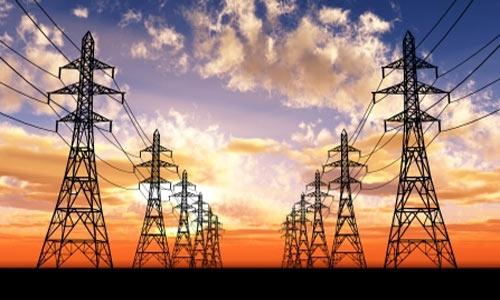
This is not the best time in Nigeria economic landscape. The economy is experiencing a recession and governments at various level seem helplessas evident from several policy contradictions. While there have been increased call for the diversification of Nigeria’s economy, much may not be achieved without improved power generation and distribution. It is a known fact that one of the greatest challenge of Nigerian economy is energy crisis.
No economy can grow without energy. Unfortunately, global oil market is not favourable to an economy that is largely dependent on crude oil like Nigeria. Resurgence of restiveness in the Niger-Delta region has worsen the situation in the country.
Power generation in Nigeria currently hovers around 3,500mw. With a population of around 176 million, to be at almost the same level with South Africa with population of about 55 million, the power need in Nigeria is put at 160,000MW. This is expected to ensure relatively stable power supply. Power Infrastructure deficit is evident across all stages of power value chain: Generation, Transmission and Distribution.
Several efforts have been made by government to ensure the power crisis is resolved including National Integrated Power Projects introduced in 2004.The current situation does not seem to be likely over in months.

The general objective of the electric energy system is to provide the needed energy services.Focus has always been on gas plant model. Gas plants are cheaper to set up relative to renewable power sources. However, many gas-fired power plants installed previously are not functional due to lack of gas.
Few functional plant are not functioning optimally as a result of incessant gas pipeline vandalism. In the recent time, the need to develop the renewable energy potentials of Nigeria has been brought to the fore. While many developed economies have improved their energy mix to include renewable energy resources, Nigeria does more talks than implementation.
If Nigeria will be able to overcome the challenges posed by energy crisis to its development in nearest future, concerted effort must be made to encourage development of micro, small and medium scale energy solutions in Nigeria.
There are several scalable energy solutions that could have helped in ameliorating energy problem facing the country. However, the financial sector lacks the capacity required to support implementation of these energy solutions.
There is huge gap between demand and supply of finance for energy solutions, and the current financial and economic crisis put more pressure on the already meagre funds for developing energy system. While emphasis has been on large scale energy projects, the role of small and medium scale energy solutions cannot be ignored.

It is also interesting that stakeholders in the energy sectors are aware of this fact.It however seems that the financial system is not positioned to support these solutions. Energy projects, regardless of their sizes usually have long gestation period and commercial banks do not have long term funds.
So it becomes a bit difficult for Deposit Money Banks to provide the required financial support for most energy projects. Energy projects are better developed via project finance due to huge capital requirements. Only few energy developers can afford to finance their projects with their balance sheets. This makes majority of scalable energy project a “no-go” area for the commercial banks.
The Federal Government of Nigeria at different times made attempts to create financial solutions to reduce the financing difficulties being faced by energy developers in Nigeria. The intervention fund created by the Central Bank of Nigeria to support power sector and development finance being provided by Institutions like Bank of Industry are evidences of government efforts.
While these efforts are commendable, there seems to be more to be done to actually help the small and medium energy developers. Since most of these funds are routed through the commercial banks, the usual impediments are created and noble and viable ideas are dying. It is high time all stakeholders came up with a sincere practical solution to eliminating the financial constraints in energy sector, particularly micro, small and medium energy projects.
Olumuyiwa Olanrewaju is the Chief Executive Officer of Watershed Capital Limited, he can be reached on 0811 200 2720 or olumuyiwa@watershedcapitallimited.com