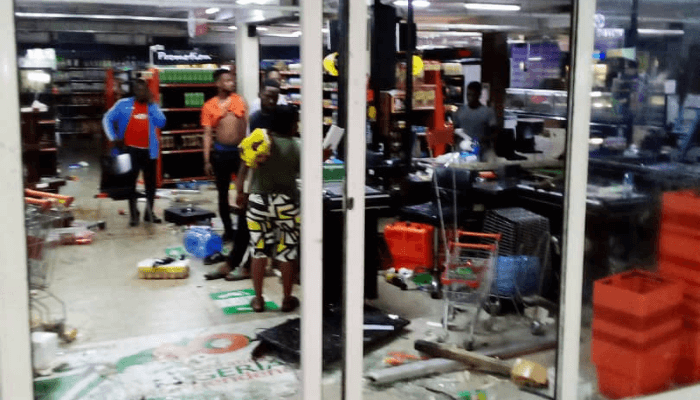
The destruction of both public and private properties and the looting events that took place after weeks of peaceful EndSARS protests would, expectedly, be having immediate, mid and long term impacts on Nigeria’s struggling real estate sector.
In the immediate term, the impact is already palpable with occupants of affected residential buildings rendered homeless while destroyed commercial buildings lie in ruins and the owners sulking and counting their losses, which run into billions of naira.
In both mid and long term, there will be developments in the sector most of which would have pulling down effects. Capital flight is a major development that may occur as foreign investors liquidate real estate holdings and move to safer climes or relocate to Western cities and pause on investing in Nigeria’s real estate market.
“There will also be a clear reduction in lease transactions which is a proxy for in-country relocations,” Ayo Ibaru, COO/director of research at Northcourt Real Estate, noted in their new report titled ‘Cause & Effects’ of the EndSARS Protest on real estate.

It is expected, however, that there will be a rise in local investment in commercial real estate to fill the gaps left by foreign investors. This, Ibaru noted, is a good development, explaining that “local capital tends to be more patient and it is this type of capital that is needed in nascent markets like Nigeria to create sustainable growth in the commercial real estate market.”
READ ALSO: #EndSARS is an emblem to demonstrate grievances about Nigeria;s backwardness; Sani
m too, people are going to be more careful about where to live and so, there will be greater emphasis and demand for residences within gated estates that enjoy communal living as this offers security services and leverages the experience, expertise and network of both the estate management company as well as the residents’ group.
This was quite evident in Lagos where, except for Thomas Estate located off Lekki-Epe Expressway, most of the gated communities in the sprawling city were safe and peaceful while the protest lasted.
In both immediate and mid-term, security is going to be a major consideration in real estate development. In his reaction to the large-scale destruction of public and private assets in Nigeria’s major cities, especially Lagos, Damola Akindolire, managing director, Alpha Mead Development Company, noted that security of assets was no longer guaranteed and that was going to affect investment decisions going forward.

Ibaru agrees, saying, “It is apparent that there exist opportunities for new businesses in the security field. From physical personal security, cybersecurity, natural surveillance, security lighting, alarm systems and sensors to video surveillance, electronic access control systems, identification systems, and private military services. These new and changing requirements will change what space users demand and how developers build.”
For some time now, there has been a lull in the sector due largely to the impact of Covid-19 pandemic, but, suddenly, the sector will be witnessing development activities arising from reconstruction and remodelling of public and private assets destroyed by the hoodlums.
“These will create a significant buzz in development activities across the country. Such a wave of construction activity has the tendency to increase both labour and material costs if not brought under some form of regulation,” Ibaru noted.
Lagos State government, for instance, says it will start the process of healing with the rebuilding of destroyed assets in the state, and has gone ahead to set up a Trust Fund to aid the process.
Meanwhile, businesses across the country are counting their losses, especially from the vandalism and looting of their wares running into billions of naira. From Lekki in Lagos to Calabar in Cross River and Ilorin in Kogi State, it is the same tale of woes.
“When I came and saw what happened, I could not eat for two days. Retailers are not happy at all, especially now that we are approaching Christmas season when they normally make enough money. We can’t even think of asking them for rent with what has happened. Recovery is going to be a slow and long process. Right now, we need all the support that we can get,” an official at Lenox Mall in Lekki, Lagos, lamented.
The official, who pleaded anonymity, explained that the mall had two wings, A&B. Wing A has 30 shops and 10 were affected. According to him, it was difficult to place value on what was lost as they were still calculating their losses and trying to be sensitive about people’s feelings.
He listed some of the stores that were destroyed and looted as Dreamworks Stores, which sells computer, laptops, accessories and phones; the Prenier Watch Place sells carrier bags, premium watches, Bureau De Change; Homely sells household appliances; SAS Textiles, Hubmart; Villar Scentral sells perfumes and homely scents, etc.
For Downtown Salon, it is a real tale of woe as the manager, Babatunde Akeju, estimated their loss at N31 million, as the looters made away with their pumping machines, 10 flat smart TVs, ceiling fans, air conditioners, and inverters.
“The one that pained us the most was the looting of our Hair Mart that contains hair products, wigs, and extensions worth millions of naira. It was very sad because we were just gradually recovering from the pandemic. We no longer have as many customers as we used to have,” Akeju said.
To Vanessa Ladipo, a manager at Glorious Evidence Nigeria Limited, the experience has been terrifying, disastrous and bad because, according to her, the looters did not just take things, they also damaged them, making the company lose close to N50 million.
The company imports, manufactures, assembles, markets and distributes all kinds of salon equipment, spa, furniture, appliances, accessories and cosmetics. “We were actually renovating the place prior to the time they came around.
We now have to start all over again. For instance, there are some products that sell for a million naira per unit. They made away with many of them,” Ladipo lamented.
“We had three standing air conditioners that were newly bought, they made away with them too. They took away the condensers, smart TVs, CCTV recorders, inverters, and even our wires. They disconcerted our electricity; we were out of light for three days before we could reconnect it,” she said.