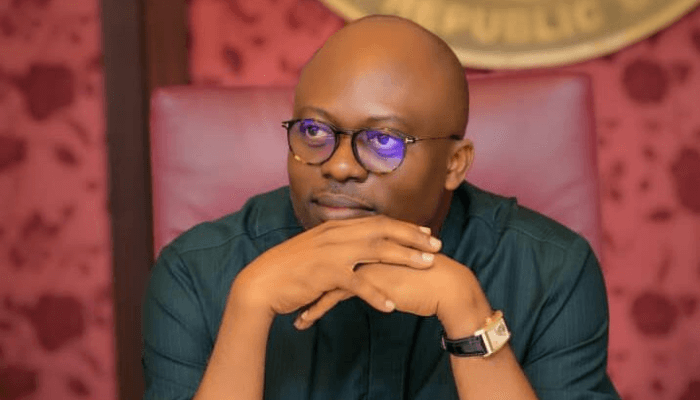
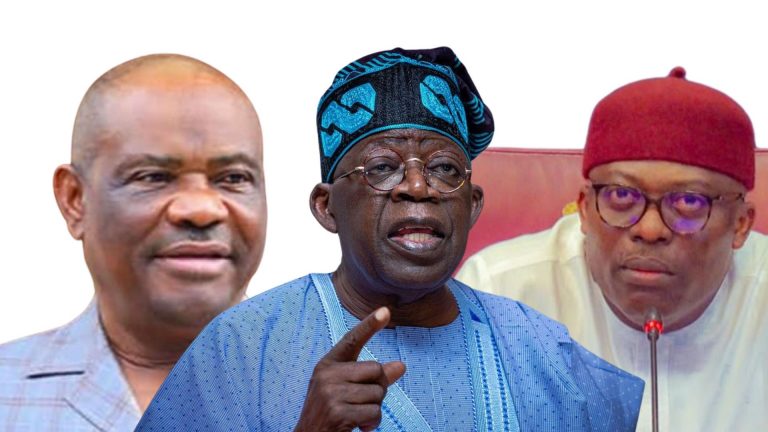
President Bola Tinubu intervened in the crisis in Rivers State by suspending Governor Sim Fubara and the State House of Assembly for six months, prompting a flurry of social media responses. These intense reactions have varied, reflecting Nigeria’s highly charged political and social landscape.
The State of Emergency in Rivers State has sparked a social media storm marked by vigorous political debate, regional sentiments, human rights issues, and misinformation-related challenges. Three days later, it is a significant test of the government’s capacity to communicate effectively and uphold public trust.
The Senate and the House of Representatives endorsed the President’s action by voice vote on Thursday, March 20, 2025. Because of the significance and sensitivity of the issue, they ignored calls to conduct actual vote counts.
Responses focused on the following:
The government failed to meet the constitutional threshold for declaring a state of emergency in Section 305 of the Constitution, fuelling scepticism.

Supporters of President Tinubu and APC defended the decision by citing Fubara’s demolition of the House of Assembly complex two years ago and failure to rebuild it.
Key political figures in the State and the South-South region, including the South-South Governors Forum, protested the declaration.
However, Edo State Governor Monday Okpebholo stood by the President and supported the emergency declaration.
Governor Duoye Diri of Bayelsa State signed the governor’s statement: “The current political situation in Rivers State does not satisfy the criteria for declaring a state of emergency as outlined in the Constitution. Such a declaration should be considered only under extreme conditions like war, external aggression, imminent invasion, a breakdown of public order, existential threats to Nigeria, natural disasters, or other significant public dangers,” the statement read.
The South-South Governors Forum further argued that removing a governor, deputy governor, or members of the House of Assembly must follow constitutional procedures as stipulated in Section 188 and suggested that due process may not have been fully considered before the emergency declaration.

“We believe that the political disputes in Rivers State between the Governor and the House of Assembly should, ideally, be resolved through legal and constitutional means, rather than by executive fiat,” the Forum noted.
https://www.vanguardngr.com/2025/03/south-south-governors-reject-tinubus-state-of-emergency-declaration-in-rivers/
Edo State Governor Monday Okpebholo stated: “The position by the Governors of the South-South, opposing the declaration of a State of Emergency in Rivers State by President Bola Ahmed Tinubu, did not get the nod of Governor Okpebholo, as he was neither consulted nor informed.
“While Governor Monday Okpebholo acknowledges the right of other governors in the South-South geopolitical zone to express their views, he distances himself from any statements opposing President Bola Ahmed Tinubu’s declaration of a State of Emergency in Rivers State.”
“Bola Ahmed Tinubu, President of the Federal Republic of Nigeria and the Commander-In-Chief of the Armed Forces, understands the issues at stake,” the statement said.
Columnist Azu Ishiekwene supports the emergency declaration at Rivers State.
Syndicated columnist Azu Ishiekwene has posited that the Rivers State situation left President Bola Tinubu no alternative than the state of emergency declaration. He stated in a column syndicated across online and print platforms.
Rivers State emergency rule: A different view, By Azu Ishiekwene.
Those opposed to the proclamation should say how to leave Fubara in place and extract the water of peace from the coconut of Rivers State without breaking the shell on the head of the people.
By Azu Ishiekwene
March 20, 2025
Reading Time: 6 mins read
Popular media has portrayed Fubara as the victim of a grasping, unforgiving godfather, which aligns with his behaviour. However, during this inconvenient pause, it may be beneficial for the governor to contemplate what he could have done differently—something that pressure from those urging him on for their narrow, selfish reasons might not have allowed him the space to consider.
President Bola Ahmed Tinubu’s proclamation of emergency rule in Rivers State on Tuesday surprised me for reasons different from those for which he has been severely criticised.
The mildest criticism is that Tinubu’s failure to call the Minister of the Federal Capital Territory, Nyesom Wike, to order caused the crisis. The more severe criticisms range from accusations that the president has subverted constitutional rule to charges of potential destabilisation at Wike’s behest.
A common point of agreement is that a civilian president should never have to declare emergency rule. That is the ideal. But before Tuesday, Rivers State presented a dire and complicated situation that stretched idealism to its elastic limits.
Chaos In Slow Motion
It’s convenient, especially for those who promoted and profited from the crisis, to pretend otherwise. Still, after the 27 state lawmakers loyal to Wike issued an impeachment notice, the outcome, if Governor Siminalayi Fubara had been impeached, might have been far worse for the state than can be contemplated under emergency rule. The proclamation was an unsolicited stitch in time.
If oil pipelines were already being blown up and militants deployed as the impeachment notice reached Fubara, what would have happened if the process had been carried through? Rivers State has been in chaos and slow motion for nearly two years. The only thriving businesses in the state are the politics of those who support Fubara and those who oppose Wike.
The Supreme Court’s judgment invalidated the budget passed by Fubara and nullified the local government election. It affirmed the position of the 27 lawmakers, making Fubara’s government a lame duck. Emergency rule saved the governor from gunpoint, created a pause for the people to get their lives back, and made room for Wike and Fubara to stop and reflect. It’s a messy situation, but the counterfactual could have been worse.
Between Wike and Fubara
Popular media has framed Fubara as the victim of a grasping, unforgiving godfather, which suits his comportment. But during this inconvenient pause, it might be helpful for the governor to reflect on what he might have done differently, something that pressure by those egging him on for their narrow, selfish reasons might not have given him the space to do.
Read also: Fubara has no hands in attacks on oil facilities – aide
Six months is the familiar tenor of suspensions.
This trended on Facebook.
UMEH NEED ROAD
Natasha…6 months.
Fubara…6 months.
Who is next?
More criticisms than praises for the State of emergency declaration.
Former Vice President Alhaji Atiku Abubakar.
“Tinubu cannot evade responsibility for the chaos his administration has enabled or failed to prevent.
“It is an unforgivable failure that under Tinubu’s watch, the Niger Delta has been thrown back into an era of violent unrest and instability—undoing the hard-won peace secured by the late President Umaru Yar’Adua. Years of progress have been recklessly erased in pursuit of selfish political calculations.
“If federal infrastructure in Rivers has been compromised, the President must take full responsibility. Punishing the people of Rivers State merely to advance the political gamesmanship between the governor and @officialABAT’s enablers in the federal government is nothing short of an assault on democracy and should be condemned in the strongest terms.”
Senator Babafemi Ojudu, in a press statement entitled, “Back to Ground Zero: Who Advised President Bola Ahmed Tinubu to Do This?, said:
“Who advised the President to take this course of action? Whoever it is, they are certainly not a friend of his administration, nor do they have the best interests of Nigeria at heart.
How could the President willingly walk into a raging inferno with his eyes wide open? No, no, no… this must be the work of fifth columnists. The Tinubu I once knew would not have made such a reckless and unnecessary decision.
To what end? This is a simple political dispute that requires a simple solution. Call the two gladiators, sit them down, and read them the riot act. One of them, after all, is your appointee. What will it benefit you, Mr. President, to keep Wike and lose the Nigerian economy?
The Dangerous Economic Implications of This Decision
Does the President realise that the Niger Delta crisis twice pushed Nigeria into recession under President Muhammadu Buhari?
Has he been informed that at one point, Nigeria’s oil production collapsed to below 400,000 barrels per day, down from 2.5 million barrels per day?
That catastrophic drop in production directly resulted from political mismanagement and conflict in the region.
It took years of painstaking effort and immense risks to stabilise the region, stop the sabotage of oil infrastructure, and restore some production level. I should know—I was part of that complex and excruciating process.
This decision threatens to undo all that progress.
If the situation escalates, we risk another shutdown of vital oil production facilities, renewed pipeline sabotage, illegal oil bunkering, and militant activities. We also risk another economic nosedive—at a time when Nigeria can least afford it.
The global oil market is unforgiving. Investors do not wait for internal political conflicts to be resolved. They simply take their capital elsewhere.
Mr. President, this is not just about Rivers State. It is about Nigeria’s economic survival.
And What About the Soldiers Fighting to Keep Nigeria Safe?
While we waste energy escalating political battles in Rivers State, thousands of Nigerian soldiers are still fighting for their lives—and for the nation’s survival—against insurgents, bandits, and kidnappers in the North East, North West, and North Central.
These are the real emergencies. These are the crises that demand decisive leadership.
The men and women of our armed forces are stretched thin, battling terrorists and criminal networks daily. They do not need yet another crisis to divert resources and attention.
Nigeria cannot afford to be fighting on multiple fronts—politically, economically, and militarily.
Mr. President, do not open a new war front in Rivers State while real wars are still raging elsewhere.
This Is Not the Way to Manage This Crisis, Mr. President.
This portends disaster—for your administration, for the economy, and for the nation.
A state of emergency is not a strategy but an admission of failure. There are far more effective, less destructive ways to handle this situation.
I urge you, Mr. President, to rethink this decision before irreparable damage is done.”
Richard Akinnola, a veteran journalist in judicial matters, wrote:
“According to reports from the International Centre for Investigative Reporting (ICIR), between January and May 2023, over 200 people died as a result of insecurity in the South East, while gunmen killed 37 police officers in 52 attacks in the same region. Similarly, in the first four months of 2023, over 1,200 people were killed, and 844 were kidnapped across Nigeria, according to the Council on Foreign Relations and TheCable Index.
Despite these, no state of emergency was declared in the respective states. But in Rivers State where no one has been killed, fiaaaam, state of emergency. Yet, only one party to the political feud is to be blamed. Even the one threatening fire and brimstone on the TV is blameless. Yoruba call it wuruwuru to the answer. That has been the game plan. History would record everyone. No yawa
Femi Falana: The extraordinary measures that the President may adopt to restore peace and security in the Federation or any particular state do not include the suspension of an elected Governor or an elected Deputy Governor and dissolving other democratic structures. For the avoidance of doubt, section 45(3) of the Constitution provides that a ‘period of emergency’ means “any period during which there is in force a Proclamation of a state of emergency declared by the President in exercise of the powers conferred on him under section 305 of this Constitution.”
Thus, by the relevant provisions of the Nigerian Constitution, the office of an elected governor can only become vacant upon death, ill health, resignation, or impeachment. Even where the office of the Governor becomes vacant for any reason whatsoever, the Deputy Governor shall be sworn in as the Governor.
And where the offices of the Governor and Deputy Governor become vacant simultaneously, the Speaker of the State House of Assembly shall become an Acting Governor for not more than three months. During the 3 months, a fresh election shall be conducted by the Independent National Electoral Commission to elect a new governor.
It is pertinent to state that the failure of a House of Assembly to function in Rivers State cannot be a justification for the dissolution of democratic structures in any State of the Federation. Indeed, the Constitution envisaged that a State House of Assembly may not be able to function for one reason or another. Hence, section 11(4) of the Constitution stipulates as follows:
“At any time when any House of Assembly of a State is unable to perform its functions because of the situation prevailing in that State, the National Assembly may make such laws for the peace, order and good government of that State concerning matters on which a House of Assembly to be necessary or expedient until the House of Assembly can resume its functions; and any such laws enacted by the National Assembly pursuant to this section shall have effect as if they were laws passed by the House of Assembly of the State:
Nothing in this section shall be construed as conferring on the National Assembly power to remove the Governor or the State’s Deputy Governor from office.”
The NBA is gravely concerned about the purported suspension by the President of the Governor of Rivers State, the Deputy Governor, and the Members of the Rivers State House of Assembly for six months.
The 1999 Constitution does not empower the President to dismiss an elected governor, deputy governor, or members of a state’s legislature under the pretext of a state of emergency.
Instead, the Constitution outlines explicit procedures for the removal of a governor and deputy governor as per Section 188. Likewise, the dismissal of members of the House of Assembly and the dissolution of parliament are regulated by constitutional provisions and electoral laws, all of which appear to have been disregarded in the current circumstances.
A declaration of emergency does not automatically dissolve or suspend elected state governments. The Constitution does not empower the President to unilaterally remove or replace elected officials—such actions amount to an unconstitutional usurpation of power and a fundamental breach of Nigeria’s federal structure.
The NBA firmly asserts that the situation in Rivers State, though politically tense, does not meet the constitutional threshold for removing elected officials.”
In light of the foregoing, the Nigerian Bar Association:
Affirms that the President has no constitutional power to remove an elected governor under a state of emergency. Any such action is an unconstitutional encroachment on democratic governance and the autonomy of state governments.
Calls on the National Assembly to reject any unconstitutional attempt to ratify the removal of the Rivers State Governor and other elected officials. The approval of a state of emergency must be based on strict constitutional grounds, not political expediency.
Warns that suspending elected officials under emergency rule sets a dangerous precedent that undermines democracy and could be misused to unseat elected governments in the future.
Demands that all actions taken in Rivers State strictly conform to constitutional provisions and Nigeria’s democratic norms.
Encourages all stakeholders, including the judiciary, civil society, and the international community, to closely monitor the situation in Rivers State to prevent unconstitutional governance and abuse of power.
The All Progressives Congress also threw its weight behind the President. Mr Ajibola Basiru, the National Secretary hoped that the emergency would help restore peace and order in the troubled oil-producing state.
“It is a welcome and positive decision by President Tinubu to restore order to Rivers, which was fast becoming a failed state,” Basiru stated.
Basiru lamented that both the executive and legislature in Rivers had failed in their constitutional duty to ensure the people’s welfare and security.
He advised the Osun governor to take note and allow court-reinstated Local Government Councils to function or risk a similar emergency declaration in Osun.