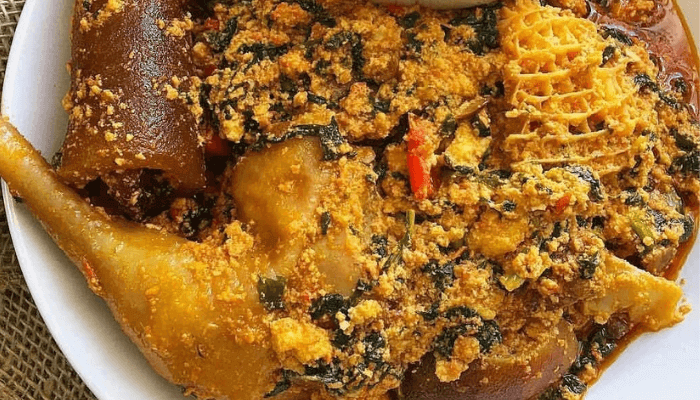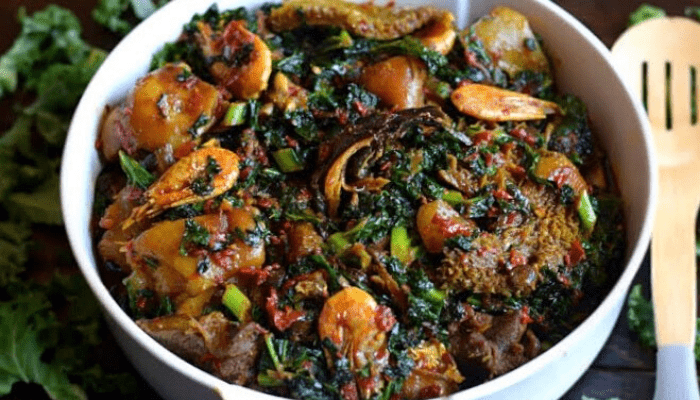
Nigeria is a great cultural country when it comes to culinary heritage and traditional cuisine. This is owing to the existence of mouth-watering delicacies.
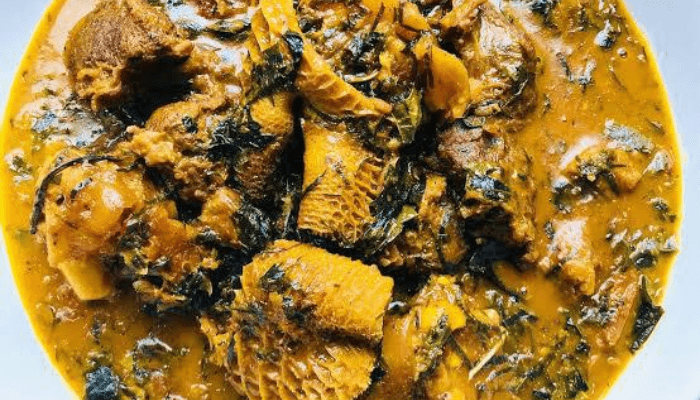
One of such delicacies is Efo-Riro. This is a Southwestern Nigeria sumptuous delight any day.
The first time I tasted this popular Yoruba soup, which has moved from the West to other parts of the country and the continent, was at a friend’s place. The taste of the tender ‘efo shoko’ and ‘tete’ as well as the taste of the offals, that is, the combination of the cow skin, ponmo, ‘shakin gbawe’, round about,’ fresh shrimp as well as other ‘mede–mede’ meat and fish was the attraction.
Smiles. If you are a Nigerian, yes, an African reading this post, you will understand the picture being painted.

The main ingredient for this soup is the Efo, which is the leaves. These could be shoko, [spinach] tete, gbure [waterleaf] or a mixture of these leaves.
There is also the special use of locust beans – iru woro or pete, which are very nutritious and very good for the eyes. Well, for me, I cannot stand the smell especially because of the – not – too pleasant – odour. But my friend stressed that to enjoy efo riro, iru must be littered all over the soup as the special meat of the ‘soup’. This is because the locust beans’ smell changes as soon as they enter the pot of soup, and a particular special flavour fills the atmosphere thereafter.
It is important to note that Efo Riro must not be watery. The soup is ideal for everyone, especially lactating mothers, pregnant women and growing children. Apart from the nutrients in the vegetables, shrimps and other ingredients, the rich Vitamin A content of the iru is an added advantage, especially for children, for bright eyes, the aged and those who are deficient in Vitamin A.
Eforiro is a delightful cultural and traditional delicacy as well as a culinary heritage that is cooked and eaten in Nigeria, virtually, amongst the Yoruba.
The spicy soup is often served with other staples like iyan, semo, eba (garri) or amala. This palm oil-enriched dish is known for its unique colour, taste, flavour and texture.

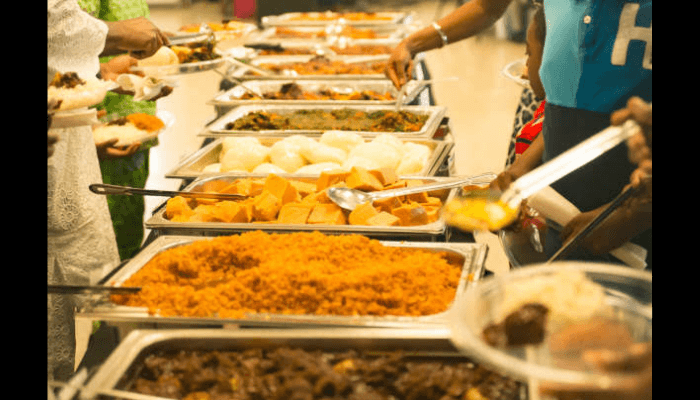
Eforiro, however, holds a valuable cultural significance in Yoruba tradition because it is often served as a unique cuisine at gatherings and special occasions, like weddings, funerals, and christening ceremonies.
Why should Efo-riro be listed on the UNESCO Intangible Cultural Heritage List? The answer is clear, the soup can be described as a traditional and cultural super food that remains a communal food readily relished by South Western Nigerians and even the diaspora of all ages. Social gatherings, especially South Western Nigerian gatherings, sit with Efo-riro, which is often served at such gatherings, parties, and festivals, thereby uniting cultures and bringing people together.
The gatherings have uniquely moved from the Yoruba land to every part of Nigeria and beyond. The cultural identity of Efo-riro is a symbol of the country’s heritage, culture and hospitality, even across the continent. The diaspora has a rich culinary heritage in the making and eating of Efo-Riro. I remember the Efo-riro we prepared in North Carolina, USA, in 2023, as we attended the wedding to entertain our African guests from different parts of the US.
This delightful vegetable soup has held daughters and mothers together, as they have taught younger women and girls how to specially mix the soup together.
In terms of documentation, the soup has strong evidence of cultural essence, including its history, preparation methods, and its role in Nigerian society. In terms of its community involvement, many chefs, vendors, food sellers in the communities and consumers, as well as cultural experts, form a strong value chain, especially looking at the economic capacity of the veggie soup.
Well, the government must create a proper nomination file that can be compiled into a detailed documentation of the role of this cuisine. These include photos, videos, and testimonials that would enable its listing in the UNESCO list. The benefits of this UNESCO Recognition is basically for the cultural preservation of the soup. The preservation will affect the making techniques and promote its cultural heritage. This would be a plus that would boost food tourism, food journalism and economic benefits as well as accelerate cultural exchange.
The most essential is the global and international recognition of Efo-riro as one of Nigeria’s rich cultural heritage.
Let’s visit the kitchen
Recipe for 4 servings:
1 big bunch of shoko leaf (shredded) or vegetable of your choice
2 cooking spoons of palm oil
6 fresh red peppers
10 large fresh tomatoes
2 tablespoons ground crayfish
1 kilogram of Cow leg
1 large onion (chopped)
1 stockfish head (deboned)
3 tablespoons ground crayfish
3 teaspoons ground locust beans ( or the whole seedy type)
Assorted meat and ponmo [shaki, liver, bee,f etc]
1 cup fresh shrimp [deboned]
2 smoked panla fish
1 smoked titus fish or catfish
Salt and seasoning to taste
Method:
1. Wash and season all the meat.
2. Bring to a boil and cook until tender.
3. Clean, wash and add the shrimp and fish.
4. Add the stockfish and cook until a thick stock is produced.
5. Remove from heat and set aside.
6. Combine the tomatoes, pepper and onion and blend into a smooth paste.
7. Fry in hot palm oil for a few seconds, adding the chopped onions.
8. Add the meat, stockfish and fish.
9. Do not add the stock yet.
10. Add the crayfish, locust beans, salt and seasoning to taste.
11. Add the shredded shoko vegetables and stir. Add the stock, a little at a time.
12. If the water is too much, do not add everything.
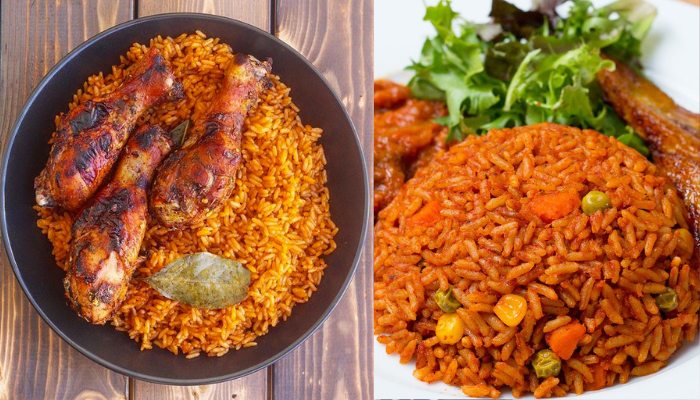
13. Simmer for a few and serve hot with any swallow like amala, cooked thickened pap [eko], [agidi], eba, semovita, iyan, or fufu.
14. Efo Riro can also be served on a hot plate of rice.