…pushes private-sector-driven regional integration
The Economic Community of West African States has unveiled a new initiative to deepen regional economic integration and reduce dependence on foreign capital through a strategic partnership with Aliko Dangote, an industrialist and other private sector players.
The plan was announced on Wednesday by the President of Omar Touray, ECOWAS Commission, at the opening of the 95th Ordinary Session of the ECOWAS Council of Ministers in Abuja.
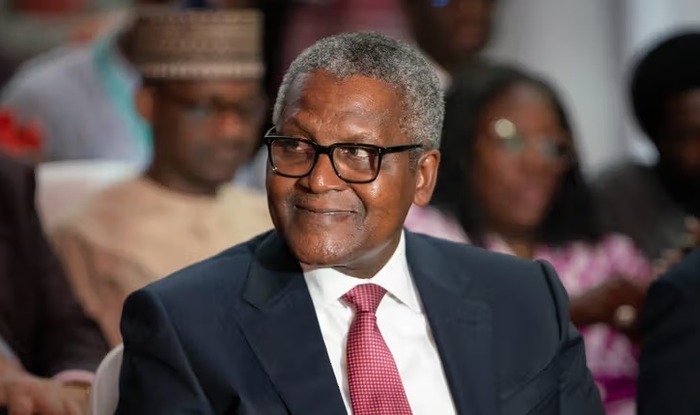
Touray revealed that Dangote has been selected as the pioneer Chairperson of the newly established ECOWAS Business Council, an advisory platform designed to mobilise private investment, strengthen economic cooperation, and drive growth across the subregion.

According to him, the Council will provide a structured mechanism for businesses to engage with ECOWAS institutions and member governments on issues of economic development.
Read also: ECOWAS urges end to petrol imports, calls Dangote refinery “beacon of hope’
“We are moving forward with the operationalisation of the ECOWAS Business Council. We have identified Alhaji Aliko Dangote to be the pioneer Chairperson of the Council in view of his vast experience doing business within our subregion and across Africa.
“Through the Council, we hope to bring the private sector actors around the table as we discuss economic integration and development of our region”, he said.
Touray added that ECOWAS aims to encourage increased intra-regional investment to strengthen financial independence, warning that an overreliance on foreign capital exposes West African economies to external shocks.

“This appetite for intra-regional investment underscores the need to mobilise capital within our region to build our Community rather than wait for precarious foreign investments.
“I am confident that with the kind of investments we have seen from the likes of Alhaji Dangote, our regional private sector actors can lead the way in the development of our Community, if given the right incentives and opportunity,” he said.
ECOWAS President also highlighted challenges facing the West African Power Pool (WAPP), the region’s flagship electricity trading platform.
Touray disclosed that mounting debts owed by national electricity companies are undermining the stability of the power market.
He urged member states to prioritise debt recovery to safeguard ongoing energy integration and improve electricity access.
His remarks also covered regional priorities such as monetary integration, economic resilience, the activation of a regional counter-terrorism force, and updates on ECOWAS audits, budget, and annual work programme.
“It is our hope that your deliberations on the various items on the agenda will pave the way for a region that is self-sufficient, free from external control and vulnerability to external economic shocks,” Touray added.
Read also: Elizabeth Jack-Rich, Dangote, Elumelu among African leaders driving UAE–Africa development agenda
In his remarks, Timothy Kabba, Sierra Leone’s Minister of Foreign Affairs and Chairperson of the ECOWAS Council of Ministers, emphasised the need for member states to deepen cooperation in tackling regional insecurity, democratic regression, and economic stagnation.
“This meeting reaffirms our steadfast dedication to regional cooperation, guided by our collective vision of an integrated and prosperous West Africa,” Kabba stated.
He said the two-day meeting would examine reports and memoranda aimed at strengthening economic and political integration, and noted that the session coincides with the 50th anniversary of the Treaty of Lagos, which established ECOWAS in 1975.
“We must persist in our effort to foster an environment conducive to the growth of the private sector, the principal catalyst of the economic integration agenda,” he said.
Kabba also called for improved trade and transport links, expanded energy connectivity, and full utilisation of the African Continental Free Trade Agreement to accelerate development.
On security, he warned that terrorism, violent extremism, organised crime, and the resurgence of military coups pose existential threats to the region.
He reiterated ECOWAS’ “zero tolerance” stance on unconstitutional government changes, condemning recent developments in Guinea-Bissau and an attempted coup in Benin Republic.
“These acts strike at the heart of constitutional order, democratic governance, and the collective values that bind us as a community,” he said, praising ECOWAS’ swift diplomatic engagement in Guinea-Bissau.
In her welcome address, Bianca Odumegwu-Ojukwu, Nigeria’s Minister of State for Foreign Affairs, cautioned that recent political instability, extended transitions, and governance deficits in several member states threaten regional cohesion and undermine development gains made over the years.
“These situations challenge not only the democratic values to which we have all subscribed, but also threaten hard-won development gains.
Read also: Nigeria’s Ambassador: EBC’s creation a game-changer for ECOWAS integration
“We must therefore remain steadfast in defending constitutional order, promoting inclusive political dialogue, and supporting credible transitions that reinforce stability”, she said.
Emphasising the demographic strength of the region, home to over 400 million people, 65 percent of whom are under the age of 25, Odumegwu-Ojukwu underscored the need to deepen intra-regional trade, enhance value chains, and create economic opportunities for young people.
She noted that the ministers would deliberate on critical dossiers covering governance, economic integration, agriculture, peace and security, humanitarian response, and institutional effectiveness.
“As Ministers entrusted with steering the Community’s course, your insights and decisions will be instrumental in shaping the recommendations to be submitted to the Authority of Heads of State and Government,” she said.