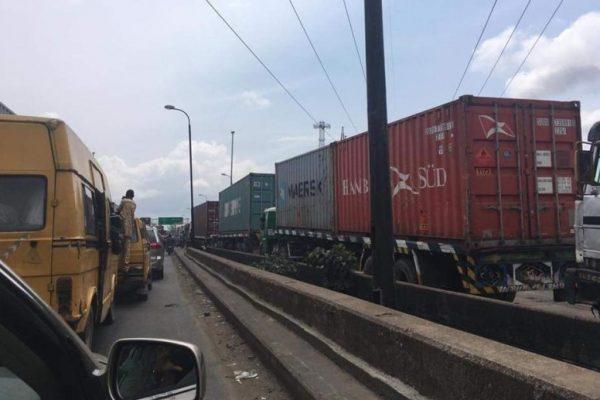
A survey by the Organised Private Sector (OPS) shows that the Nigerian economy loses about N6 trillion to the intractable gridlock within the Apapa port environment.
This was contained in a presidential report presented at the 62nd Annual General Meeting (AGM) of the Nigeria Employers’ Consultative Association (NECA) which held in Lagos on Tuesday, and attended by a wide spectrum of the business community.
This comes as Vice President Yemi Osinbajo, represented by Adeyemi Dipeolu, a former economic adviser to President Muhammadu Buhari , said that the ongoing effort at decongestion Apapa and making the port environment more business-friendly is yielding positive results, although more is expected to be done.
The OPS report presented by Mauricio Alarcon, NECA’s 2nd vice president to a capacity audience at the AGM, specifically showed that about N3.06 trillion ($10 billion) on non-oil export and N2.5 trillion earnings annually, across the different sectors of the economy are lost due to the Apapa gridlock.

Indeed, until the recent efforts by the Federal Government which ceded the reconstruction of collapsed sections of Oshodi-Mile2-Apapa Expressway to the Dangote Group in lieu of taxes, the Apapa gridlock which spanned over a decade, had defied a solution. Its concomitant losses in monetary value as captured in the OPS survey are exclusive of human casualties resulting from incidences of containers falling on vehicles and snuffing lives out of occupants of such vehicles.
This is also as the OPS decried a rather tough operating environment which continues to pose a challenge to businesses. According to the report, “One year after the Presidential Executive Order on the promotion of transparency and efficiency in the business environment to ease procedural and operational hiccups being experienced at the nation’s seaports, orderliness is yet to return.”
This, they noted, is against the high expectation that the Executive Order would bring sanity to the ports and save importers and shippers the avoidable pain, anguish and agony of doing business.
Although the OPS commended some steps taken by the government in 2018 in the interest of the business community such as the withholding of presidential assent to the Federal Competition and Consumer Protection Bill, 2018, and the suspension of the 0.5 percent profit after tax contribution which was foisted on organised businesses, they nevertheless stressed the need for the government to address the huge infrastructural gap in the economy.
Other areas they also want tackled are unemployment, insecurity, support for the real sector, reduction in taxes and diversification of the economy.

JOSHUA BASSEY