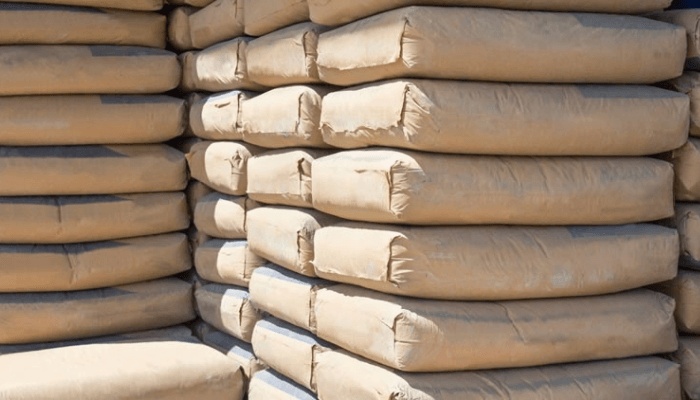
As an important large-scale manufacturing sub-sector within the manufacturing sector, the cement industry contributes a growing portion to Nigeria’s gross domestic product (GDP) annually. In the first half of 2024, the cement industry accounted for around 10.3% of the manufacturing GDP, showing its increasing importance, particularly with infrastructure growth, though challenges like rising costs impact its sector growth rates. The industry is fundamental to national industrialisation – it supplies critical material for infrastructure (roads, housing), drives GDP and job creation, reduces import reliance, fosters downstream sectors like real estate, attracts investment, boosts non-oil exports and significantly contributes taxes – all vital for urbanisation and economic stability in Africa’s largest economy.
Domestic cement manufacturing has helped turn Nigeria from a net importer decades ago to now among Africa’s leading producers, particularly with companies like Dangote, Lafarge Africa and BUA Cement that have invested in large-scale local plants, ensuring a consistent supply of quality cement and driving down import dependency. Yet, Nigeria faces a persistent gap between demand and actual supply. While the combined installed production capacity is substantial at around 65.6 million tonnes annually, actual production often falls short due to operational challenges and infrastructure limitations. With Nigeria facing a significant housing deficit, estimated at 17 million units in urban areas, there is an urgent need for new, structured and well-governed market entrants. Experts suggest that Nigeria requires as much as $5 billion in further investments to fully meet local demand.
With vast deposits of limestone, gypsum, and clay, which are key raw materials required for cement production, the proposal by Ebonyi State for a strategic investment in a cement plant as a successor to the defunct NIGERCEM creates a market opportunity in bridging existing market gaps, particularly with issues of regional cement supply disparities, as cement prices and availability significantly vary in different regions due to logistics challenges, and the demand for specialised cement products, offering a new range of specialised and innovative building solutions like pre-mixed concrete and specific low-carbon products. This is a concrete entry point into the heart of Nigeria’s urgent quest for broad-based industrialisation. At a time when the national economy is rebalancing away from oil and toward non-oil sectors, such subnational ventures deserve sustained support to start and survive in supplying one of the most essential building blocks – literally – for infrastructure, housing, roads, bridges, industrial facilities, and urban expansion.
“However, for these hopeful outcomes to materialise, borrowing and investment must be treated as a projective endeavour, not a shortcut. That means the state must commit to transparent, structured public-private partnerships in different structures of the company.”

But the benefits of a cement plant in Ebonyi go beyond national aggregates. Just like most states in Nigeria, Ebonyi suffers from deep structural poverty and chronic underemployment. According to a recent report, up to 79.8 percent of Ebonyians live below the poverty line, with a large share trapped in multidimensional deprivation – lacking access to adequate housing, sanitation, healthcare, education, and clean water. Among farming households, a study showed that 54 percent were poor, highlighting entrenched rural poverty. Meanwhile, despite these hardships, official labour-market statistics for 2023 show Ebonyi’s formal unemployment rate at 3.7 percent – a number that belies the reality of pervasive underemployment, informal work, and limited livelihood options.
This bold project by Governor Francis Ogbonna Nwifuru aligns with his strategic and unwavering commitment to the People’s Charter of Needs and the collective dreams of Ndi Ebonyi, particularly in solving the earlier mentioned problems of poverty, unemployment and lack of opportunities. The planned new state-owned cement factory serves as a transformative project that will boost industrial growth, create jobs, and expand Ebonyi State’s revenue base for enduring development.
A properly managed cement plant in Ebonyi, within a broader industrial-city vision already being pursued by the State Government promises to deliver transformational impacts in job creation and poverty reduction as the cement plant will absorb large numbers of workers – from skilled and semi-skilled labour in construction, operations, logistics, transport, to support services – helping lift meaningful portions of the population out of poverty, and reducing pressure on men and women forced into precarious informal work; have industrial linkages and multiplier effects, as cement production spawns demand for quarrying, logistics, transport, packaging, maintenance services -creating a ripple of economic activity across sectors. Over time, this can attract complementary industries, such as building materials, manufacturing, real estate development, and local infrastructural projects; achieve infrastructure-led growth, with more affordable cement locally available, the costs of roads, housing, schools, clinics, bridges – all of which are critical for development – will decline, enabling the State and its citizens to invest in the infrastructure that underpins economic viability; reduce crime, lead to social stability and human dignity, by offering stable livelihood opportunities and reducing poverty and deprivation, the plant can offer legitimate alternatives to criminality, desperation, and social decay – especially for youth who currently see limited prospects.
However, for these hopeful outcomes to materialise, borrowing and investment must be treated as a projective endeavour, not a shortcut. That means the state must commit to transparent, structured public-private partnerships in different structures of the company. The financing for the plant should be clearly accounted for, with clear contracts, public disclosure of terms, and an arrangement that balances public interest with private-sector efficiency. This structure helps ensure that the plant delivers dividends over the long term, not short-term political gains.
There is also a need for strong corporate governance and institutional continuity beyond political cycles. The project must be institutionalised beyond the tenure of the current leadership so that the plant, and any successor plant, has robust corporate governance, environmental safeguards, and performance oversight. It must not be a “one-term wonder” but a permanent engine for growth.

Read also: Ebonyi to borrow ₦150bn to commence state-owned cement factory — Nwifuru
More importantly, there is a need for environmental regulation and community protection. Cement plants carry environmental risks: air pollution, dust, quarrying impacts, deforestation, and water contamination. Given that host communities in Ebonyi are likely to bear the brunt, the State Government must strictly enforce environmental regulations, adopt sustainable production practices, mitigate deforestation, rehabilitate quarry sites, and protect the rights and health of local residents.
If executed with political will, technical competence, and social and environmental responsibility, it will be a people’s project and a foundational investment in dignity, growth, and intergenerational progress. The future of Nigeria’s industrialisation may well be decided not in Abuja or Lagos alone, but in frontier states industrialisation like Ebonyi.
If the plant is completed in record time, managed transparently, and sustained beyond electoral cycles – offering jobs, growth, environmental stewardship, and hope – then Ebonyi’s cement plant will not be just a factory: it will be a symbol that industrialisation rooted in subnational vision, executed with integrity and partnership, remains our most transformative path forward.
God bless the Federal Republic of Nigeria.
Ekpa, Stanley Ekpa, a lawyer and leadership consultant, wrote via ekpastanleyekpa@gmail.com. Ekpa, Stanley Ekpa is the Principal Partner, Plan Partners.