Nigeria is often described, casually and sometimes cruelly, as having a “people’s problem”. The phrase is usually invoked to explain everything from poor governance and low productivity to corruption and social disorder. But this framing is misleading. Nigeria’s challenge is not a failure of individual Nigerians. It is the long-term, systemic underdevelopment of human capital that is driven largely by chronic underinvestment in education. This has weakened the average citizen’s capacity to think critically, work productively, and hold institutions accountable.
At independence, Nigeria was regarded as one of Africa’s most promising economies, rich in natural resources, young in population, and optimistic in outlook. More than six decades later, that promise remains largely unrealised. The gap between potential and performance is evident in inconsistent policy execution, inefficient public institutions, decaying infrastructure, and weak productivity across sectors. These outcomes are not accidental; they reflect an economy constrained by limited average human capacity.
Education sits at the centre of this problem. Adult literacy in Nigeria stands at roughly 62–63 percent, with youth literacy around 73 percent. While these figures represent gradual improvement, they conceal stark regional and gender disparities. States such as Lagos record literacy rates above 90 percent, while parts of the Northeast remain below 30 percent. Female literacy lags male literacy by nearly 20 percentage points, reflecting deep-rooted cultural and economic barriers. More importantly, literacy figures alone mask a deeper issue: what many Nigerians receive is schooling, not education.
For decades, Nigeria’s education sector has suffered from persistent underfunding. Schools are overcrowded, infrastructure is dilapidated, and teachers are poorly trained and compensated. Government spending on education has consistently fallen short of international benchmarks. In the 2025 appropriation bill, education received just over 7 percent of the total budget; that is far below UNESCO’s recommended 15–20 percent. While enrollment expanded rapidly, funding did not keep pace with population growth, inflation, or the increasing complexity of the global economy.

The economic consequences are visible in the labour market. Nigeria produces large numbers of graduates each year, yet employers routinely complain about skill shortages. The education system rewards memorisation rather than reasoning and certification rather than competence. Students are trained to reproduce information, not to evaluate evidence, challenge assumptions, or solve novel problems. Over time, this has produced graduates with certificates but limited analytical depth, adaptability, or intellectual confidence. For businesses, this translates into higher training costs, lower productivity, and difficulty scaling operations. The coexistence of mass unemployment and talent scarcity is not a paradox; it is the predictable outcome of weak human capital development.
This decline in critical thinking extends beyond the classroom. A population weak in analytical skills is more susceptible to misinformation, less able to engage meaningfully in public debate, and more likely to defer to authority rather than evidence. Civic participation becomes shallow, and politics shifts toward identity, emotion, and short-term exchange rather than policy evaluation and long-term planning. In such an environment, citizens struggle to demand accountability, and leadership has little incentive to invest in public goods such as education that might empower scrutiny.
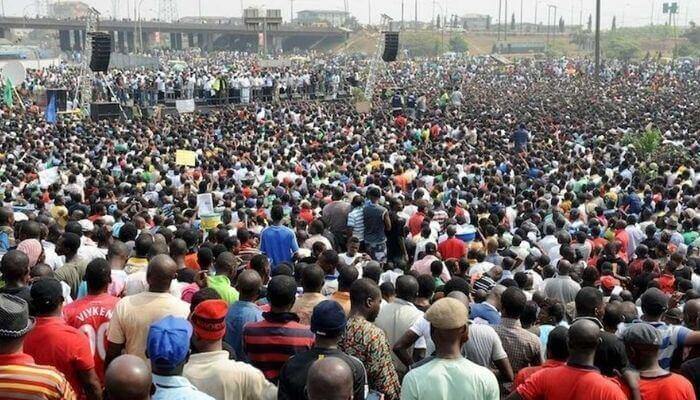
Nigeria’s demographic trajectory makes this problem especially urgent. The country is projected to have one of the world’s largest youth populations by 2050, with a total population exceeding 400 million. In countries that invested wisely in education, large youth cohorts powered industrialisation and innovation. In Nigeria, however, underinvestment in education threatens to turn this demographic opportunity into an economic liability.
While Nigerians are famously entrepreneurial, much of this activity remains informal and subsistence-oriented. Scaling businesses requires strategic planning, financial literacy, market analysis, and problem-solving skills and capabilities nurtured through quality education. Their scarcity limits job creation, productivity growth, and economic diversification. The danger is not a large workforce but a large workforce without the cognitive tools required for modern production.
If current trends persist, Nigeria risks a future characterised by structural unemployment and low productivity. Millions of young Nigerians may remain unemployed or underemployed, not because jobs do not exist, but because skill mismatches persist. A larger but low-skilled workforce would lock the country into low-value-added activities at the bottom of global value chains. The social consequences, such as frustration, crime, instability, and mass migration, are already visible.

So, does Nigeria have a people problem? In a narrow sense, yes, but not in the way the phrase is often used. The problem is not that Nigerians are inherently incapable or unwilling to contribute. It is that decades of state failure have produced a population whose average skills, reasoning capacity, and civic confidence are insufficient for the demands of a modern economy and democracy.
This distinction matters. A people problem rooted in culture would be difficult to change. One rooted in underinvestment is not. Education must be treated as economic infrastructure, just as critical as power supply, transport networks, and digital connectivity. Increased funding, curriculum reform focused on practical and critical skills, and accountability for learning outcomes are essential.
Nigeria’s population should be a competitive advantage, not a source of anxiety. Whether it becomes one or the other depends on the choices made today about how deliberately the country invests in the quality of its people.
Mayowa Oyatogun is a strategy & business planning specialist and writes from London.