



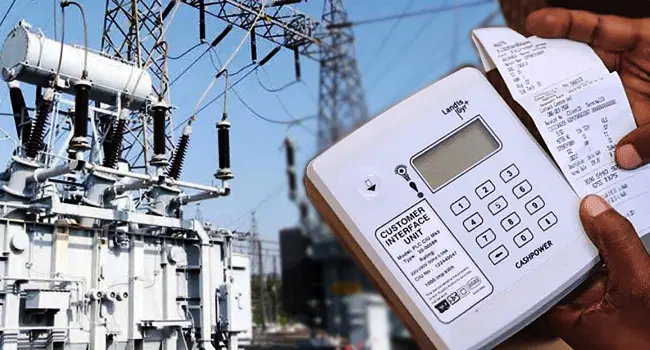
Nigeria’s power distribution companies (DisCos) failed to recover over N202.6 billion in electricity bills within the first quarter of 2025, according to newly released data by the Nigerian Electricity Regulatory Commission (NERC).
This revenue shortfall, representing more than a quarter of total billing points, is due to deep-rooted structural inefficiencies undermining the country’s electricity sector.
The NERC’s latest factsheet shows that the 12 DisCos billed a total of N761.9 billion from January to March 2025 but managed to collect only N559.3 billion. The revenue recovery performance trended downward across the three months.
Read also: How DisCos can lure biggest customers back to grid

In January, the DisCos billed N250.2 billion and collected N178.68 billion. February’s billing stood at N245.93 billion with a collection of N191.75 billion, while March saw the highest billing at N265.77 billion but a lower collection of N188.89 billion. This marked the second consecutive month of decline in billing, collection and recovery efficiency.
“DisCos’ energy billed and billing efficiency, revenue collection and collection efficiency, and revenue recovery performance dropped by 2.42 percent, 6.9 percent and 7.04 percent, respectively,” the NERC said.
The underperformance signals deeper systemic issues. Experts, including analysts from FBNQuest, warn that the sector is at a critical juncture, with longstanding problems threatening national development goals.
“A reliable and efficient power supply plays a central role in Nigeria’s industrialisation drive and, by extension, the economy’s growth,” FBNQuest noted.
Despite various reforms aimed at boosting power generation and operational efficiency, Nigeria’s power sector remains hamstrung by infrastructure deficits, gas supply issues, liquidity constraints and inadequate metering.

Of the 28 grid-connected power plants nationwide, 19 are gas-powered, making up 68 percent of Nigeria’s energy mix. However, frequent gas shortages continue to limit generation capacity, despite the country’s abundant natural gas reserves.
The liquidity crisis is further exacerbated by poor collection efficiency, attributed largely to the failure to implement cost-reflective tariffs and close the metering gap. As of the fourth quarter (Q4) of 2024, only 6.3 million out of 13.5 million registered customers were metered, leaving a metering gap of 53.4 percent.
During the same period, the DisCos were only able to collect N509.8 billion out of a billed N658.4 billion, reflecting a collection efficiency of 77.4 percent. While an improvement from the 74.5 percent recorded in the previous quarter, the sector still struggles to meet its financial obligations.
The DisCos’ remittance to the Nigerian Bulk Electricity Trading Plc (NBET) and the Market Operator was also below expectation. Out of a total invoice of N408.9 billion, only N378.9 billion was remitted.
Meanwhile, the reliability of the power grid remains in question. The NERC recorded three total grid collapses and two partial collapses in the Q4 of 2024, underscoring the fragile state of Nigeria’s electricity infrastructure.
FBNQuest analysts advised the federal government to urgently address these challenges to stabilise the sector.
Read also: FG accuses DisCos of frustrating power sector reforms
“Looking ahead, given the availability of abundant natural resources, the federal government should focus on diversifying Nigeria’s current energy mix to increase electricity generation and improve power stability,” they recommended.
“To address liquidity constraints, significant efforts must be made to ensure cost-reflective tariffs and close the significant metering gap.”
As DisCos continue to struggle with collections and infrastructural hurdles, Nigeria’s quest for reliable and sustainable electricity remains a formidable challenge, one that requires coordinated policies as well as investment, and regulatory reforms.





