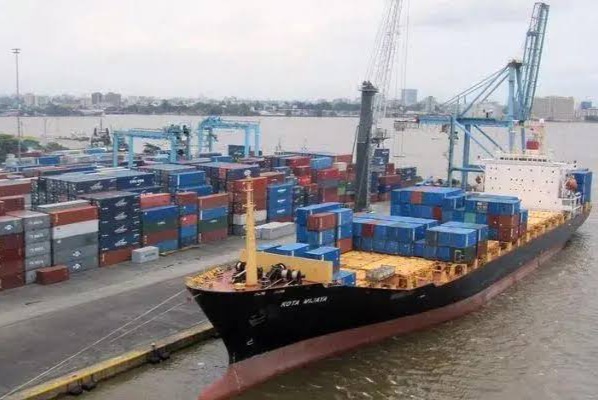
At Nigeria’s busiest port, industry leaders say the real key to faster cargo clearance may lies in Nigeria’s ability to move beyond decades-old policies and equipment and chase modernisation in collaboration.
Speaking at a panel session on “Terminal Progress and Future Outlook”*during APM Terminals Apapa’s Partners’ Engagement Forum in Lagos, operators and regulators argued that technology, automation and data-sharing must drive the next phase of port reform if Nigeria is to keep pace with competitors in West Africa.
The discussion examined how digital platforms can streamline transactions, reduce human contact points, and cut the delays that have long slowed cargo owners.
Lawal Adebowale, port manager of Lagos Port Complex (Apapa), said the Nigerian Ports Authority was pairing infrastructure upgrades with technology-driven solutions. Alongside deepening channels to handle bigger vessels, the authority is also strengthening pilot training and vessel traffic systems to meet modern shipping demands.

For Olaniran Olakunle, director of port inspection at the National Agency for Food and Drug Administration and Control (NAFDAC), digitalisation has already begun to make a difference.
He pointed to the agency’s online product administration and monitoring system, which now offers an end-to-end process for registering and clearing food, drugs and medical devices. “It has significantly reduced manual delays,” he said.
But automation alone is not enough. Abubakar Usman, who represented the Comptroller of the Apapa Area Command of the Nigeria Customs Service, stressed that faster clearance will only come if importers and clearing agents comply fully with documentation. “The system is only as fast as the information you put into it,” he warned.
Margaret Ogbonna, director of Regulatory Services at the Nigerian Shippers’ Council,, said coordination across agencies was the missing link. Without regular joint meetings, she argued, different regulators risk duplicating checks and slowing the very trade they are meant to support.
“Harmonised procedures are essential if port reforms are to align with national trade strategies,” she said.