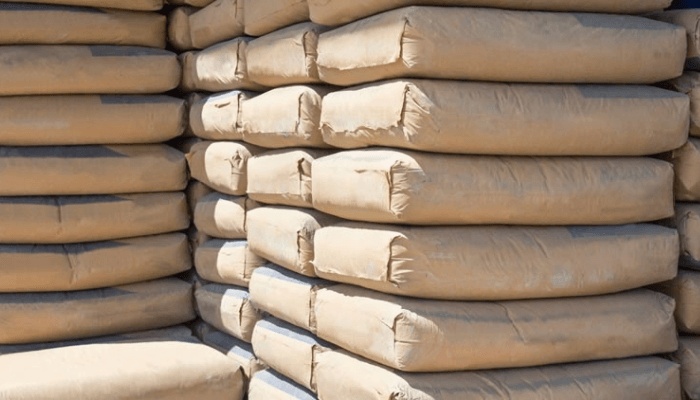
The transition to concrete in road construction is driving demand for cement, which has now outstripped supply, forcing prices up by 100 percent in the last one year.
Experts attribute the surge in cement demand to a growing preference for concrete in road construction across Nigeria.
David Umahi, Nigeria’s works minister, has repeatedly emphasised the federal government’s commitment to transitioning from asphalt to concrete for road-building projects.
Speaking to the leadership of the Nigerian Society of Engineers in November 2023, Umahi highlighted the water resistance of concrete and his stance on the usage of concrete in road construction, saying, “… there are certain terrains in states that we stress must use concrete; we cannot change that. You cannot put asphalt in water, but you can put concrete in water.” He also noted in July 2024 that the plan is to transition to concrete for 70 percent of Federal roads in Nigeria.

Currently, the first phase of the Lagos-Calabar Coastal Highway is a concrete road. Similarly, the first phase of the proposed 1,000 km Sokoto-Badagry Highway, which is a 258 km road from Sokoto to Kebbi, is being constructed with concrete.
According to engineering experts, a kilometre of dual-carriageway motorway will consume about 2,500 tonnes of cement. Going by this estimation, the first phase of the Lagos-Calabar coastal highway, which is 47.5 kilometres, will consume approximately 118,750 tonnes of cement. This volume of cement would construct an average of 8,500 family homes.
Innovations by some cement producers have helped to settle some of the supply bottlenecks.
A staff member at Gravitas, developers of Gracefield Island, noted to BusinessDay, “We have our internal mix and external mix. The external mix is used for drainages, walkways, and foundations.”
The introduction of value-added services, such as ready mix concrete, has enabled real estate developers to accelerate their projects, further fueling the demand for cement.

Despite the entry of a new competitor, Mangal Cement, which has provided some relief to the market, the rising demand for cement continues to strain supply chains. In response, established industry players have ramped up logistics and production capacity to deal with the growing demand.
Read also: Cement sector leads growth as Nigeria’s PMI expands to 50.5 points in Sept – CBN
“Nigeria is a construction hub, which gives fillip to cement demand,” said Ike Ibeabuchi, an emerging markets analyst,
“As a developing nation, we need to build homes, roads, bridges and even city centres, and all of these would require cement. Coupled with this is the growing need for concrete cement which now means more demand for cement.”
Data from the financial statements of the three major cement players show rapid expansion moves amid credit accessibility issues in the Nigerian manufacturing scene.
In the first nine months of 2024, Dangote Cement, Lafarge Africa, and BUA Cement recorded a cumulative capital expenditure of N564.8 billion, representing a 689 percent year-on-year growth from the N71.5 billion capital expenditure recorded by these companies in nine months.
BUA Cement spent N327.7 billion on asset addition during the nine months, as the company ramps up the expansion of its plant in Sokoto. The company is targeting an increase in its production capacity to 20 million tonnes per annum, from the current 17 million tonnes.
Dangote Cement made a capital expenditure of N185.5 billion during the nine months, as it expanded its logistics fleet and advanced the development of a new plant in Itori, Ogun State. This year, the company added an initial batch of 1,500 compressed natural gas (CNG) trucks to its operations, with another 1,600 trucks expected to arrive by the close of 2024.
The company disclosed that the CNG truck venture represents an approximately $280 million investment.
Read also; Cement makers’ cash flows decline on headwinds
Lafarge Africa is also expanding with N51.1 billion capital expenditure recorded in the first nine months of 2024. In terms of logistics, Lafarge Africa has increased its trucking capacity, with its partner, ABC Haulage acquiring new CNG trucks.
Mangal Cement, which recently commenced operations, has a production capacity of 200 trucks per day. According to local reports, the company now holds a dominant position in its primary market, Kogi State.
Dangote Cement, in its nine months (9M) of 2024 financial statements, accounted for the rise in cement demand. During the period, the company produced about 20.261 million tonnes of cement, representing a 436 tonnes’ increase from the 19.825 million produced in 9M 2023. It also sold 20.674 million tonnes, marking a 2 percent growth from the 20.288 million tonnes sold in 9M 2023.
In early 2024, analysts at CardinalStone Research said, “In 2024, the Nigerian cement industry is expected to benefit from renewed government focus on infrastructure development and construction projects, which could stimulate demand for cement products. With increased budget allocations to critical sectors and ambitious infrastructure initiatives (N1.32 trillion to infrastructure, which represents 5.0 percent of the total FG 2024 budget), the construction industry is likely to experience a resurgence.”