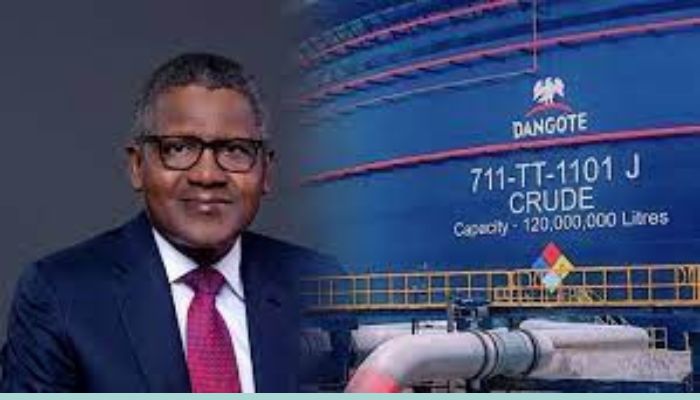
The Dangote Petroleum Refinery’s new plan, which is set to transform the way petroleum products are transported and distributed nationwide, is shaping up to be one of the most disruptive moves in Nigeria’s downstream oil and gas sector, according to findings by BusinessDay.
Effective August 15, 2025, the refinery will begin direct distribution of premium motor spirit (PMS) and diesel to a wide spectrum of large-scale users across Nigeria.
This includes fuel marketers, petrol station operators, manufacturers, telecommunications companies, aviation firms, and other major off-takers.
At the heart of this initiative is a bold and capital-intensive bet on cleaner and more efficient energy transport: the deployment of 4,000 brand-new CNG-powered tankers and the construction of supporting infrastructure, including CNG ‘daughter booster’ stations across Nigeria.

The refinery is also rolling out an initial fleet of over 100 CNG tankers to kickstart the transition.
Industry stakeholders and analysts have hailed the announcement as a major turning point, not only in product distribution efficiency but also in addressing longstanding challenges in Nigeria’s downstream sector.
Among these are the dangerous reliance on aging diesel trucks for product movement, frequent accidents on highways, and the perennial threat of strikes from petroleum tanker drivers, which often result in fuel scarcity and economic disruption.
Read also: Winners, losers in Dangote’s petrol distribution strategy
“This is not just about getting products from point A to point B,” a business executive familiar with the rollout said. “It’s about rethinking the entire architecture of how we move energy in Nigeria, cleaner, safer, more reliable, and ultimately cheaper.”

The shift to CNG-powered tankers is expected to drastically cut emissions and reduce the country’s dependence on imported diesel, which powers most of the fuel distribution trucks in the nation.
The federal government has previously backed a national gas expansion programme, but this is the first time a private sector player is committing to CNG at this scale, a survey by BusinessDay showed.
Abimbola Oyarinu, a university lecturer and public affairs analyst, stated that if successfully implemented, the policy could significantly reduce the power held by middlemen within the oil and gas distribution chain.
He observed that these intermediaries, including tanker drivers, have historically held the sector, and sometimes even the state, to ransom.
“This initiative has the potential to dismantle the dominance of powerful middlemen, who have in the past stalled progress and held entities like the NNPCL hostage,” said Oyarinu.
Speaking on a national television programme, Kelvin Emmanuel, energy expert and co-founder of Dairy Hills, said Dangote’s move to cover logistics costs marks a critical shift that could allow Nigerians to finally benefit from domestic refining.
He argued that concerns about the refinery becoming a monopoly are misplaced, pointing instead to systemic inefficiencies that have plagued the sector for decades.
“People have valid concerns,” Emmanuel acknowledged. “But let’s be clear: the real business marketers have been involved in selling PMS with margins of N5 to N15. Their real gains have come from exploiting arbitrage opportunities, often with substandard imports that don’t meet the sulphur specifications outlined in the Petroleum Industry Act (PIA).”
He highlighted how logistical and regulatory failings have hampered fuel distribution.
“For instance, I can confirm that the Nigerian Midstream and Downstream Petroleum Regulatory Authority (NMDPRA) currently owes independent marketers N1.8 billion in outstanding bridging claims. Whether these claims are valid is another matter—an independent forensic audit would be required to determine that.”
According to Emmanuel, the Dangote Refinery is stepping in to address long-standing gaps in Nigeria’s fuel distribution system. He emphasised that fuel supply across the country remains inconsistent, with only Lagos, a few states in the southwest, and Abuja enjoying relatively stable and fair pump prices
He further explained that the refinery’s current reliance on road transport is a strategic move to bypass infrastructural and bureaucratic bottlenecks.
“The immediate fix is the deployment of CNG-powered trucks to ensure last-mile delivery while avoiding delays caused by existing structural inefficiencies,” Emmanuel added.
Read also: More trouble for depot owners as Dangote begins petrol, diesel distribution nationwide
Disrupting an old model
The implications of this pivot are wide-ranging.
First, the introduction of free logistics for large-scale distributors effectively levels the playing field, especially for independent marketers, who often complain about the high cost of product transportation from depots to their outlets.
By removing logistics costs from the equation, Dangote’s model may force other refineries and major depots to review their pricing strategies or risk losing market share.
This could also significantly ease pressure on pump prices at retail outlets, especially in rural areas where transport costs are usually inflated.
Also, the shift toward CNG trucks and stations addresses one of the downstream sector’s most critical safety challenges: fuel tanker accidents. Nigeria has witnessed multiple high-profile road disasters involving petrol tankers, often with tragic consequences.
“Thousands of lives have been lost over the years because of poorly maintained diesel trucks and careless handling,” said Abdulrahman Aliu, an independent logistics consultant. “This Dangote initiative could very well cut accident rates by half within a few years if properly managed.”
Broader economic, environmental impact
Beyond logistics, Dangote’s CNG bet aligns with broader national goals around energy transition and climate action. Nigeria, which has committed to achieving net-zero carbon emissions by 2060, has identified natural gas as a transition fuel.
A wide-scale adoption of CNG-powered logistics could significantly reduce emissions from the transport sector, currently a major source of air pollution and greenhouse gases.
“This is a bold move and a strong private-sector endorsement of gas as a cleaner alternative to diesel,” said Olufemi Taiwo, an energy economist based in Abuja. “If scaled properly, this could trigger demand for more CNG vehicles and stations across Nigeria, with multiplier effects on jobs, manufacturing, and technology transfer.”