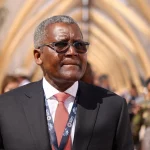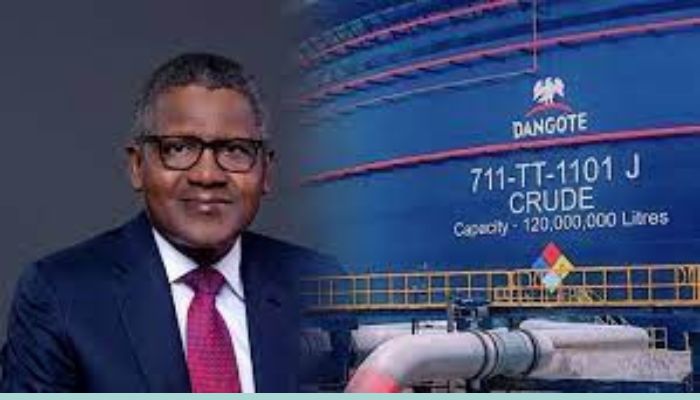
The President of the Dangote Group, Aliko Dangote, said that most Nigerians are unaware that they currently pay 55 per cent of what other West African countries pay for Premium Motor Spirit (petrol).
Dangote also said his refinery has helped reduce fuel prices by selling petrol between N815 and N820 per litre.
The billionaire businessman made these comments during a high-level visit to his 650,000 barrels-per-day facility. The visit was led by Dr Omar Touray, President of the Economic Community of West African States Commission, and his team. The Dangote Group released a statement about the visit on Sunday.
Dangote emphasised that Africa would benefit greatly by encouraging trade between its countries. He explained how his refinery has helped Nigeria reduce the cost of fuel and production costs across many sectors of the economy.

He gave the example of diesel price reductions that happened when his refinery started production.
“Last year, when we began diesel production, we were able to reduce the price from N1,700 to N1,100 at a go, and as of today, the price has crashed further. This reduction has made a significant impact across various sectors. It has supported industries, benefited those of us in mining, and provided vital relief to the agricultural sector. The effect has been far-reaching,” he said.
Dangote pointed out that Nigerians are getting better deals from local refining. He said petrol prices have dropped significantly compared to what people pay in neighbouring countries.
Read Also:
Fiscal deficit surges 75% under Tinubu despite revenue gains
“In neighbouring countries, the average price of petrol is around $1 per litre, which is N1,600. But here at our refinery, we’re selling at between N815 and N820. Many Nigerians don’t realise that they are currently paying just 55 per cent of what others in the region are paying for petrol,” he noted.
The businessman hinted at future developments, saying the refinery has “a much larger initiative in the pipeline, something we’ve not yet announced.” He told Nigerians that “this refinery is built for them, and they will enjoy the maximum benefit from it.”

During the facility tour, Dangote explained the challenges and successes involved in building what he called the world’s largest single-train refinery. He repeated his long-held belief that Africa’s continued dependence on imported goods cannot continue because it prevents economic independence.
“As long as we continue importing what we can produce, we will remain underdeveloped. This refinery is proof that we can build for ourselves at scale, to global standards,” it was stated.
Dangote responded to critics who have questioned the refinery’s capacity. He said the facility is fully equipped to meet petroleum needs for both Nigeria and the entire West African region.
“There have been many claims suggesting that we don’t even produce enough to meet Nigeria’s needs, so how could we possibly supply other West African countries? But now, they (ECOWAS officials) are here to see the reality for themselves and, more importantly, to encourage other nations to embark on similarly large-scale industrial projects,” he said.
He stressed that lower prices are a direct result of local refining. This approach continues to make fuel more affordable while improving energy security and reducing dependence on imports.