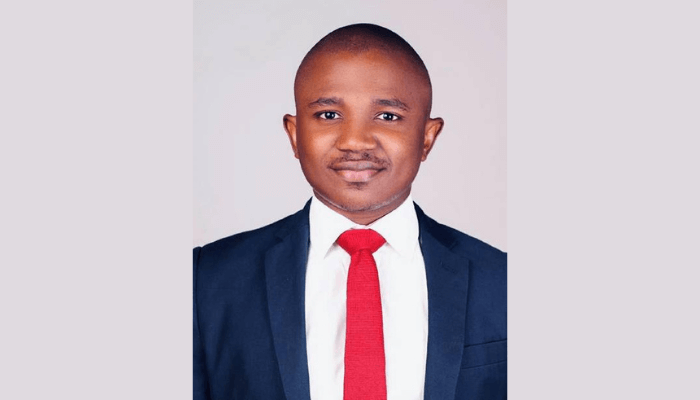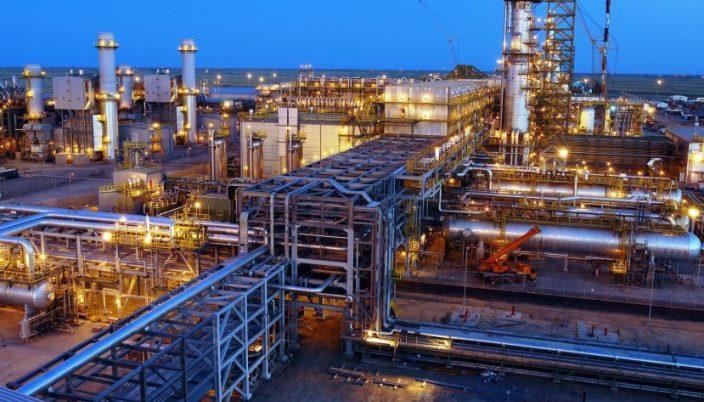
David Bird, the chief executive officer of Nigeria’s $20 billion Dangote Refinery, said the company can deliver a 1.4 million-barrel-a-day expansion of the plant within three years, betting on a replication strategy designed to avoid the cost overruns and delays that often plague large energy projects.
Speaking about the expansion plan targeted for 2026 on Wednesday , Bird said the refinery will pursue what he described as a “roofless replication” of its existing configuration, essentially copying the current design without reopening detailed engineering work.
That approach, he said, would allow the company to fast-track procurement and construction by relying on proven specifications rather than redesigning systems.
“Once you let engineers go back into an expansion, they often start to tinker, and that sends you back into months or years of detailed engineering,” Bird said. “The idea here is replication. We will not need to reengineer, so we can get straight into ordering long-lead items and commencing construction.”

Read also: Dangote refinery says maintenance ongoing but fuel output remains steady
The Dangote Refinery, located in the Lekki Free Trade Zone near Lagos, is already the largest single-train refinery in the world, with a nameplate capacity of 650,000 barrels a day.
An expansion to 1.4 million barrels a day would cement its position as one of the world’s biggest refining complexes and significantly reshape fuel flows in Africa, a region that has long relied on imports for refined petroleum products.
Bird, who was appointed as the refinery’s first standalone CEO, said the expansion timetable rests on two sets of parallel activities beginning immediately.
The company plans to place orders for long-lead procurement items, such as major equipment and process units, with the goal of completing those purchases in the first month of 2026. At the same time, site preparation and early civil works are set to begin before the end of this month.

“We’re doing two things in parallel,” Bird said. “Procurement starts immediately, and at the same time we’re beginning filling works and site preparation.”
He said one of the key advantages of the project is that most of the groundwork has already been done.
The land earmarked for the expansion has been reclaimed, raised and prepared in advance, eliminating a major source of delay typical in large industrial projects.
“If you look at the landscape, you can see that the land has already been proclaimed and raised by more than a meter compared with where it was in the past,” Bird said, crediting the foresight of Nigeria’s leadership. “All of that pre-investment has been done. None of the normal site-preparation timelines really apply here.”
Read also: Dangote refinery launches hotline to report MRS stations selling petrol above N739
Because of that early preparation, Bird said the refinery expects to see structural steel “coming out of the ground” as early as the end of this year, a milestone that would normally take much longer to reach on a greenfield site.
Dangote Refinery is central to Nigeria’s strategy to cut fuel imports, conserve foreign exchange and stabilise domestic fuel supply.
Once fully operational, the existing plant is expected to meet all of Nigeria’s petrol demand and export surplus products across West and Central Africa. An expansion would deepen that impact, potentially turning Nigeria into a major exporter of refined fuels.
Bird acknowledged that large-scale refinery projects globally have struggled to meet schedules and budgets, but said the combination of replication, early procurement and ready-to-build land gives Dangote Refinery a strong advantage.
“We are firmly of the belief that we can bring this expansion online within three years,” he said.
If achieved, the expansion would rank among the fastest large-scale refinery builds globally, underscoring Dangote Group’s ambition to position the facility not just as a national asset, but as a globally competitive refining hub.