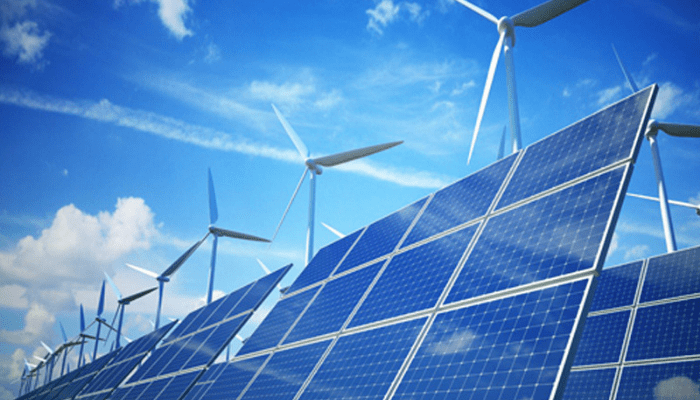
The Centre for the Promotion of Private Enterprise (CPPE) has called on the federal government to scrap the import duty paid on renewable energy equipment like solar panels and batteries in order to accelerate efficient and effective solutions to continuous energy challenges, especially for manufacturing companies.
This call was made by Muda Yusuf, chief executive officer, CPPE, on Monday as he stated that epileptic power supply is a major challenge affecting businesses, adding that their reliance on self-generated sources mostly petrol and diesel-powered generators are no longer sustainable as their prices spiral out of control, especially with the ongoing Russia-Ukraine crisis.
Yusuf said many businesses are unable to pass on the increase in energy cost to their consumers which eats into their profit. Some have scaled down their operations, while several others have suspended operations.
“Power sector is critical to the economic development of the country, I believe the government still needs to provide generous fiscal incentives for investors in the sector because of the economic development and social impact of an improved power sector performance,” he said.

Read also: Business women advocate female’s property rights in Nigeria
Consequently, Yusuf said the use of renewable sources of energy such as solar power, wind energy, among others provides a more sustainable and affordable solution to the power availability challenge, however, the current high cost of acquiring renewable energy installation has been a major impediment to the access of this energy solution.
“We submit that import duty and taxes on solar equipment, solar batteries and inverters should be scrapped to improve access to renewable energy solutions and ensure the rapid promotion of renewable energy solutions through the enactment of policies that will make it more affordable,” he said.
Yusuf also highlighted the country’s growing debt profile which was reported to have hit N39.56 trillion as of December 2021 according to the Debt Management Office (DMO).
Although Nigeria’s Minister of Finance, Zainab Ahmed said the country does not have a debt problem, Yusuf said debt typically becomes a problem if the revenue base is not strong enough to service the debt sustainably.

He explained that the debt service component of government finances will increase as the government struggles to finance the deficit, especially as government actual revenue can hardly cover the recurrent budget.
“We need the political will to cut expenditure and undertake reforms that could scale down the size of government, reduce governance cost, ease the fiscal burden on government, and boost revenue,” he said.