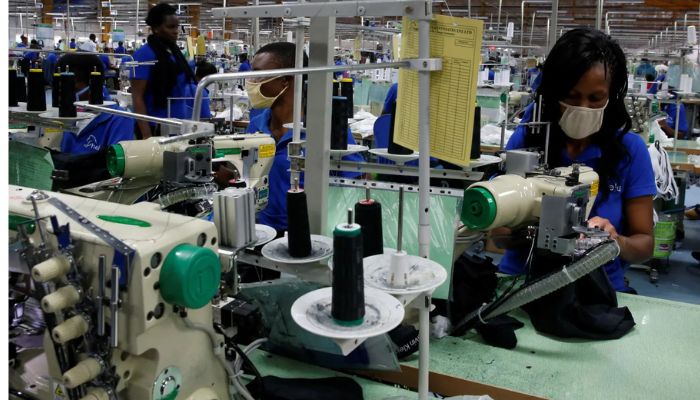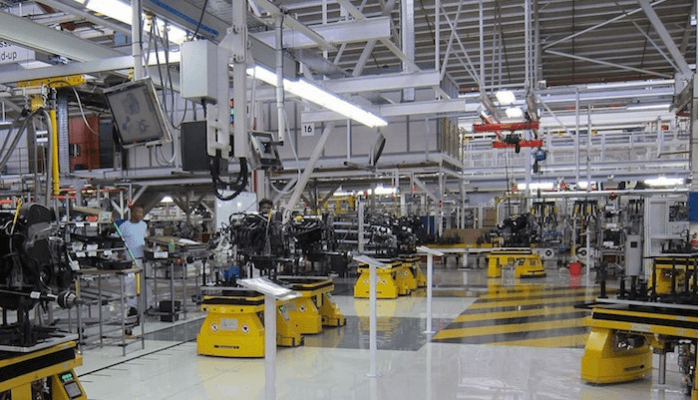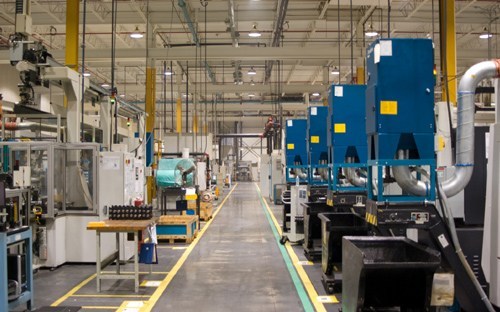
Coronavirus is producing different outcomes for manufacturers as some record gains while other incur losses.
Food and beverage companies, which have been licensed to operate within the period, are happy to be in business, even though they have not been able to maximize the opportunity owing to lack of purchasing power of consumers who are mainly sitting at home.
“Sales have been good, but not as much as you would want,” an operating manager of a food company based in Ikeja, Lagos, said.
“Apart from low purchasing power of the consumers, we experience interruptions in terms of supply chain and logistics,” the manager said.

Since the outbreak of the coronavirus pandemic, economies of countries have been hard hit. Nigeria is not an exception with lockdowns threatening thousands of firms and jobs.
While pharmaceuticals and food firms are at work, others are uncertain about their future.
Layo Bakare-Okeowo, chief executive officer of FAE Limited, said in a telephone interview that the impact of the pandemic in the company is huge. She said that the company is being forced to suspend operations till further notice.
“The impact is huge in the company and right now we don’t know how we want to achieve our projections for the year,” Bakare-Okeowo, whose company produces envelopes,said.
“We hope it comes to an end soon so we can get our lives back, not just for the company but also for staff members who have dependents,” she further said.

She explained that while she is still able to communicate with her foreign business partners, business transactions have been minimal especially as banks are not in full operation.
Similarly, Joseph Onah, CEO, Sparkles, which manufactures soaps, shampoos, and antiseptics, said he has been forced to stop operations because he has not been able to get raw materials for production and his staff members have not been able to get to the production factory.
“Initially, when the pandemic started, we were still able to produce while employing precautionary measures,” he said.
“However, since the lockdown began, we have suspended operations. The lockdown extension will make it a month and that is bad for business,” he said.
He noted that many of his distributors have sold out their stock and there will be a problem in meeting demand when the economy re-starts, as raw materials may not be available or their prices not affordable.
A report by Africa’s Pulse titled ‘Assessing the Economic Impact of COVID-19 and Policy Responses in Sub-Saharan Africa’ says that the pandemic has taken a toll on human life and brought major disruptions to economic activity across the world.
It says the impact of the unprecedented crisis on human life and the global economy reflects the speed and magnitude of the contagion, greater global integration, and the major role that China plays in global supply chains, travel, and commodity markets,
“At the global level, incoming data suggest that the economic disruption from the COVID-19 outbreak is extensive, and the global economy is falling into recession. Industrial production, investment, retail sales, and services production contracted sharply in China in 2020 Q1. Contractions of a similar magnitude are expected to follow in other countries, including the United States and the euro area, as localized outbreaks combined with strict containment measures weigh on activity.”
It is well known that when China sneezes, the world catches cold. This is evident as the pandemic continues to expand from a health crisis to an economic, political and social crisis affecting commercial and business activities in the global economy.
Akinloye Ayorinde, analyst at CSL Stockbrokers Limited, said the coronavirus, which has slowed down economic activities, will batter the MSMEs despite their significant contributions to economic growth, adding that suspended operations and low demand will result in a gloomy year for them.
According to a 2017 report by the National Bureau of Statistics (NBS) and the Small and Medium Enterprises Development Agency of Nigeria (SMEDAN), the number of MSMEs rose from 37million in 2013 to 41.5million in 2017. Micro enterprises were 41.47 million, constituting 99.8 percent of the total enterprises, while small and medium businesses were estimated at 73,081, which is 0.2 percent of the total.
However, the report shows that the number of medium scale enterprises majorly constituting manufacturers dropped by 61 percent, from 4,670 in 2013 to 1,793 in 2017. MSMEs contribute 50 percent to the GDP and over 80 percent to employment.
Gbemi Faminu