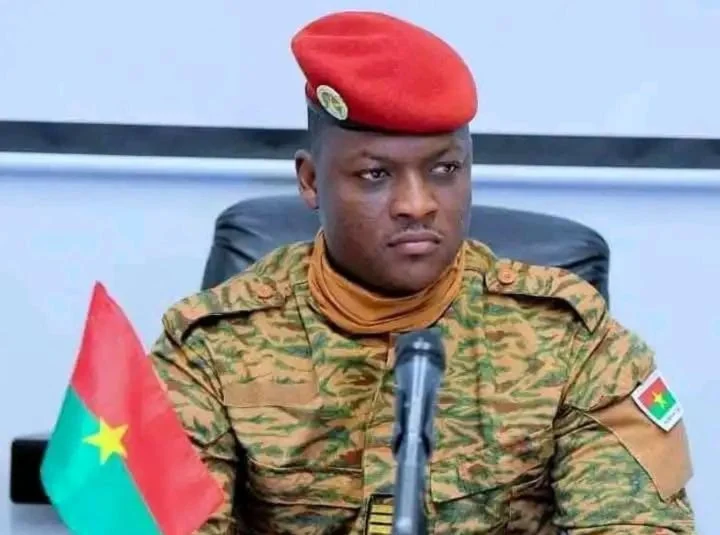
A new continental study has found that military coups, not elections, have become the most common pathway for young Africans to attain national leadership, deepening concerns about democratic backsliding and instability across the region.
The Age & Governance in Africa: 2015–2025 report published by Column shows that almost all of Africa’s youngest leaders in the last decade rose to power through the barrel of a gun rather than the ballot box, a trend the authors describe as one of the continent’s most defining governance shifts.
“Younger African leaders mostly rose to power through coups between 2015 and 2025. Older leaders typically came through elections or party processes,” the report states.
The research examined 38 first-time heads of state and discovered that some of the continent’s most youthful leaders, such as Burkina Faso’s Ibrahim Traoré (34), Mali’s Assimi Goïta (38), Guinea’s Mamady Doumbouya (41), and Chad’s Mahamat Idriss Déby (37), gained power through military takeovers. In contrast, elected leaders tended to be significantly older, typically in their late fifties to seventies.

According to the authors, this sharp divide reflects a deeper structural problem within African political systems. They argue that traditional party structures “push entry into the late fifties or sixties,” leaving younger political hopefuls little room to rise legitimately. As the report warns, “The pathway to power explains age differences better than cultural preferences or demographics.”
The consequence, the analysis suggests, is that ambitious youth increasingly view democracy as a closed door. “When formal systems seem closed, ambition flows to informal or disruptive channels, protests, populist movements, and military interventions,” the document says, cautioning that this dynamic fuels unrest and weakens public faith in democratic governance.
The report also highlights that while coups tend to bring younger leaders to office, they often come with legitimacy challenges, international sanctions, and strained donor relations. Elected leaders, though older, typically enjoy greater constitutional recognition. This makes the “ballots versus barracks” divide an urgent governance puzzle for African states.
Ultimately, the study calls for deep party reforms, youth-inclusive political pipelines, and stronger civilian oversight of the military to ensure that young leaders can rise through constitutional means rather than force.