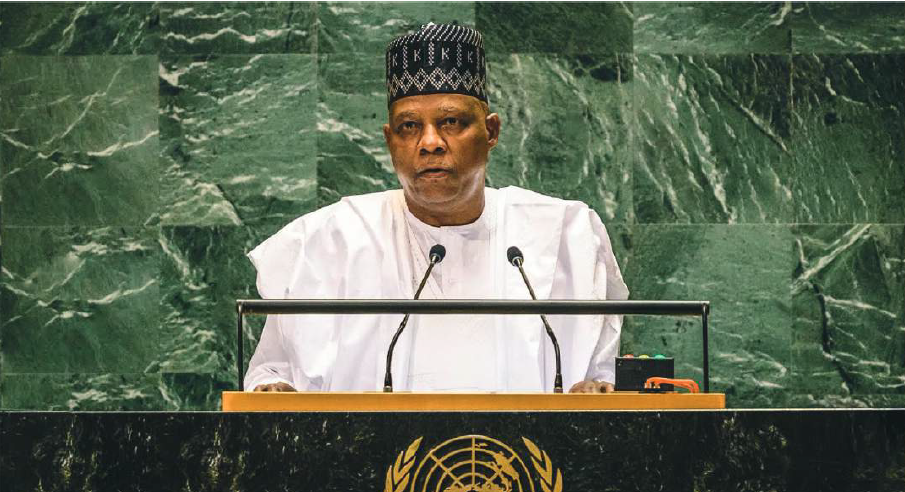
Vice-President Shettima’s address at the UN General Assembly last week provoked strong reactions. His words, which indicted the erosion of international norms the UN was created to uphold, resonated powerfully at an 80th anniversary gathering facing the collapse of the world order it was built to defend. The speech was more than a diplomatic performance – it was a reminder that Nigeria still has a voice capable of unsettling assumptions and forcing the world to look itself in the mirror. At a time when trust in multilateralism is wearing thin, Nigeria’s intervention could not have been timelier.
At the heart of that intervention was a bold call – Africa deserves a permanent seat on the UN Security Council. However, back home, this ambition sparked scepticism. To citizens grappling with power cuts, insecurity, and unemployment, such a demand can sound detached from reality. Yet this reaction misreads our history and misunderstands our moment. The world is heading into a storm it barely understands and Nigeria already stands in its eye. What many see as our weaknesses are, in truth, our deepest source of expertise.
The scepticism about Nigeria’s role stems from a failure of historical imagination. We measure our destiny with the yardstick of the coloniser, forgetting that our very survival as a sovereign nation is already a rebuttal to his world. The 19th century spoke of the “White Man’s Burden” – a project of violent domination that built the modern world on the lie that human lives can be ranked. That same logic still haunts the institutions created in 1945.
Nigeria carries the opposite responsibility. Call it the ‘Black Man’s Burden’: to lead the world toward the humanistic vision it proclaims but rarely practises. This is the philosophy of liberation – I am because we are – which rejects the colonial logic of I have, therefore I am. Our role is not to join the banquet of the powerful, but to build a table that nourishes all of humanity.

Our founding fathers understood this. As the political theorist Adom Getachew reminds us, the anti-colonial project was not just independence but world-making: the creation of a new international order grounded in shared humanity. That project remains unfinished, and Nigeria must reconnect with it. Our daily struggles reflect the contradictions of a dying order. Our task is to solve them. We are the frontline where the future is contested.
Nigeria’s national ambitions cannot be separated from its global calling. Its promise lies in engaging outward – in drawing from its history of regional leadership to model a new kind of global cooperation. While the industrialised world lectures on carbon limits, Nigeria and its peers face the real burden of lifting millions out of poverty within those constraints. The country’s fight against desertification in the Sahel is not an academic debate but a daily negotiation with survival. Where others theorise about a green transition, we are forced to practise it, balancing energy, development, and dignity.
The same is true of conflict. The “wars of others” spill into our borders through weapons, ideologies, and refugees. Modern warfare – over resources, faith, and survival – has placed Nigeria at the heart of its fallout. And yet, time and again, we have chosen solidarity over conquest. From supporting the anti-apartheid struggle to leading the Multinational Joint Task Force under President Buhari, we have consistently shown that influence can be exercised through cooperation, not domination. This is Nigeria’s signature: sovereignty blended with solidarity, strength exercised through fraternity. In a world tilting toward authoritarianism, this is the model humanity needs.
As the UN turns 80 and Nigeria 65, both face a moment of reckoning. The old models are exhausted. The world can no longer be led from a distance. Nigeria is right to demand a permanent seat because its existential battles are global battles. The country’s fight against insecurity, its demographic surge,as well as economic dilemmas, among others, are the same pressures reshaping the world. Recognising this should give us confidence, not doubt. We are not outliers; we are at the centre of the story.
The world, too, must choose. It can continue to pity Nigeria, or it can acknowledge us as an indispensable partner. We hold a map to the future – one etched in the resilience of the Sahel, in the ingenuity of our youth, and in the daily negotiation of pluralism that is our greatest national project. The call for a Security Council seat is not arrogance; it is the logical conclusion of our history. We shoulder this ambition not as conquerors but as survivors who understand the value of life. Nigerians are not asking for permission to lead. We are reporting for duty.

If Nigeria can embrace its 65 years not as a burden but as preparation, then the 65th independence anniversary will mean more than celebration. It will mark a turning point: the moment we begin to transform our struggles into lessons for the world, and our survival into a blueprint for humanity’s future. The world has much to learn from Nigeria’s contradictions and resilience. If we can turn them into strength, Nigeria will not just be a participant in the future order – it will be one of its architects.