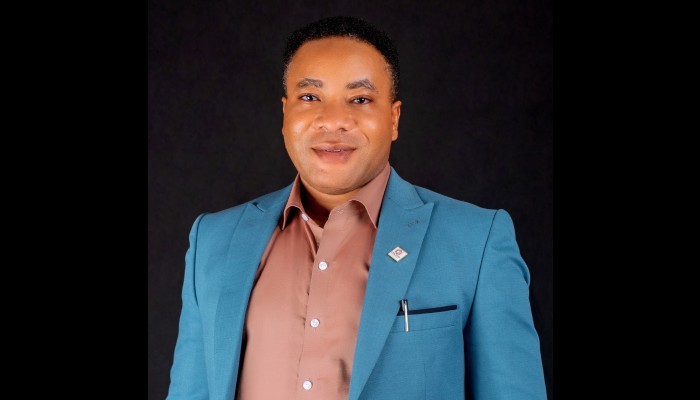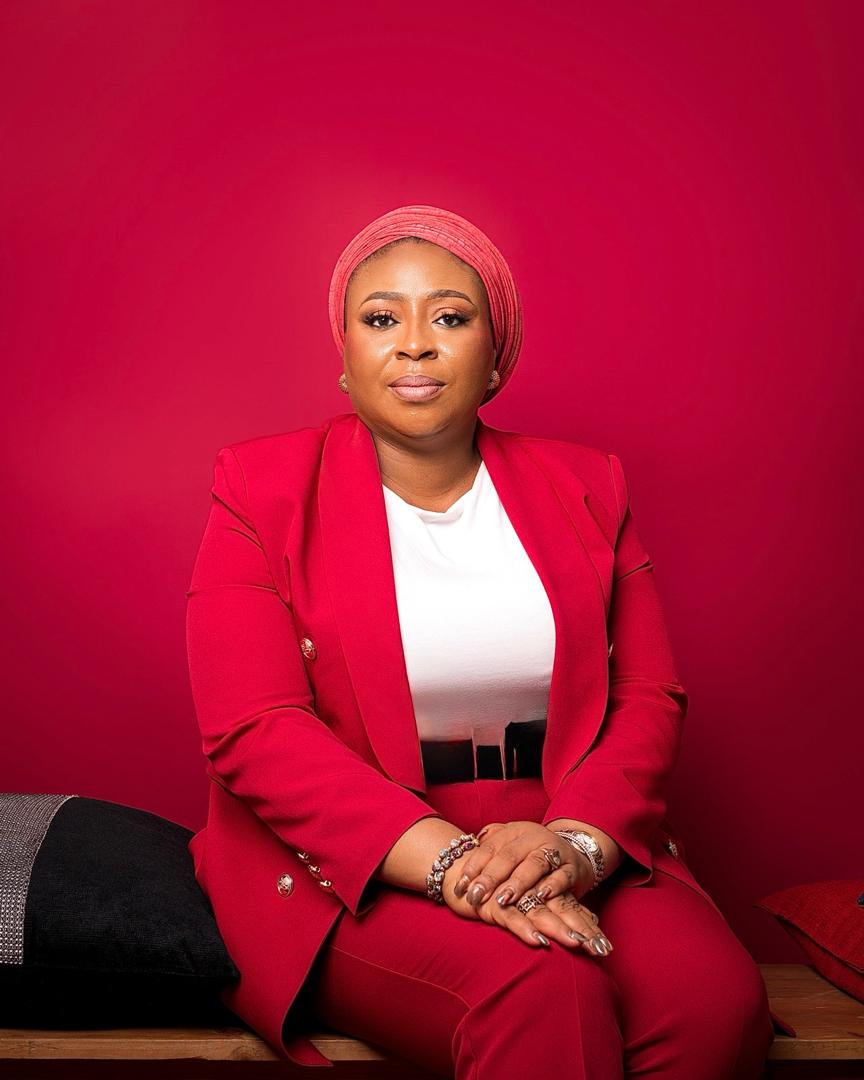
Ezinne Nwazulu, group head, Retail, Nepal Oil and Gas Limited & founder, 234 Finance speaks about managing conflicts while being part of the family business.
Can you tell us about your family business and some of the other businesses that you’re into?
Nepal Energies, founded in 2004 is a leading fully indigenous Downstream, Midstream and Upstream player in the Nigeran Energy sector. Our business spans Procurement, Trading, Warehousing, Marketing & Distribution of Petroleum Products across Nigeria and the coastal lines of Sub-Saharan Africa.
Two years ago, we ventured into retail stations. We realized that if you’re not servicing the last mile as an industry player, your business will struggle. This is a unit that I set up and I’m currently running as the Group Head of Retail. We have 11 stations and counting and intend to further expand to a minimum of 50 stations by the end of next year. You can learn more about us at www.nepalgroupng.com

Can you just tell us a bit more about your role and how you got involved with the family business?
My journey in the family business has been pretty interesting, with a lot of ups and downs.
I left the banking industry in 2017 to join Nepal as a Business Development Manager. At the time, I didn’t have much understanding about the business and I struggled.
I struggled because I didn’t understand the dynamics of the business and I came into the organization with the mindset of wanting to change everything, wanting to put structure in place and I was focusing on the things that weren’t priority for the management at the time.
It was an interesting season for me also as the dynamics of my relationship with my
mother, who the Group Managing Director, changed. It changed from mother and daughter to boss and employee and I didn’t quite know how to manage that. We were also bumping heads a lot because my mum felt like I was coming into her organization to give orders rather than focusing on the job I was hired to do.
At some point I couldn’t cope with the work pressure and I left the organization to focus on building my startup, 234Finance.com where we support African startups with mentorship and funding.

Although it seemed premature to leave, I felt that was what was needed to be done and I had also just had my twins who were just a few of months old.
My exit from Nepal is similar to the prodigal son story because I left to focus on my startup, got my own office space and during that period my relationship with my mom was strained.
I had The Mentor Matchup Challenge event in December that year and I was optimistic for the following year because at 234Finance, we promote entrepreneurship and get entrepreneurs funding to scale up their businesses. Unfortunately, COVID happened and a lot of people had to start managing their resources.
The investors that had committed to provide funding to the businesses in 234Finance community didn’t quite come through on their promises and this was a nudge to come back to reality because it felt like a disaster at the time. I couldn’t afford to pay my office rent the following year and I needed to know the next line of action because I am not that young and I have three children.
I remember my immediate younger brother coming to talk to me at my office about coming back to the company to manage one of the smaller businesses. My mom is a serial entrepreneur who has created businesses that were interlinked with the activities within Nepal Group and these subsidiary companies support the needs of oil and gas company, which is our main business.
So I decided to handle the insurance brokerage company which is the smallest,
and the office I was working out of, wasn’t in the main building so I just went to work and nobody noticed me.
I resumed work in February 2020, handling insurance and I was just trying to give it my best shot. Less than a month after my resumption, my mom decided that she wanted to go into retail station business. So she asked me to help set it up, even though I had little experience in the industry at the time.
It was very challenging and we started small with one station in Egbeda that was launched in August 2020 and I had to learn on the job.
In the early days of running Nepal Retail, I remember coming to the office defeated because I didn’t know what I was doing and I had to swallow my pride to learn from both subordinates and industry colleagues.
Nepal retail stations started small but after two years, I can say categorically that it is the fastest-growing arm of our company today.
How did you deal with the family feuds and then what advice do you have for young people who have the same situation with their parents in the family business?
First of all, my mother and I are from two different generations. I consider myself a millennial and her, a Gen X and how we do things are typically very different. My mom would rather be behind the scenes and just make things happen but for me, I prefer to put myself out there, strategically so our approach was very different.
It was difficult for her to conform to my ideas of doing things and I don’t know how many people are able to handle that kind of dynamic, especially because we’re more or less like best friends. Although it was difficult, I had to separate the relationship as my boss and my mother and understand that I can’t take things too personal even though I can be very sensitive.
A couple of years ago when my mom was speaking to me, because I felt the need to be heard, I responded back. This was perceived as being rude. Over time, I’ve had understand her expectations as my boss and learn how to communicate effectively.
I’ve also learned to not take my access to her for granted and to see it as an opportunity to also learn and I think it has been very interesting. I’ve also had to do a lot of internal workings within myself to adjust my approach and prioritize what is most important at every point in time.
So I read a book recently by Kristin Keffeler which talks about the myth of the silver spoon and highlights the fact that children from affluent families or children in big family businesses tend to face anxieties and pressures because everyone expects them to succeed, so lots of them have issues with the fear of falling short of family expectations.
Do you feel this pressure and if you do, how do you cope?
Absolutely, so for me, I’m the first child and the first girl and my parents have high expectations of me. The Nigeria we are in today is not the Nigeria our parents had, in terms of the opportunities they had access to and the situation of the country. They started their businesses when things were fairly okay and the economy was good, however, they had challenges but made it work and my parents are very successful so as the children, we have very huge shoes to fill. Fortunately, my siblings and I were raised to be grounded and to understand that life is very tough and it is hard to make money. This has kept us on our toes and to know nothing is going to be handed over to us.
Every opportunity that has been given to me, I’ve had to grab it with my two hands and I’ve had to earn the respect of my subordinates, my management, and my GMD to have my voice heard.
I have to work three to four times harder just to make people understand that see, I’m not your average rich kid or spoilt brat. I have ventured into businesses outside of my family because somehow I feel the need to prove myself and for my parents, their ultimate goal for us is to be independent outside of them.
Read also: Adeolu Adewumi-Zer, a leading lady in Nigeria’s insurance sector
For family businesses to survive different generations, there are clearly unique characteristics, such as succession management, staffing, family affairs, strategy, planning and governance structure that set family businesses apart from other business types. What would you say is the Nepal way of doing business that sets your company apart and ensures that it is successful?
So there are things that Nepal puts a lot of importance on and I think that is because in this industry, a lot has happened that has swallowed many companies.
My mum says this phrase that we use as a joke in the company: “follow the money”, and it’s very much part of our culture to keep our eyes on the prize.
Nepal is a big company, but it’s also a small company in terms of structure and flexibility. It’s a very fast-paced work environment such that as a junior employee if you’re unable to keep up with the pace, you would not survive.
You also cannot separate the business from the founder. My mom is a risk taker, very bullish and over the years she has learned hard lessons from losing money doing risky business transactions. However, as a company, we have put certain structures in place to mitigate the risks that we take.
We also have this culture where there is little bureaucracy so that we’re able to move swiftly to seize opportunities when we see them.
Nepal Energies very much feels like the family environment because you spend most of your time with your colleagues, so we created this atmosphere where everybody feels like they’re part of a family, and this makes employees want to go above and beyond to make sure things don’t go wrong in that family setting even if that is not your direct job role.
We are also very conservative about putting our brand out there, which is a culture that I am trying to change because publicity is a necessity in the retail space. There are companies who are much smaller than us but have done a great job in putting themselves out there. At Nepal, it is actually the opposite because we have so much going on as a group and only a fraction of it is out there.
How have you implemented the use of technology in business? Did you get any pushback from your mother in this case?
For technology, No, I didn’t get any pushback, because it’s something that we all know is important. With running retail stations, you need to think about automation if you’re trying to do anything large scale. So we use technology to monitor our operations, we use an ERP for posting and monitoring sales. We also use a forecourt management system for tracking sales of our petroleum product at our retail outlets, we use something called an automated tank gauge (ATG) to basically check the volume of products being stored in our underground tanks.
We have an internal control and audit department that always makes sure there are checks and balances in place, so you absolutely cannot do without technology.
Although I wish the pace to be fully automated could be a bit faster, we’re slowly getting there to ensure all our systems and processes are automated, monitored and tracked. I’m also pushing for data collection too.
I believe so much in technology because I’ve seen it being used to make life easier, especially in the workplace. However, I am learning to work at everybody’s pace, because when everyone is carried along, then it becomes easier to implement some of those leading technologies and push for digital transformation within the company.
Do you think that the idea of people or families who started a business, staying in the business is a source of competitive advantage versus hiring a professional business manager?
It depends on the individual but competence must be prioritized and having people with the best intentions because there are issues of people in family businesses with feuds or a family member trying to cheat the owner of the business.
It’s also about having a balance because when something is family owned, it’s very personal. In my own situation, I’ve had to earn the trust of my mother, and my COO who is my aunt, although it’s been difficult working with both of them, but with time I’ve also been working on myself and understanding what is important.
During management meetings, my mum is very tough on me and she uses it to send a signal to others that listen,’ if I can be this brutal with my daughter, then who are you?’ so it kind of keeps everybody on their toes.
Something happened about a month ago where one of our stations stocked out and it’s like policy in our SOP that under no circumstance do you go out of stock because that’s the fastest way to kill a retail business.
So she took a chunk of my salary based on the number days we lost sales due to stockout. I was furious but that was her way of instilling discipline; it was not my fault but because it happened on my watch, she held me responsible for it.
Now my team and I do everything possible to ensure we do not stock out except it’s a force majeure situation where it is clearly beyond our control. So to answer your question about hiring within the family versus hiring a business professional, I believe there should be a balance of both.
You can also hire very good talent, good people, genuine people that have good intentions for the company, even if they’re not related by blood to family. For instance, if the founder of a family business doesn’t see their child, or their heir competent to run their business, they will put somebody else in charge because that business is their brainchild, and they’re not going to give it to somebody that is going to run it down.
How can you advise the younger generation to create legitimacy around their positions in the family business?
First of all, you must be honest with yourself and you need to know what you’re good at and what your shortcomings are. For instance, when I started running the retail stations, I was very intentional about building relationships within the organization because I understood that there were people there before me. If you come with this bossy mentality, you’re going to end up looking ridiculous because these people understand work politics and can set you up to look highly incompetent especially since they understand the business more than you do.
You need to learn and do whatever it takes to master the business, so I’ve had to build relationships. In my organisation, I have so many friends and they know that I’m approachable because I spend more time with them than with my family and I need them to make my life easier. Also, teamwork is very important to me because there are people that are good at certain things and have been designated for certain roles and you need to work with those people and it is not something that happens overnight.
When we started the retail stations, I was clueless and I didn’t know anyone in the industry. We were making so many mistakes but from those mistakes, we’ve learned a lot and improved. I also ensure that I give people their credit and this has earned me respect from my colleagues because from my experience working at the bank, it’s so easy to get lost in the system because it’s such a big organization. You’ll be doing the work and somebody else is getting credit for it.
As GMD’s daughter, I have access to her where people don’t and I use this opportunity to also empower other people by mentioning what they are doing and how well they are doing it and it helps them in their career to be visible for promotion if there’s an opportunity. I also look at it as a trade-off; so they help make my job easier and I help them grow, it’s a win-win!
I am also in a position where what I say carries a lot of weight and as a result, I am careful about how I portray my colleagues because at the end of the day, I need these people to help me perform at my job. This is how I manage my relationship with subordinates and even my management.
Do you ever compare what you could be earning if you were outside of the family business? Does it ever come across your mind every single time to have a conversation about a pay raise with your mother?
Every single time. And yes I have had these conversations with her but there is always a pushback because in her head all these things are mine so I should be able to make the sacrifice. I feel like that’s the price to pay for being in the family business, and I’m paying that price because there are so many diverse businesses and there’s so much I’m learning which I use to comfort myself. If I was working in a company like Procter and Gamble or some tech company, I would have been earning so much more but then I would have been building someone else’s business.
So in the family business, it’s rewarding because, beyond the salary, you’re impacting lives, creating employment, and I don’t think there’s anything more rewarding than that, knowing that any decision I make can literally affect somebody’s life. The policies that we’re putting in place, the safety standards and all of that, can be the difference between somebody being dead or alive so what I’m doing is by far more important and it feels very rewarding.
What would be your advice to next-generation family business leaders to have a better chance of success than the older generation?
So my advice is that it is important to be authentically you and to have your own ideas when you’re joining the family business, but it’s also important to recognize the hard work, history and the tenacity behind that business.
There are some fundamental principles that have made that family business stay from year to year and you can’t throw it away when you’re trying to bring about freshness and new innovations into the business, so there should be a balance.
You also have to eat the humble pie because you can’t come into your family business with a know it all attitude. You have to start from a clean slate and understand the dynamic because every business has a strange secret and has what it does that makes it unique from the next one.
You must also be willing to outwork everybody because people already have this perception that you’re privileged. So it’s only by doing the extra work that you can prove to them that everyone is the same and it creates healthy competition because the people that are already there want to remain relevant. If everybody is competing to outperform the other, it benefits the business because everyone is putting in the work.
They also need to know that not all their linear ideas would be accepted and if they’re ever in the position to be the CEO, then they can go and implement everything they think of. So essentially, you can’t throw away the history of the business even though you’re trying to forge a new path.
In the Downstream oil and gas industry, business thrives very much on relationships and those relationships are what makes people in their functions relevant and able to deliver, so I’ve also had to start building certain relationships. Some family businesses didn’t survive because the children weren’t calm enough to continue those relationships that their parents had already started that helped the business to run.
So there has to be succession, but that succession is not going to be handed over to you, rather you have to show that you’re committed and you’re willing to manage and maintain all those relationships and trade secrets that makes the business to stand out.
So what is your philosophy about being a better leader?
To me, leadership is about service. I believe so much in the ‘servant leader’ phrase because when you’re a leader there are people following you and they need direction on how to go about things or where to go. So leadership isn’t about intimidation rather it is about service. Leadership is about using your influence to make things better for others, to make people’s voices heard, and to basically serve.
How would you define wealth?
Wealth to me is a currency and it has different expressions. There are different ways wealth can be defined. In my own personal definition, I’ll say I am rich in my network i.e human resource because nobody is an island. Also, wealth is being able to transform your network and your resources into value. I can also define wealth as the ability to understand the components that are needed to create value as well.
I don’t consider money as wealth because one moment you have it, one moment it’s gone, but what can you do to bring that money back? To me, that is true wealth.
What is the best financial decision you’ve ever made?
There’s so many I have made but one of the most important financial decisions I’ve made is my journey to financial independence.
Although my parents have always been supportive towards my family, I think to a large extent, I have somehow taken it for granted and almost felt entitled to their support. In recent times, I have changed my entire orientation and approach to money.
I have learnt not to take money for granted because it would disrespect you by leaving, so I’ve had to come to reality and being in Nigeria things are so hard you see people struggle, even me although it sounds like privilege when you compare it to the life of the average Nigerian.
So what that has helped me to do is to step out of my comfort zone by actively seeking opportunities that are outside of my family.
I have learnt to change my entire mindset around money, I’ve learnt to be frugal and avoid unnecessary spending.
What is your typical day like?
I’m a very routine-based person and I can do the same thing over and over again. So during the week, my typical lifestyle, I’m an early bird and I try to work out three times a week after which I get dressed and take my kids to school then go to work.
On Mondays I have like two meetings, on Tuesdays I have management meetings and because I am a group head, I interface with different groups and have different meetings, then I oversee what everyone is doing.
My day typically winds down around 5:30 pm and I do not like to stay out late because I’m very religious with my bedtime routine. I’m very social so I love to hang out with friends in my spare time.
I don’t really like to stay at home except I’m spending time with the kids which is a deliberate activity. So If I’m not at work or at home, I typically like to hang out with my friends and have dinner. I also love to attend events and I’m pretty good at networking and interacting because I think it’s very important to build those personal connections. So even if you see hanging out at a bar or any club, best believe that I’m networking or looking out for opportunities.
What is your favorite quote?
I am going to use Nepal’s tagline which is ‘Energy to Soar’ and it’s something that can be applied in your everyday life.
Can you recommend just one book that you read and that you think would be good for other students?
One book that I will recommend is the Blue Ocean Strategy although I can’t remember who wrote that book but basically, it is about establishing yourself in uncontested waters.
For instance in the oil and gas industry which is very competitive yet you’re struggling; finding a blue ocean is creating an opportunity where it is uncontested and people are not looking at. This is something I apply in my work and in my personal life. I’m always looking for areas that nobody has thought of or said anything about and I like to always set myself apart from others which is something that has also helped me to excel in whatever I do.