After deploring five of its innovative solar walk in cold rooms in markets around Nigeria, and plans to deplore 35 others, ColdHubs, a social enterprise that designs, assembles, installs and commissions 100% solar powered walk-in cold rooms in markets and farm locations, to store and preserve perishable foods 24/7, has procured cooling vans to move produce from farms to markets across Nigeria.
“The second part of our development phase is cold logistics to bring food in a safe and hygienic way from the north down to the south of Nigeria and to take apples and grapes imported from South Africa from the South into the northern part of Nigeria,” Nnaemeka Ikegwuonu, CEO of ColdHubs told BusinessDay in Owerri.

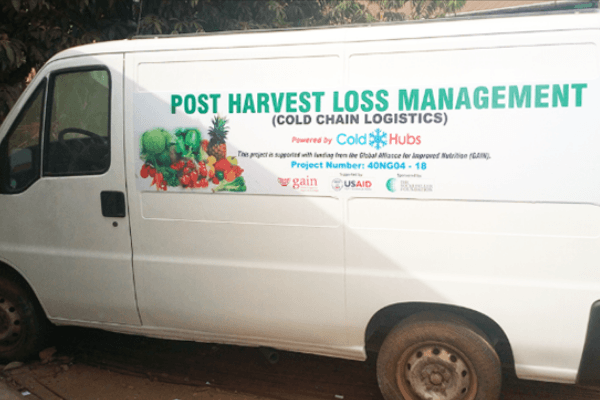
ColdHubs recently received support, from the Global Alliance for Improved Nutrition (GAIN) Post-Harvest Loss for Improved Nutrition (PLAN) Project, for a small cooling van. As a pilot project, ColdHubs wants to deploy the cooling van to support a perishable food aggregator to convey food from the north to southern parts of Nigeria.
This plan is however constrained by a difficult operating environment in Nigeria, Ikegwuonu said.
“I have been doing a scoping mission over the last two years looking at that sector, from Kano to Owerri, there are more than 30 checkpoints of touts, revenue collectors, local government collectors, police, soldiers, civil defence, road safety, agricultural quarantine service, community youths – its like everybody is against the business man, these are the challenges we fail and why it is very difficult to do business in Nigeria,” Ikegwuonu said.
ColdHubs effectively commenced operation in 2015 after starting off as a small holder foundation for farmers in the Imo state which organises radio talks to broadcast information on agriculture commodity pricing and improved farming practices part of the founder’s work as a consultant.

It was in the course of these engagements with farmers and other stakeholders that he discovered a critical problem of food waste and post harvest loss.
“Once cabbage is harvested with so much glut, those who cannot transport it dump it in the market, the cost of bringing back is more expensive and you cannot sell to make profit,” Ikegwuonu said.
As a result, “We decided to use solar from day one to achieve non reliance on grid and diesel generators. We are advocates of the green movement and environmentally conscious hence need for a technology that will achieve this goal,” Ikegwuonu said.
This led to the development of a solar powered cold room in 2015 with a pay as you store pricing strategy. The first cold room was launched in December 2016
and became operational in March 2017. It has the capacity to hold 150 crates and customers are charged N100 per day.
The company has deplored five operational cold hubs, three in Imo state, two in Kano and is building a set of 35 at the moment supported by grants from organisation such as All On and USAID.