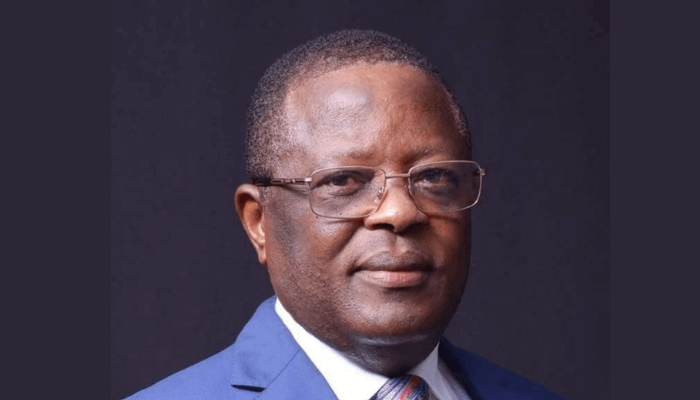
Civil society organisations, opposition party figures, and economic experts have applauded President Bola Ahmed Tinubu’s administration for the Lagos-Calabar Coastal Highway project, describing it as a landmark initiative that could transform Nigeria’s infrastructure and boost economic growth. The commendations came during a project inspection tour in Lagos, led by the Minister of Works, Senator David Umahi, where stakeholders noted the quality of execution and urged Nigerians to rise above political divides in supporting developmental projects.
Umahi disclosed that the first section of the 750-kilometre coastal highway stretching from Ahmadu Bello Way, Victoria Island, Lagos, to Eleko, Lagos would be completed by May 2026. He revealed that 35 kilometres had already been completed, leaving 12 kilometres to finish the initial segment. According to him, the first section covers 47 kilometres of the coastal highway, and work has also commenced on the second section from Eleko, Lagos, to Ode-Omi, Ogun State. He highlighted the government’s efforts in saving properties such as the Landmark Centre, clearing refuse up to a depth of 10 metres, and using concrete technology to ensure road durability. “Emerging economies like India have adopted concrete for enduring roads, and Nigeria must follow suit,” he added.
Otunba Segun Showunmi, a chieftain of the Peoples Democratic Party (PDP) and convener of The Alternative, stressed the need for national consensus around development. “You cannot develop a nation without a long-term plan. What I have seen so far today is commendable, I must tell you. Beyond our political ideological differences, we need to, as a nation, breathe in and out to explore how to achieve consensus to develop our nation,” he said. Showunmi pointed to global examples: “When you look at countries like Singapore, India, and UAE, their achievements have come through building consensus for national development. A nation at 65 must be in a hurry to link its infrastructure to model after other globally competitive economies.” He urged Nigerians to have “the courage to build the kind of things that will position it as a country to turn the corner and go full throttle in investing in legacy infrastructure projects that will transform the economy.”
Olufemi Awoyemi, Chairman of Proshare Group, described the Lagos Calabar Coastal Highway as a “test case” for financing large infrastructure projects. “This is an alternative, providing a primary route for cross-country connectivity, away from the current congestion, and a test case for big infrastructure projects and their financing,” Awoyemi said. According to him, the project has the potential to open up trade routes and provide long-term relief to Nigeria’s congested transport systems, while stimulating investment in adjoining communities.

Leaders of over 20 civil society organisations (CSOs) were also part of the tour. Declan Ihekaire, one of the CSO representatives, welcomed the government’s decision to involve stakeholders in monitoring the project. “We, as CSOs, must not condemn every time. When we see where they are getting it right, we should talk so that we encourage them. Ultimately, the beneficiaries of good initiatives are the people,” he said, adding that constant engagement between government and citizens would boost accountability and help sustain public confidence in national projects.
Umahi also responded to concerns about properties and investments allegedly affected by the highway construction. He assured the public that due process would be followed. “We will unravel the issues around the WinHomes and allegations of about $200 million of diaspora investments in the real estate project. We will involve the EFCC and DSS to investigate the matter alongside civil society organisations,” he stated. The Minister promised regular briefings with the media and stakeholders to provide progress reports and maintain transparency.
Beyond the Lagos Calabar Coastal Highway, Umahi outlined three other “legacy projects” under Tinubu’s administration: the 477-kilometre Trans-Saharan Highway traversing Calabar, Ebonyi, Kogi, Benue, Nasarawa, and the FCT; the 422-kilometre Akwanga–Jos–Bauchi–Gombe Expressway; and the 1,068-kilometre Sokoto–Badagry Superhighway. “We will continue to reiterate that roads and bridges are the infrastructure that build the GDP of every nation. And it is from this that the GDP of other sectors will grow,” Umahi said. He linked Tinubu’s vision for the coastal highway to his record as Lagos governor. “President Bola Ahmed Tinubu has this knowledge; he has demonstrated it when he was Governor of Lagos State and you can see that Lagos State is an economy within an economy. That is why we are doing everything possible to develop infrastructure according to his vision and mission.”
Stakeholders at the inspection agreed that Nigeria’s infrastructure challenges required collective action, not political rivalry. “Consensus is the key,” Showunmi reiterated. “If we must compete with global economies, we cannot afford to politicise every national initiative. Nigerians must support projects that promise to unlock growth and prosperity.”
The Lagos Calabar Coastal Highway, projected at 750 kilometres, is expected to be one of the most ambitious road projects in Africa. With sections already underway and a completion date for the first stretch set for 2026, stakeholders believe the project could redefine Nigeria’s transport network and unlock significant economic opportunities. For now, the project has managed to attract rare bipartisan praise, suggesting that infrastructure may be the bridge for consensus in a divided political landscape.