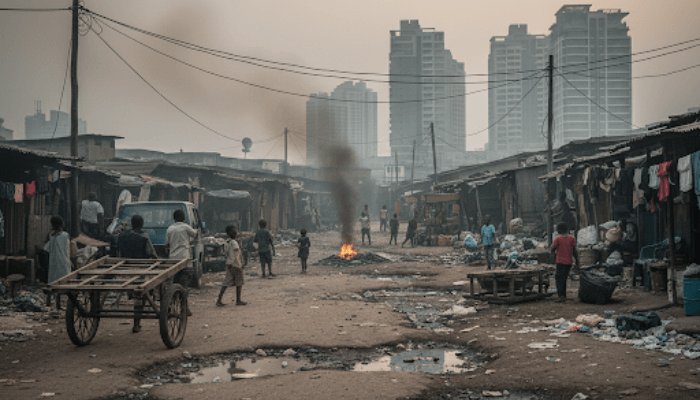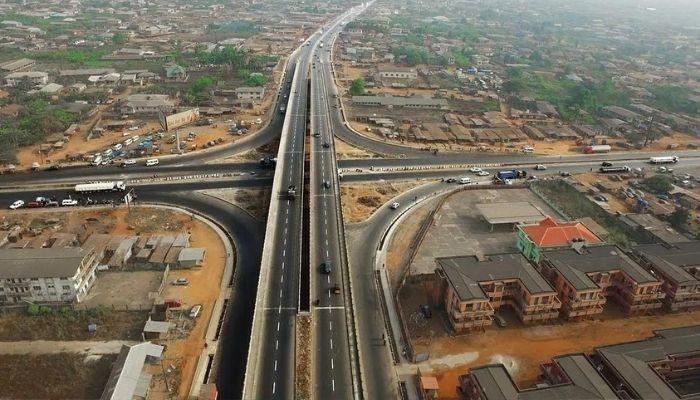
Currently, Nigeria stands at a critical juncture. With its infrastructure currently estimated at just 30 to 35 percent of gross domestic product (GDP), which is far below the 70 percent benchmark typical of middle‐income nations. The question is no longer if the infrastructure gap should be closed, but how fast and by what means.
Recent official estimates put Nigeria’s infrastructure shortfall at $2.3 trillion over the period through 2043 under the National Integrated Infrastructure Master Plan. Meanwhile, Nigeria has committed to raising its infrastructure stock from its present level of GDP to at least 70 per cent by 2043.
“Despite these promising steps, serious obstacles remain. Much of the funds for large infrastructure projects still come from external loans or foreign development finance institutions (DFIs). While necessary, such financing increases Nigeria’s debt burden and exposes the country to currency fluctuation risk.”
These are staggering figures dwarfing many of the past assumptions about the scale of investment needed, and they imply that incremental progress will no longer suffice.
Several recent developments show that Nigeria is beginning to mobilise resources more aggressively. The African Development Bank has invested $1.44 billion to support projects in power, transport, water, and sanitation. A $652 million package from China’s Exim Bank has been approved to build a road corridor that will serve as an evacuation route for goods from the Lekki Deep Sea Port and the Dangote Refinery.

The China Development Bank released around $255 million to help advance the standard‑gauge rail project between Kano and Kaduna, a project valued at $973 million.
The Federal Executive Council has officially approved $11.17 billion for the Lagos‑Calabar coastal rail line, part of a broader push to link up major coastal cities with modern rail infrastructure.
Read also: How Nigeria can mobilise private capital to close $100bn infrastructure gap
There are also commitments at the domestic level, as the Federal Government has disbursed N1.6 trillion to states (including FCT) between March 2024 and May 2025 for infrastructure and security‐related projects.
Despite these promising steps, serious obstacles remain. Much of the funds for large infrastructure projects still come from external loans or foreign development finance institutions (DFIs). While necessary, such financing increases Nigeria’s debt burden and exposes the country to currency fluctuation risk.

Some ambitious proposals, like a proposed $60 billion/N100 trillion plan for 4,000 km of high‐speed rail lines, have drawn sharp criticism concerning cost, timelines, technical feasibility, and whether they divert focus from already underway or critical infrastructure.
In 2024, only 20 percent of Nigeria’s budget spending was allocated to capital projects, despite the urgent need in transport, power, healthcare, and education. This reflects an imbalance between recurrent costs and long‐term investment.
Large projects like the Lagos‑Calabar rail line are being approved, but securing full funding, completing right‑of‑way acquisition, and coordinating across states remain huge tasks.
To close the infrastructure gap, Nigeria must move beyond good intentions and incrementalism, such as accelerating public‑private partnerships. Given the scale of the gap (~$2.3trn), public funding alone will not suffice. The government must strengthen regulatory frameworks, de‐risk projects, and make investments more attractive to private investors and institutional funds.
Prioritise projects based on impact. Instead of spreading resources thinly, focus must be on projects with high multiplier effects, major transport corridors, energy generation and transmission, water and sanitation. Resources should target projects that unlock commerce, reduce costs, improve trade, and enhance connectivity.
Boost domestic resource mobilisation. Beyond external borrowing, there is a need to raise internal revenues via better taxation and bond markets (including local‐currency bonds) and encourage infrastructure finance from pension funds and domestic institutional investors.
Improve implementation capacity and governance. Many infrastructure failures stem not from lack of funds, but from delays, cost overruns, land acquisition challenges, and poor intergovernmental coordination. Strengthening capacity at the state level, streamlining approvals, and ensuring transparency will be key.
A balance between large mega projects and essential local infrastructure should be considered. While grand rail lines and coastal rail networks are critical, there should not be neglect of feeder roads, rural access routes, local grids, and basic infrastructure that directly impact citizens’ lives, commerce, health, and education.
Nigeria’s infrastructure gap is real, large, and costly, not just in dollars, but in lost opportunities: reduced economic growth, constrained trade, weakened global competitiveness, and lower quality of life. Recent commitments give cause for cautious optimism, but they also raise the bar, as much more will need to be done.
If Nigeria can sustain a disciplined, transparent, well‑prioritised investment strategy, leverage PPPs, mobilise both domestic and international finance, and strengthen project execution, then the goal of raising infrastructure stock to 70 percent of GDP by 2043 may be within reach. Otherwise, the risk is that the country remains trapped in underdevelopment while its peers accelerate forward.
The challenge before us is immense, but the cost of failure is far higher.