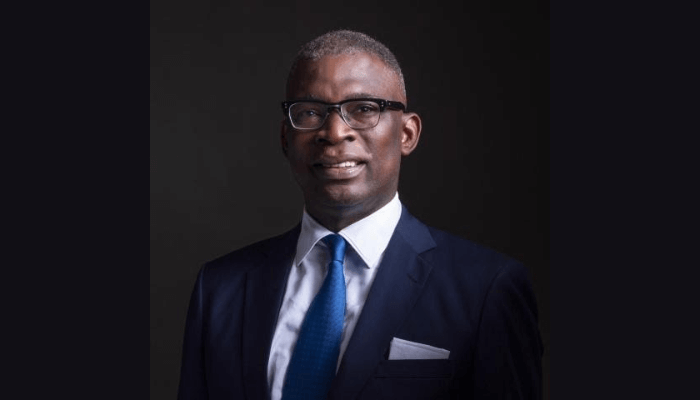
Africa’s journey from a polluted environment to a sustainable and cleaner energy future must be guided by justice, equity, and accountability. Our climate and energy policies must protect the most vulnerable while empowering communities to thrive in a new economy. The continent cannot simply repeat the exploitative, extractive models of industrialised nations; to do so would be to sacrifice both development and dignity.
Although Africa contributes less than 4% of global carbon emissions, it bears the heaviest burden of their consequences. 162 million tons of man-made global warming pollutions emitted into the atmosphere every year and 8.7 Million people die every day to pollution and climate-related disasters. Yet, poorly designed or externally imposed “net zero” policies threaten to worsen these harms displacing communities, intensifying food insecurity, exploiting child labour, and eroding human rights. The real challenge is to achieve a just transition, one that is not only clean but also fair.
This requires coordinated action: governments must define clear policy objectives and provide oversight; the private sector must adopt responsible practices; financial institutions must link funding to social and environmental outcomes; and communities must be meaningfully involved in shaping their future. Integrating human and development – what I often call EcoSoc (Economic and Social) – rights into the green transition enables Africa to restore degraded environments, create livelihoods, and meet the Sustainable Development Goals.
From Environmental Neglect to Rights-Based Action
The relationship between environmental protection and human rights in Africa has evolved over time. After independence, the Organisation of African Unity (OAU) prioritised sovereignty and reconstruction, but environmental degradation soon revealed that progress without protection is hollow. The droughts and famines of the 1970s made it clear that a polluted environment undermines the very right to life and development.

The turning point came with the African Charter on Human and Peoples’ Rights (1981), which for the first time enshrined the right to a “general satisfactory environment conducive to development.” Africa declared then that environmental care is intrinsic to human dignity.
By the 1990s, Africa began influencing the global conversation. At the 1992 Rio Earth Summit, African states championed the principle of common but differentiated responsibilities, insisting that those most responsible for pollution must bear the greatest responsibility for its correction. The UN Convention to Combat Desertification (1994) reinforced this, affirming that Africa’s struggles with drought and land degradation were inseparable from human rights and development.
By the early 2000s, the African Commission on Human and Peoples’ Rights, through Resolution 153, recognised climate change as a direct human rights issue. Civil society movements, notably the Pan-African Climate Justice Alliance (PACJA), strengthened this cause, reframing climate change from an environmental challenge into a demand for fairness, justice, and inclusion.
The African Charter and the Legal Foundation for a Fair Transition
The African Charter provides a powerful framework for balancing Africa’s developmental ambitions with its environmental responsibilities.
- Article 21 recognises the sovereignty of African peoples over their natural resources.
- Article 22 guarantees the right to equitable and sustainable development.
- Article 24 upholds the right to a clean and satisfactory environment.
Together, they define Africa’s normative guide for a just energy transition, one that reconciles the right to exploit resources with the duty to protect the environment.

This balance remains delicate. Many African economies still depend on oil, gas, and coal, yet these same industries have bred pollution, corruption, and rights abuses. Africa must therefore pursue cleaner energy pathways: solar, wind, hydro, and geothermal, without excluding the developmental rights of its people. The challenge is not the lack of vision, but of financing and institutional strength. Renewable energy in Africa costs several times more than in OECD countries, and our share of global climate finance remains unjustly low.
The Human Cost of Inaction
Despite numerous frameworks and declarations, the pace of progress is painfully slow. Climate inaction – both globally and locally – has turned Africa’s environmental crisis into a profound human and development rights emergency.
Across East Africa, prolonged droughts have left over 22 million people food-insecure and destroyed millions of livestock. In Southern Africa, Cyclone Idai displaced nearly two million people and caused over a thousand deaths. In the west and central regions, floods, desertification, and shrinking lakes have sparked displacement and violent conflict. The Lake Chad Basin, which has lost over 90% of its water area since the 1960s, has become a symbol of how environmental degradation fuels insecurity.
These examples are not isolated tragedies; they are evidence that environmental collapse strips people of their most basic rights; to life, food, health, shelter, and dignity. The lesson is clear: climate change is not just an environmental issue; it is the most urgent human rights challenge of our time.
Africa’s Development Paradox and Global Inequality
Africa’s development story remains marked by contradictions. We are rich in natural and human resources, yet poor in access and opportunity. Nearly 600 million Africans live without electricity. Meanwhile, global policies often demand that Africa decarbonise at the same pace as industrialised economies – without recognising historical injustices or current realities.
Calls for an immediate end to fossil fuels disregard the fact that Africa still needs affordable energy to industrialise and lift millions out of poverty. Restricting development finance while limiting access to cleaner alternatives creates a form of climate colonialism – a system that denies Africa the same developmental pathways once used by the West.
To counter this, Africa must centre human and development rights within its climate and energy agenda. Protecting vulnerable groups, enforcing environmental accountability, and ensuring fairness in global partnerships will strengthen both our domestic resilience and international negotiating power.
Global Commitments, Local Realities
The Paris Agreement (2015) reaffirmed principles that Africa had long advanced: that climate action must respect human rights, health, and development. Yet developed nations have failed to meet their obligations, particularly the promised $100 billion annual climate finance fund.
Nigeria’s experience reflects the continent’s broader challenge. As a signatory to the UNFCCC and the Paris Agreement, Nigeria pledged to cut emissions by 20% unconditionally and 47% conditionally by 2030. Although the Climate Change Act (2021) domesticated these commitments, it did not enshrine binding targets, leaving investors uncertain and enforcement weak. Nigerian courts have also been reluctant to grant standing to civil society organisations on environmental issues, limiting accountability. Courts relying on a diminished non-justiciability provision of the constitution despite advancements in the Law and the bindingness of the Charter on Nigeria
Nigeria and the Paris Agreement
The United Nations Framework Convention on Climate Change (UNFCCC) (1992) was the precursor to both the Kyoto Protocol (1997) and the Paris Agreement (2015). Nigeria is a signatory to the convention, along with 197 other signatory countries, as a non-annex 1 Party. Under the UNFCCC, under Article 4(2)(a), each participating party is required to adopt national policies and corresponding measures for mitigating climate change. Subsumed under the UNFCCC’s broad negotiation platform, the Paris Agreement refines and strengthens the commitments of signatory states through their Nationally Determined Contributions (NDCs).
According to Article 4(2)(a) of the United Nations Convention on Climate Change (UNFCCC), each participating party is required to adopt national policies and corresponding measures for mitigating climate change.
Unconditionally, Nigeria is committed to:
- Working toward ending gas flaring by 2030
- Working toward off-grid solar PV of 13 GW (13,000 MW)
- Efficient gas generators
- 2% per year energy efficiency (30% by 2030)
- Transport shifts from car to bus
- Improve the electricity grid
- Climate-smart agriculture and reforestation
The conditional reductions imply that Nigeria will be dependent on assistance in funding and technical support from developed countries to fulfil 47% of its NDC commitment to reduce GHG by 2030, under the Agreement.
Furthermore, since signing the Agreement in 2016, the Nigerian Government passed the Climate Change Act in 2021, providing the Agreement with access to the Nigerian legal system as a progressive step toward meeting its NDC targets.
Notwithstanding the enactment of the Climate Change Act 2021, the Act does not contain the 20% unconditional and 47% conditional reduction in greenhouse gas (GHG) emissions that the country’s NDCs previously referred to. This makes it difficult to establish clear and legally binding emission targets, provide certainty to investors, businesses and markets to promote investment in low-carbon technologies and sustainable practices.
Nigeria is still legally obligated to meet its 20% unconditional GHG reduction by 2030 NDC because it is covered by the principle of common but differentiated responsibilities (CBDR) in international environmental law, which states that all states are responsible for addressing global environmental destruction, yet not equally responsible.
Regarding the remaining 47% conditional reduction commitment, the Nigerian government is not legally obligated to meet it because the CBDR principle does not cover it, and it relies on financial support from developed countries, which Nigeria cannot guarantee with certainty.
Considering the exclusion of the NDC’s from the Climate Change Act 2021, enforcement mechanisms may prove inchoate because the 20% unconditional GHG target reduction cannot be enforced against the government.
Article 4(9) of the Agreement requires Parties to communicate their NDCs every five years. On September 22, 2025, Nigeria submitted its latest Nationally Determined Contribution (NDC 3.0) to the UNFCCC Secretariat, which targets net-zero across all sectors of the economy by 2060 despite the apparent lack of reform or support.
Regrettably, Nigerian courts have a track record of dismissing NGO’s from enforcing climate-related issues, such as Douglas v Shell, and the dismissal of Centre for Pollution Watch v Nigeria National Petroleum Corporation from the Court of Appeal because the NGO was said not to have suffered any damage or injury, as it filed the suit against the Defendant on behalf of a community affected by an oil spill. This narrow approach to legal interest (locus standi) is not helpful; it is outdated and lacking in understanding of our global responsibility to the earth.
Moving Forward
To achieve a truly just transition, Africa must:
- Implement human and development rights due diligence throughout the value chain.
- Ensure meaningful consultation and participation of affected communities.
- Provide social safety nets and retraining programmes for workers in industries facing transition.
- Adopt equitable carbon pricing strategies that recycle revenue back to low-income communities.
- Africa must build capacity (skill-up) and appoint representation that will negotiate and insist on international
- collaboration and investment in sustainable development for emerging nations.
- Take leadership in an astute Decarbonisation Legal framework, which is conspicuously lacking a legislative
- framework that respects international obligations, while instituting a system that is sensitive to development rights
Africa stands at a crossroads between vulnerability and resilience, dependence and self-determination. The continent’s future depends on how intentionally we act today. Purposeful decarbonisation must become our shared mission: one that unites environmental responsibility with human and developmental justice.
??????????????? ?? ??? ???? ? ??????? ????? – ?? ?? ? ????? ??????????? ?????? ??????? and we cannot afford indifference or delay. Everyday counts – in answering the cries of humanity and securing a future where Africa’s progress is both green and just.
Olasupo Shasore SAN, Partner, Africa Law Practice NG & Co, member Africa Climate Change Movement; Carbon Market Institute, Association of International Energy Negotiators (AIEN)