The Donald Trump administration’s sharp pivot away from renewable energy and electric vehicles could wipe out more than half a trillion dollars in clean energy and transportation investments, threatening to derail America’s decarbonisation trajectory, according to a new report by research provider Rhodium Group.
In its Taking Stock 2025 analysis released this week, Rhodium warned that the U.S. is on course for “much slower emissions reductions than previously anticipated” as the White House and Congress roll back policies that underpinned the rapid expansion of solar, wind, and EV adoption over the past decade.
Hostile Climate Policy Shift
Since returning to office in January, President Donald Trump has advanced what analysts describe as one of the most abrupt reversals in U.S. energy and climate policy in recent history.

His administration has scrapped incentives for clean energy projects, moved to accelerate fossil fuel development, and targeted the 2009 “endangerment finding”, a landmark Environmental Protection Agency (EPA) ruling that established greenhouse gases as harmful to public health and provided the legal basis for climate regulations.
EPA Administrator Lee Zeldin has formally proposed rescinding the endangerment finding, calling it a step toward “commonsense policies that expand access to affordable, reliable, secure energy.”
Energy Secretary Chris Wright praised the move as a way to strengthen fossil fuel and nuclear power generation, in sharp contrast to the previous Biden administration’s prioritisation of renewable technologies.
“The first seven months of the second Trump administration and 119th Congress have seen the most abrupt shift in energy and climate policy in recent memory,” Rhodium Group noted.
Decarbonization Pace Slows

Rhodium’s projections show the U.S. could reduce greenhouse gas emissions by 26–41% by 2040 relative to 2005 levels. That is far below the 38–56% cut the firm estimated in last year’s report. The slowdown is particularly stark in its “high emissions scenario,” where average annual reductions would collapse to just 0.4% between 2025 and 2040—less than half the rate achieved in the past two decades.
At the heart of the reversal is the “One Big Beautiful Bill Act” (OBBBA), a sweeping budget reconciliation measure passed by Congress earlier this year. Rhodium estimates the law will cut the build-out of new clean power-generating capacity by 53–59% over the next decade, effectively putting at risk more than $500 billion in clean energy and transportation investment.
“It also places nearly $150 billion of existing clean energy manufacturing investment under pressure,” the group said, warning of reduced domestic demand for solar panels, wind turbines, and EV components.
Solar Industry at Risk
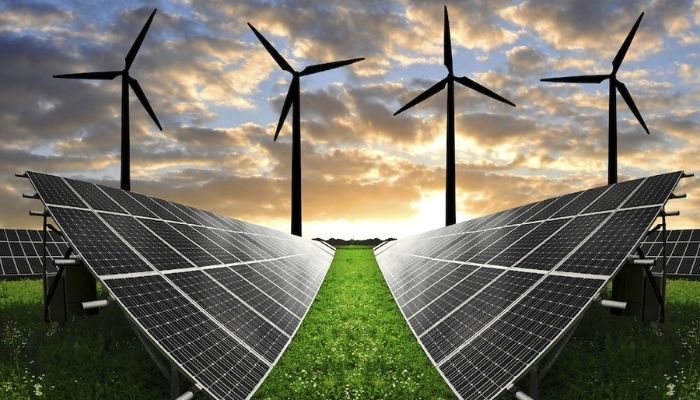
The solar industry faces a particularly uncertain future. While developers are racing to complete projects before remaining tax incentives expire in 2027, longer-term prospects have dimmed due to new restrictions on permitting and penalties tied to Chinese supply chains.
A joint report by the Solar Energy Industries Association (SEIA) and Wood Mackenzie forecasts the U.S. could lose 44 gigawatts (GW) of planned solar deployment by 2030—a decline of about 18%.
“Instead of unleashing this American economic engine, the Trump administration is deliberately stifling investment, raising energy costs for families and businesses, and jeopardising grid reliability,” said SEIA president and CEO Abigail Ross Hopper.
Michelle Davis, head of solar research at Wood Mackenzie, added that “federal policy uncertainty is making the business environment incredibly challenging,” with developers cautious about committing new capital.
Notably, the industry’s growth has been concentrated in Republican-led states. SEIA data show that 77% of solar capacity installed this year has been built in Trump-won states such as Texas, Indiana, Arizona, and Florida.
Wind Power Stalls
Wind energy is also showing signs of strain. Although installations rose earlier this year, turbine orders plunged by 50% in the first half of 2025, reaching their lowest point since 2020, according to a report by Wood Mackenzie and the American Clean Power Association (ACP).
ACP data show the U.S. clean power development pipeline has stagnated, with solar installations falling 23% and new power purchase agreements nearly grinding to a halt.
“The uncertainty created by new bureaucratic delays and unclear demands is chilling the pipeline for future projects,” ACP CEO Jason Grumet said. “This is stalling growth precisely when the nation needs more energy to power a growing economy.”
Broader Implications
The policy U-turn not only undermines U.S. climate commitments but also threatens jobs and industrial investments tied to the energy transition. Clean power and EV supply chains had been a cornerstone of federal and state-level industrial policy in recent years, with billions of dollars flowing into domestic manufacturing hubs.
Now, analysts warn, those investments could dry up, ceding ground to Europe and Asia, where governments continue to incentivize renewables and clean technologies.
The Rhodium report underscores that executive decisions will further shape how deeply the OBBBA curtails clean energy momentum. If the administration aggressively enforces new trade and permitting rules, the hit to investment could exceed its current half-trillion-dollar estimate.
The Bottom Line
What emerges is a sharp divergence between the U.S. and its major trading partners. While the European Union has upheld “green” designations for nuclear and natural gas to support its clean energy transition, Washington is signaling a retreat from renewables in favor of fossil fuels.
For now, the U.S. remains on a path to slower emissions reductions, weaker renewable growth, and a less certain investment climate. As Rhodium put it bluntly: “The U.S. is no longer driving decarbonization at the pace required to meet its climate commitments. The policy environment has turned openly hostile to wind, solar, and electric vehicles, with consequences that will reverberate for decades.”